AI Infrastructure Economics Pivot Toward Inference Efficiency and Factory-Level Reliability
As agentic workloads and physical robotics scale, cloud providers and hardware makers are confronting power caps, memory pressure, and zero-downtime constraints.
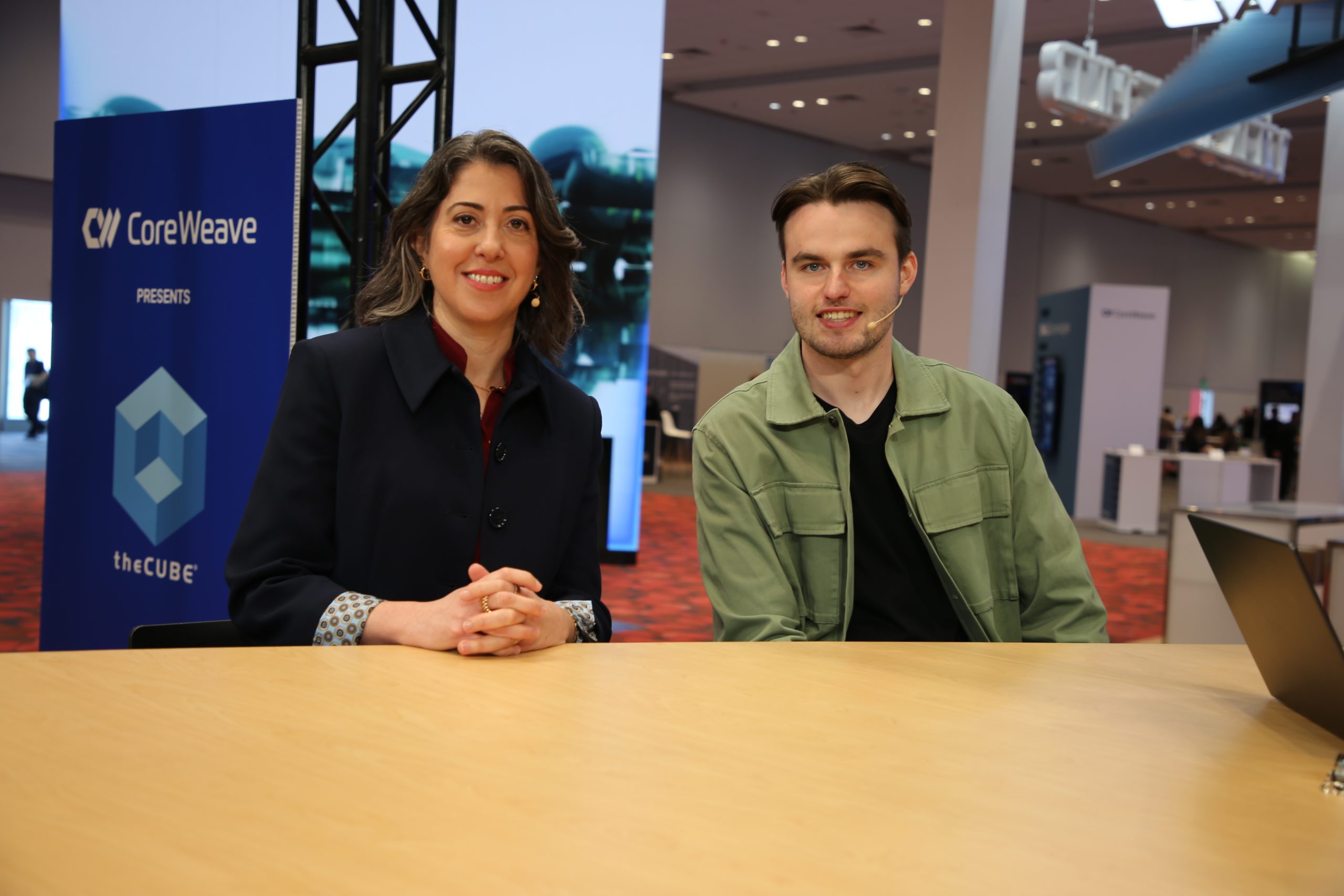
The economics governing artificial intelligence infrastructure are shifting from the upfront capital cost of procuring compute capacity to the ongoing operational expense of producing continuous intelligence. With inference demand outpacing traditional model pre-training, data center operators, semiconductor manufacturers, and AI application developers are retooling system architectures to extract higher productive output without triggering unsustainable power and hardware costs.
The operational friction points accompanying this transition were examined during the Fully Connected conference, as reported by SiliconANGLE (https://siliconangle.com/2026/11/25/three-insights-missed-thecubes-coverage-fully-connected-event-fullyconnected/). Across discussions involving specialized cloud provider CoreWeave Inc., server vendors, and enterprise practitioners, engineering teams emphasized that memory bottlenecks, data center power ceilings, and distributed node failures have become the primary constraints on production deployments.
Power capacity has emerged as a hard physical limit for data centers, forcing chipmakers to prioritize energy efficiency over unconstrained raw FLOPs. Ian Buck, vice president and general manager of hyperscale and high-performance computing at Nvidia Corp., noted that data centers face a natural operational cap defined by power availability. Buck stated that Nvidia achieved a 30-fold improvement in tokens generated per watt with its Blackwell architecture and highlighted growing interest in the Groq 3 LPX inference accelerator paired with its Vera Rubin platform for low-latency workloads such as financial processing.
Simultaneously, agentic architectures conducting multi-step reasoning are exerting acute pressure on GPU memory. Prolonged agent sessions involving 500,000 tokens can consume between 5% and 10% of a graphics processing unit's onboard memory, according to Alon Horev, co-founder and chief technology officer of Vast Data Inc. Offloading and orchestrating key-value cache data across external storage and host memory allows clusters to migrate active sessions across machines rather than forcing costly recalculations from scratch.
For applied software companies, operational spend is already overwhelmingly dominated by inference. LlamaIndex Inc. co-founder and chief executive Jerry Liu noted that inference represents roughly 75% of the company's daily compute consumption as it processes millions of document pages for enterprise customers in finance, insurance, and legal sectors. Liu emphasized that securing predictable, non-throttled capacity under spiky enterprise demand is critical to maintaining production service-level agreements.
Protecting capital-intensive hardware investments is also pushing operational risk detection earlier into the hardware lifecycle. Dell Technologies Inc. has implemented modular rack architectures to accommodate varying power and liquid-cooling specifications, integrating CoreWeave's Racky management software directly into factory testing. Sarat Krishnan, Dell's director of PowerEdge AI architecture and systems development engineering, explained that shifting diagnostics leftward to capture hardware defects on the factory floor avoids substantially more expensive replacements after clusters are deployed.
Cluster reliability is equally vital for autonomous software engineering agents. Silas Alberti, head of research and founding team member at Cognition AI Inc., pointed out that the company's Devin agent depends on distributed training runs across international data centers where an outage on a single replica can invalidate an entire job, making 99.99% system reliability essential. To address that operational cycle, CoreWeave introduced Forge, a software platform designed to link inference, evaluation, and model refinement with an observability tool named Agent Lens, while International Business Machines Corp. has worked with CoreWeave to implement sandboxed workload isolation and audit hardware supply chain provenance.
Physical AI deployments are introducing even narrower tolerances. Aston Martin F1 commercial technology ambassador Eric Ernst noted that race vehicles stream 1 million data points per second under strict competition schedules that leave no margin for system downtime. Similarly, Walden Robotics Inc. co-founder Adrien Gaidon reported that the startup's adaptive robots have completed full production shifts alongside human workers since May, executing machine tending and parts kitting tasks that require models to adapt continuously to line changes rather than relying on static deployment weights.
Sources
Written by
The Company Wire
Inside the companies building what’s next. Reporting on startups, technology, funding and the people shaping them.


