Goldman Sachs CIO Says AI Agents Turn Developers Into Managers of Managers
Marco Argenti outlines the bank's shift toward revenue-generating AI systems, multi-agent workflows, and defensive architecture.
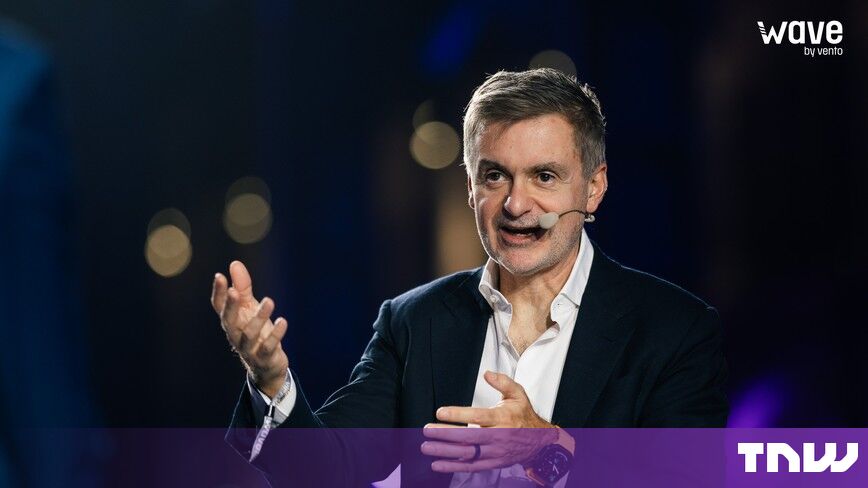
Goldman Sachs is shifting its artificial intelligence strategy from internal cost efficiency toward top-line revenue growth, according to Chief Information Officer Marco Argenti. Speaking on Friday with Bloomberg anchor Tom Mackenzie at the Wave by Vento conference in Turin, Argenti outlined the financial institution's evolving deployment roadmap, as reported by The Next Web (https://thenextweb.com/news/marco-argenti-goldman-sachs-ai-third-wave-growth-wave-by-vento).
Argenti, who joined the bank in 2019 after serving as vice president of technology at Amazon Web Services, categorized the bank's AI adoption into three phases. The first phase focused on experimentation among early adopters, including more than 12,000 software engineers out of Goldman Sachs' roughly 47,000 employees. The second wave restructured operational workflows to pursue straight-through processing—executing end-to-end operations without manual human intervention. The emerging third phase targets top-line business growth alongside operational speed.
Over the past six months, the bank has shifted from tracking proxy metrics like developer code commits to direct business outcomes. Argenti noted that technical teams now complete three-month software projects in two months, allowing initiatives previously excluded under zero-based budgeting cycles to become economically viable.
The shift is also redefining core engineering responsibilities. Rather than manually writing code, developers increasingly specify requirements, delegate tasks to autonomous AI agents, and monitor execution. Because primary agents can spawn their own sub-agents to resolve subtasks, Argenti said developers are effectively becoming managers of managers, allocating resources and setting priorities like internal entrepreneurs.
When asked whether increased automation would reduce headcount, Argenti said that while efficiency gains provide operational flexibility, engineering backlogs consistently exceed the funding capacity of standard planning cycles. He stated that ongoing business demand will continue to generate work for technical staff.
To mitigate errors inherent to non-deterministic statistical models, Goldman Sachs applies a zero-trust and defense-in-depth security framework. The bank restricts execution environments and data access permissions, inspects model chain-of-thought traces, and deploys secondary AI models to cross-examine outputs. Argenti added that the firm pairs cost-effective open-weight models retrained on proprietary internal data for routine tasks with frontier reasoning models reserved for complex, novel problems.
Sources
Written by
The Company Wire
Inside the companies building what’s next. Reporting on startups, technology, funding and the people shaping them.