Wayve and Stellantis Outline Plan for Mass-Market AI Driving by 2028
At an event in Turin, executives detailed how Wayve's software integrates with Stellantis's STLA AutoDrive platform across Fiat, Jeep and Maserati.
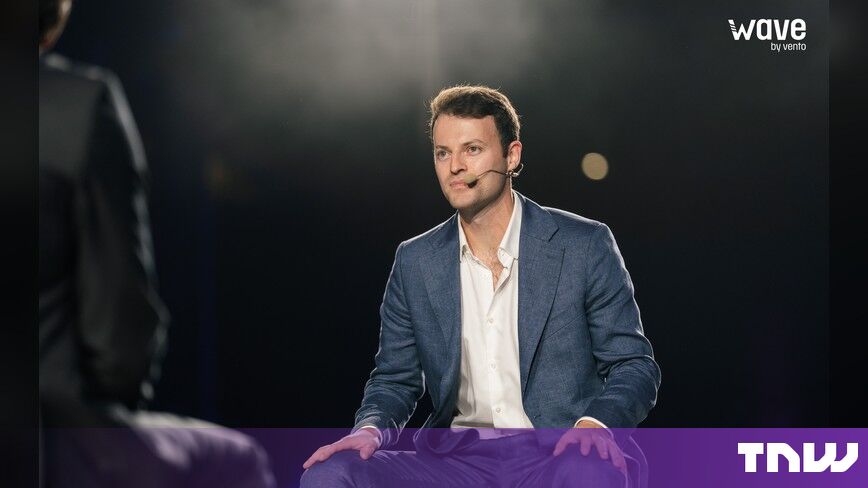
Wayve and Stellantis showcased the progress of their automated driving partnership at the Wave by Vento conference in Turin on Friday, Oct. 9, 2026. Appearing on a panel moderated by Morgan Stanley analyst Adam Jonas, Wayve chief executive Alex Kendall and Stellantis chief executive Antonio Filosa outlined technological targets and brand-customization plans for their joint software integration, as reported by The Next Web (https://thenextweb.com/news/alex-kendall-wayve-stellantis-ai-driving-seatbelt-wave-by-vento).
The partnership, announced in May, integrates Wayve's AI Driver into Stellantis's STLA AutoDrive platform to deliver supervised, hands-free driving. Stellantis is targeting its initial commercial deployment in North America for 2028. At the Turin event, the companies offered demonstration rides in a Fiat 500e and a Maserati Grecale. Kendall noted that the idea to adapt the system for the Fiat 500 originated from an informal agreement roughly five months prior, tuning the software for local driving styles.
Kendall argued that vehicle AI will eventually become mandatory equipment across the automotive industry, comparing it to foundational safety features like seatbelts and automatic emergency braking. To enable adoption in mass-market passenger cars, Wayve is designing its systems to operate on hardware suites costing less than $1,000 per vehicle.
Filosa explained that the software allows individual brands within Stellantis—including Jeep, Peugeot and Maserati—to establish distinct driving dynamics while utilizing the same underlying self-learning system. He noted that the partnership combines Wayve's AI development with Stellantis's manufacturing scale, which he said can lower component costs and accelerate the automaker's typical 24-month product development cycle.
Kendall framed supervised driving as an operational prerequisite for future driverless systems rather than an independent commercial segment. Operating supervised vehicles allows developers to gather fleet data while establishing the supply chains and hardware pipelines necessary for global automotive production. Kendall stated that transitioning to unsupervised autonomy requires exceeding the safety benchmark of a safety-conscious human driver.
According to Kendall, Wayve trains its models on data collected across more than 100 countries and 600 to 700 cities, testing performance in simulation through its generative world model, Gaia, prior to physical deployment. He added that the system's performance is currently scaling by more than an order of magnitude annually. Beyond Stellantis, Wayve maintains an agreement to deploy software in Mercedes-Benz production vehicles within two years and operates a supervised robotaxi service in London with Uber.
Sources
Written by
The Company Wire
Inside the companies building what’s next. Reporting on startups, technology, funding and the people shaping them.