Wayve Software Scheduled for Mercedes Consumer Cars Within Two Years, CEO Says
Speaking at HumanX in Amsterdam, Alex Kendall argued that autonomous driving will reach mass adoption before humanoid robots.
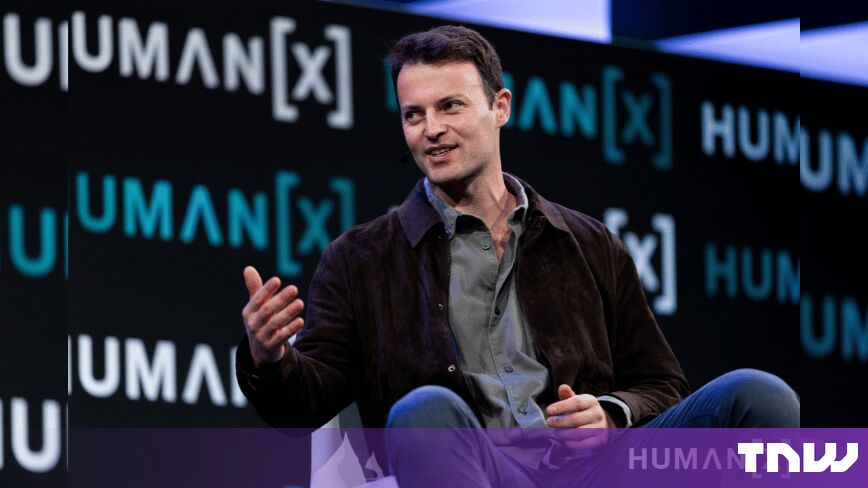
Wayve expects its autonomous driving software to enter Mercedes-Benz consumer vehicles within the next two years, co-founder and chief executive Alex Kendall said on Wednesday at the HumanX conference in Amsterdam, as reported by The Next Web (https://thenextweb.com/news/wayve-alex-kendall-mercedes-humanoid-robots-humanx). Kendall declined to provide a precise deployment date for the integration.
The partnership makes Mercedes-Benz the third top-10 global automaker in nine months to incorporate Wayve’s software into production roadmaps, following earlier agreements with Nissan and Stellantis. Wayve published test footage showing prototype vehicles operating on Mercedes production hardware across London, Stuttgart, and San Francisco using low-compute processing units, production cameras, and radar sensors.
Kendall stated that engineering efforts have shifted to production integration, focusing on processing latency, functional safety targets, and component compatibility. He noted that the automotive manufacturing cycle remains largely incompressible, contrasting public technology demonstrations with the rigorous requirements of consumer vehicle production.
Wayve develops a single end-to-end deep learning foundation model licensed to automakers and fleet operators. Carmakers can customize parameters such as braking profiles while providing fleet driving data back to Wayve for model training. The company utilizes a world model called Gaia to simulate complex traffic scenarios and edge cases, ranging from Sweden's Arctic Circle to rural Japanese road signage. Kendall contrasted this licensing strategy with Tesla, noting Tesla represents roughly 1 percent of the global vehicle market while Wayve seeks broad cross-manufacturer deployment.
In commercial operations, Wayve currently runs a supervised robotaxi service in London with Uber using in-vehicle safety drivers, with plans to launch a comparable pilot in Tokyo by the end of the year. Kendall also dismissed suggestions that physical artificial intelligence has reached a breakout moment comparable to generative text models, pointing out that fewer than 10,000 robotaxis operate globally against an annual market of 100 million newly sold cars.
Wayve has maintained its founding 2017 objective to build a general-purpose Level 5 autonomous driving system that assumes full liability and operates on any vehicle using approximately $1,000 of hardware.
Sources
Written by
The Company Wire
Inside the companies building what’s next. Reporting on startups, technology, funding and the people shaping them.