Shark Introduces Lighter, More Affordable PowerDetect Speed Cordless Vacuum
Shark's latest cordless vacuum, the PowerDetect Speed, offers enhanced portability and a lower price point compared to its predecessor, alongside strong cleaning performance and an optional self-emptying base station.
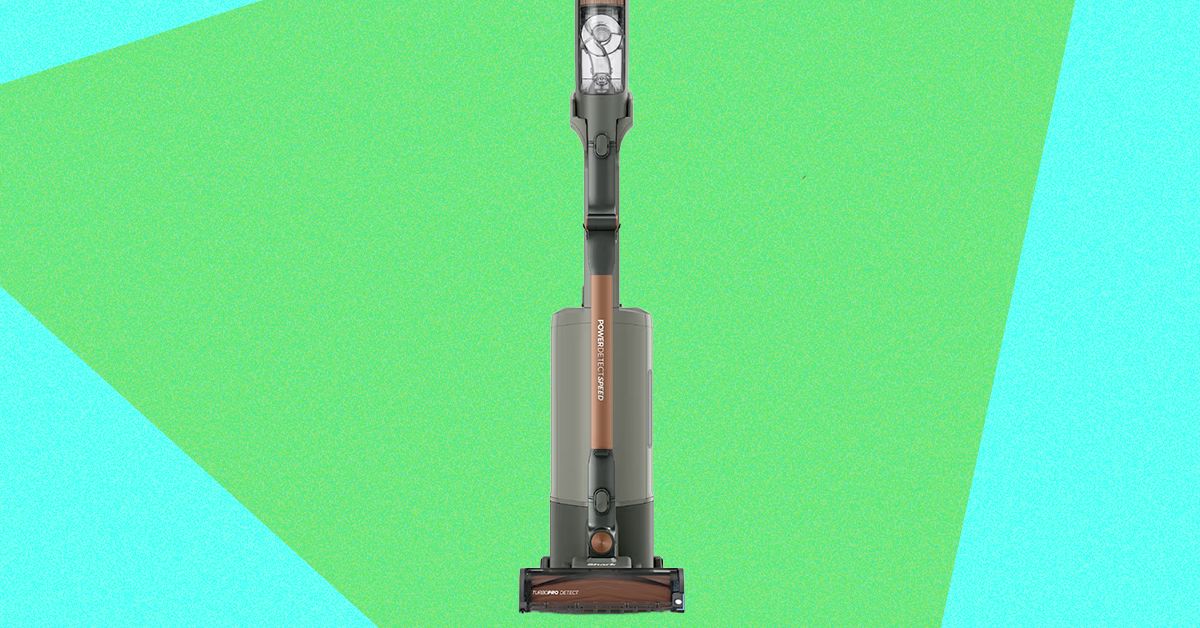
Shark has unveiled a new iteration of its popular cordless vacuum line with the introduction of the PowerDetect Speed. This model aims to improve upon the original PowerDetect by offering a lighter, slimmer, and more cost-effective design, positioning it as a strong contender in the cordless vacuum market, particularly the Clean & Empty version.
The PowerDetect Speed features a 350-watt motor, a slight reduction from the original's 380 watts. Despite this, testing indicated superior performance on sand and thin rugs, matching the efficiency of more expensive Dyson models when cleaning sand and Cheerios from thick rugs. The device also demonstrated a remarkable capacity for collecting pet hair and debris from recently vacuumed areas.
A notable feature of the PowerDetect Speed is its ease of maneuverability. The vacuum is designed to assist forward movement during use, making it less physically demanding to operate across various surfaces, including thick rugs. Its flexible wand also allows users to clean beneath furniture without needing to bend over. While initial uses occasionally resulted in the head locking upright, this issue reportedly diminished with continued use.
The vacuum's head incorporates floor-sensing technology, which automatically adjusts its speed based on floor type and debris levels. For the Clean & Empty version, two lights are integrated into the motor bar to aid visibility: a blue laser for hard floors and a brighter headlight for carpets.
In a series of five cleaning tests involving sand, Cheerios, litter, stairs, and general carpet vacuuming, the Shark PowerDetect Speed achieved a score of 15 out of 20. This placed it behind only the Dyson Gen5Detect ($800) and Dyson V16 Piston Animal ($980) in performance. The PowerDetect Speed notably outperformed the Dyson V10 Konical by one point and the Dyson V15 Detect and new V8 Cyclone by four points, which is particularly significant given the higher price and additional cleaner head of the V15 Detect.
The PowerDetect Speed received minor deductions primarily for getting stuck upright during stair cleaning, an issue that became less frequent after extensive use. It scored perfectly on sand and Cheerios removal from rugs and exhibited stronger performance on thin rugs compared to most Dyson models. While it required more passes on hard floor messes, such as litter, than some Dyson vacuums equipped with the newer Fluffy Optic head, its overall performance in this area was comparable to other brush heads.
Comparatively, the PowerDetect Speed's performance is similar to that of the original Shark PowerDetect, though direct numerical comparison is not possible due to updated testing methodologies. Both models excelled in sand, cereal, and general vacuuming tests. The original PowerDetect showed slightly better performance on stairs due to fewer instances of the head becoming stuck. Key differences include the original's slightly stronger motor, 10-minute longer run time, larger dust cap, and edge detection, offset by its additional pound of weight.
Priced in the $500 to sub-$500 range, depending on whether the Clean & Empty version is selected, the PowerDetect Speed is positioned as a strong value. The Clean & Empty version, which includes a base station and integrated lights, is recommended due to its practical features and availability in five color options, unlike the standard Speed vacuum which only comes in one color. This allows for better aesthetic integration into home environments.
Ultimately, the PowerDetect Speed is presented as a compelling option over the original PowerDetect, delivering comparable performance in a more compact, lighter, and slightly more affordable package, with observed sale prices for the vacuum alone as low as $280 and the Clean & Empty version at $400.
Sources
Written by
The Company Wire
Inside the companies building what’s next. Reporting on startups, technology, funding and the people shaping them.