Nvidia Reaches $12.9B Agreement to Acquire AI Platform Hugging Face
The deal secures a developer network of 18 million users as the chipmaker expands its footprint in open-source artificial intelligence.
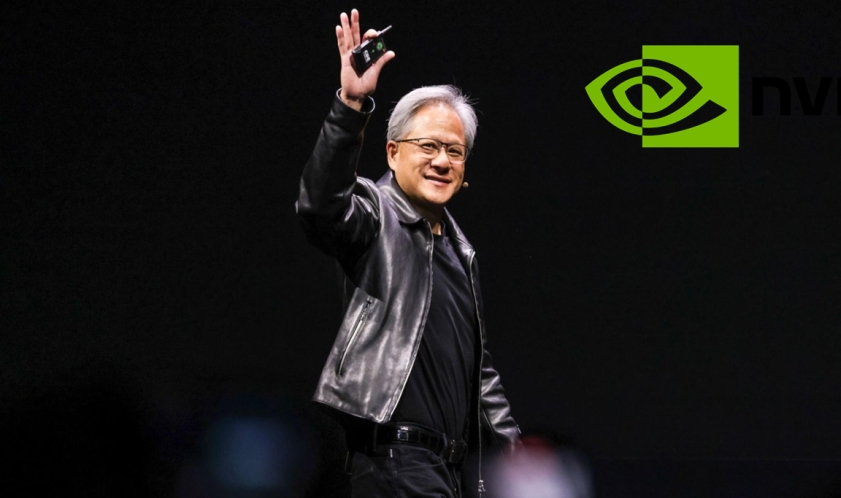
Nvidia has formally agreed to acquire open-source artificial intelligence platform Hugging Face for $12.93 billion, marking the semiconductor giant's second-largest transaction to date following its $20 billion purchase of chipmaker Groq's assets, as first reported by Tech Startups. The purchase price represents a substantial multiple for a startup generating roughly $150 million in annualized revenue. Speaking to CNBC on Thursday, Nvidia Chief Executive Officer Jensen Huang stated that the near-$13 billion valuation was required to outbid rival suitors vying for the platform.
Rather than purchasing software assets or standalone revenue streams, the transaction secures Nvidia direct oversight of an ecosystem comprising more than 18 million active users, over 3 million hosted models, 500,000 datasets, and an enterprise client base exceeding 200,000 organizations. The strategic alignment reflects Nvidia’s core market dynamics; Huang noted during his CNBC appearance that approximately half of Nvidia's overall business is driven by open-source models, adding that Nvidia ranks as the largest single contributor of open models globally.
The deal underscores a recurring pattern across the technology industry, where capturing established developer ecosystems frequently yields greater strategic value than building competing hubs internally. By taking control of the primary repository where machine learning practitioners collaborate, Nvidia gains a self-reinforcing network effect. As engineers share new models, the growing library attracts additional users and commercial enterprises, which in turn expands demand for infrastructure, tooling, and specialized chip integrations.
Corporate history highlights the precedent for paying a premium to acquire developer communities. Microsoft executed a comparable transaction in 2018 when it purchased code-hosting repository GitHub for $7.5 billion, absorbing a platform used by 28 million developers across 85 million repositories. At the time, Microsoft Chief Executive Officer Satya Nadella stated that the company recognized the "community responsibility" of managing the primary collaboration space for software creators, pointing to a commitment toward developer freedom and openness.
By contrast, attempts to erect alternative platforms against established networks have historically struggled to gain traction. During the early smartphone expansion, Apple launched the App Store in 2008 with over 500 native applications, yielding 10 million downloads within three days, while Google built Android Market into Google Play. Both companies constructed self-sustaining ecosystems connecting mobile hardware to deep application libraries that proved difficult for competing operating systems to disrupt.
Microsoft experienced the challenges of an ecosystem deficit with Windows Phone, despite committing significant financial resources and acquiring Nokia's Devices and Services business in 2014. By July 2015, Microsoft announced up to 7,800 job cuts primarily within its mobile unit and recorded a $7.6 billion impairment charge tied to the Nokia assets as developers prioritized iOS and Android. Smartphone pioneer BlackBerry highlighted similar dynamics in regulatory filings, informing the Securities and Exchange Commission that "an application-rich ecosystem is critical to succeeding in the mobile smartphone and tablet marketplace."
For Nvidia, building a competing model repository or offering discounted cloud infrastructure would have been technically feasible given its cash reserves and engineering headcount. However, replicating the entrenched habits, collaborative contributions, and established workflows of 18 million researchers presents a benchmark that capital alone cannot quickly reproduce. Acquiring Hugging Face prevents competing technology firms from positioning themselves between Nvidia and the developer base whose computational requirements dictate chip demand.
As a result, the transaction's long-term financial yield extends beyond Hugging Face's current software sales. Researchers discovering, tuning, and deploying models on Hugging Face ultimately require scalable compute resources to run applications in production. By embedding itself at the center of the open-source development pipeline, Nvidia positions its hardware and networking ecosystem to capture downstream compute demand across the artificial intelligence sector.
Sources
Written by
The Company Wire
Inside the companies building what’s next. Reporting on startups, technology, funding and the people shaping them.


