Anthropic Researchers Use Claude Science Harness to Solve Nine-Loop Physics Calculation
Physicists deployed an automated AI framework to compute a six-particle scattering amplitude in planar N=4 super Yang-Mills, completing the calculation for under $2,000.
Anthropic physicists have computed a previously unsolved nine-loop scattering amplitude in theoretical particle physics using an automated system built on the company's Claude large language model, according to a report shared via Hacker News (https://www.anthropic.com/research/yes-claude-can-do-nine-loops). The work came in response to a public challenge issued by science writer and former theoretical physicist Matt von Hippel, who sought to test whether an artificial intelligence system could tackle a computationally demanding frontier calculation within a modest budget.
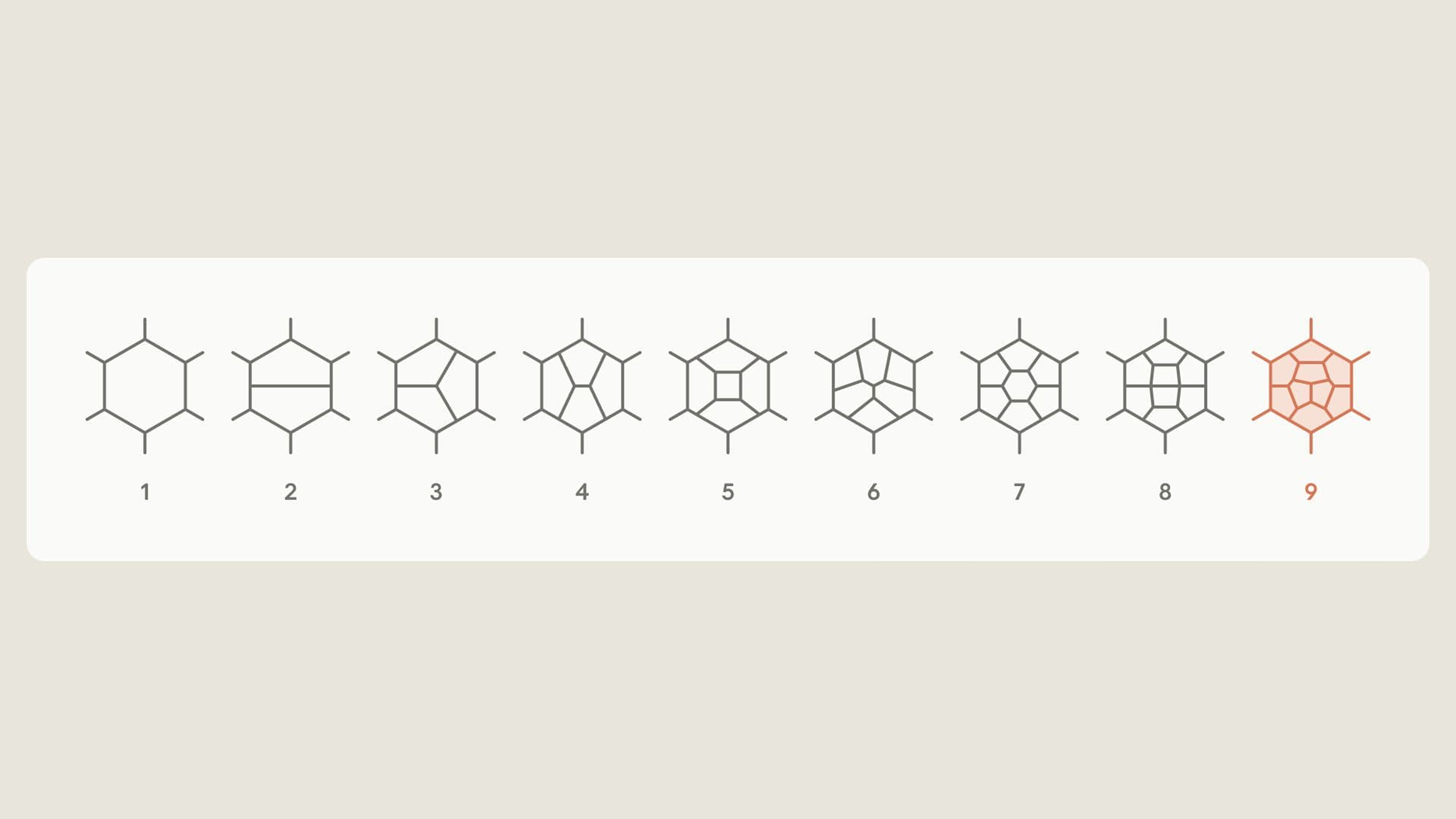
The task focused on amplitudeology, a subfield of theoretical particle physics that calculates scattering amplitudes to predict the probabilities of particle interactions. Because exact calculations for real-world interactions are mathematically intractable, physicists approximate them by loop orders, which track escalating interaction complexity. To test new mathematical techniques, amplitudeologists work with simplified toy models such as planar N=4 super Yang-Mills, a supersymmetric gauge theory that allows for higher-order loop computations than standard physics models.
Von Hippel challenged AI developers to calculate the six-particle hexagon amplitude in planar N=4 super Yang-Mills at nine loops, surpassing the previous eight-loop threshold. At the end of August, Anthropic physicists Liam Fitzpatrick and Siddharth Mishra-Sharma tackled the problem using Fable 5.1 within Claude Science, a commercial harness that wraps the Claude model with structured rules and prompts. After receiving the initial prompt defining the amplitude problem, the harness ran autonomously with minimal oversight, prompting the system to provide progress reports every four to six hours.
Claude completed the calculation using two separate approaches: the direct bootstrap method, which tests constraints in a manner similar to solving a Sudoku puzzle, and an indirect form-factor technique. The bootstrap approach generated Python code using the open-source SymPy library, running on a 96-CPU cluster for one week at an estimated compute expense of $100. Overall, Anthropic estimated the end-user cost to reproduce the run between $1,000 and $2,000, driven largely by model inference time.
The nine-loop result was independently verified with Lance, a researcher who previously calculated the eight-loop result. Around the same time, a separate research group led by Song He at the Chinese Academy of Sciences in Beijing independently derived the majority of the nine-loop result using GPT-6 assistance alongside active human direction. Human researchers plan to publish and analyze the complete mathematical findings, while von Hippel noted that the exercise demonstrated the growing capacity of structured LLM harnesses to execute multi-step scientific code reliably without compounding errors.
Sources
Written by
The Company Wire
Inside the companies building what’s next. Reporting on startups, technology, funding and the people shaping them.