DeepSeek Quadruples Model API Pricing Alongside Launch of Agent Scaffolding Tool
The Chinese AI startup unveiled DeepSeek Harness v0.1 while adjusting API rates ahead of a potential $71 billion IPO.
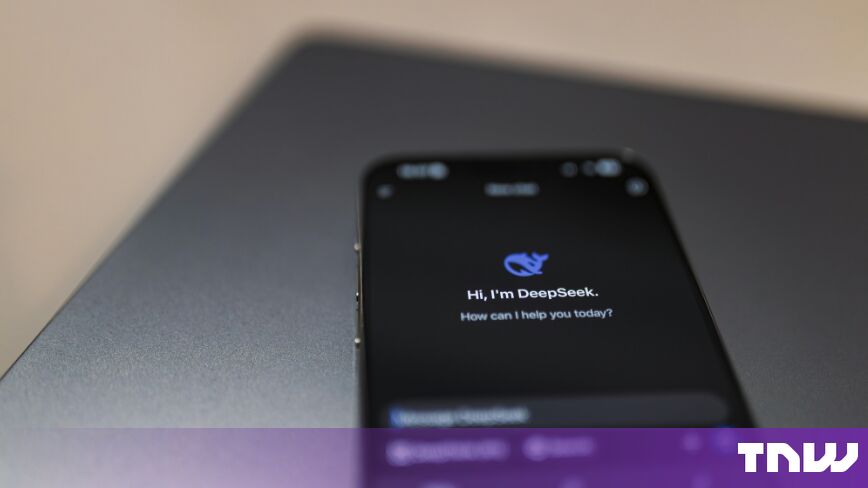
DeepSeek has significantly increased the prices for its flagship artificial intelligence models while unveiling a preview of its new agentic coding framework, DeepSeek Harness v0.1. Effective Aug. 16, peak pricing for output tokens via DeepSeek-V4-Pro soared from $0.87 to $3.96 per million tokens, as first reported by The Next Web. Simultaneously, output rates for DeepSeek-V4-Flash climbed from $0.28 to $1.32 per million tokens, according to Bloomberg. Off-peak pricing across both tiers was set at half the peak rate—$1.98 for V4-Pro and $0.66 for V4-Flash—meaning off-peak usage of V4-Pro now costs more than double its previous peak rate.
The price surge coincided with the release of DeepSeek Harness v0.1, a developer preview designed to provide the software scaffolding necessary to run autonomous coding agents. Similar to Anthropic's Claude Code, the harness enables an AI agent to execute complex software workflows, including reading files, editing source code, and browsing the internet until a given task is completed. DeepSeek signaled the expansion by establishing a verified WeChat account for the "DeepSeek Harness Team" under a Beijing corporate entity and posting job listings aimed at building frontier agentic products, Bloomberg previously reported.
DeepSeek emphasized that its harness features an open architecture, allowing software developers to integrate external AI models alongside or instead of its own proprietary systems. By positioning the harness as model-agnostic, the Chinese AI startup is attempting to establish control over the developer workspace rather than relying solely on base model inference. The strategy comes as competition surrounding developer tools intensifies; rival tool maker Cursor recently adjusted pricing during its own harness transition, while Alibaba recently prohibited internal use of Claude Code over privacy and tracking concerns.
Alongside the price adjustments and tool preview, DeepSeek officially transitioned its general-availability build, DeepSeek-V4-Pro-0813, out of a four-month preview period. The company initially posted a brief statement on its website claiming the build offered "significantly enhanced agent capabilities," but pulled the note down by Thursday afternoon, according to the South China Morning Post. DeepSeek did not provide an explanation for removing the claim and did not respond to requests for comment regarding its harness development team.
Initial feedback on the updated 0813 build was mixed. While cybersecurity researchers praised specific narrow capabilities, software developers expressed dissatisfaction with both the cost increase and overall performance, according to reporting by the South China Morning Post. According to vendor-provided model cards—which have not yet been independently verified—V4-Pro achieved an 80.6% score on SWE-bench Verified under maximum reasoning settings, matching Gemini 3.1 Pro and sitting just behind Claude Opus 4.6 at 80.8%. However, the model lagged behind competitors on other evaluations, recording 67.9% on Terminal Bench 2.0 compared to GPT-5.4 at 75.1%, and 37.7% on Humanity’s Last Exam against Gemini 3.1 Pro at 44.4%.
Architecturally, DeepSeek-V4-Pro operates as a mixture-of-experts model containing 1.6 trillion total parameters, with 49 billion active parameters per token. The company reported that a revamped attention mechanism reduced single-token compute requirements to 27% of its prior generation's workload. The substantial efficiency gains suggest that the fourfold price hike reflects a strategic push toward higher operational margins rather than rising underlying infrastructure overhead.
Despite the price hike, DeepSeek's rates remain substantially lower than those of Western and domestic competitors. Output tokens for DeepSeek-V4-Pro at $3.96 per million remain far below Moonshot AI’s Kimi K3 at $15 and Anthropic’s Fable 5 at $50 per million tokens. The startup’s historical ultra-low pricing structure created what industry insiders call a "death zone" for pricier base models, according to Bloomberg. The revised pricing narrows that gap while signaling a shift away from loss-leading inference subsidies.
The strategic pricing pivot comes as founder Liang Wenfeng prepares DeepSeek for a potential initial public offering as soon as this year, with the company currently pursuing a funding round at a valuation of approximately $71 billion, Bloomberg reported. As the company weighs investor expectations against compute costs and international expansion, establishing a monetization strategy built on proprietary workflow tools like DeepSeek Harness may prove critical to sustaining its long-term market position.
Sources
Written by
The Company Wire
Inside the companies building what’s next. Reporting on startups, technology, funding and the people shaping them.