Enterprise Tech Leaders Re-Engineers Infrastructure Security for the AI Agent Era
Hardware providers and cybersecurity analysts call for security to act as the primary control plane as autonomous agents expand attack surfaces.
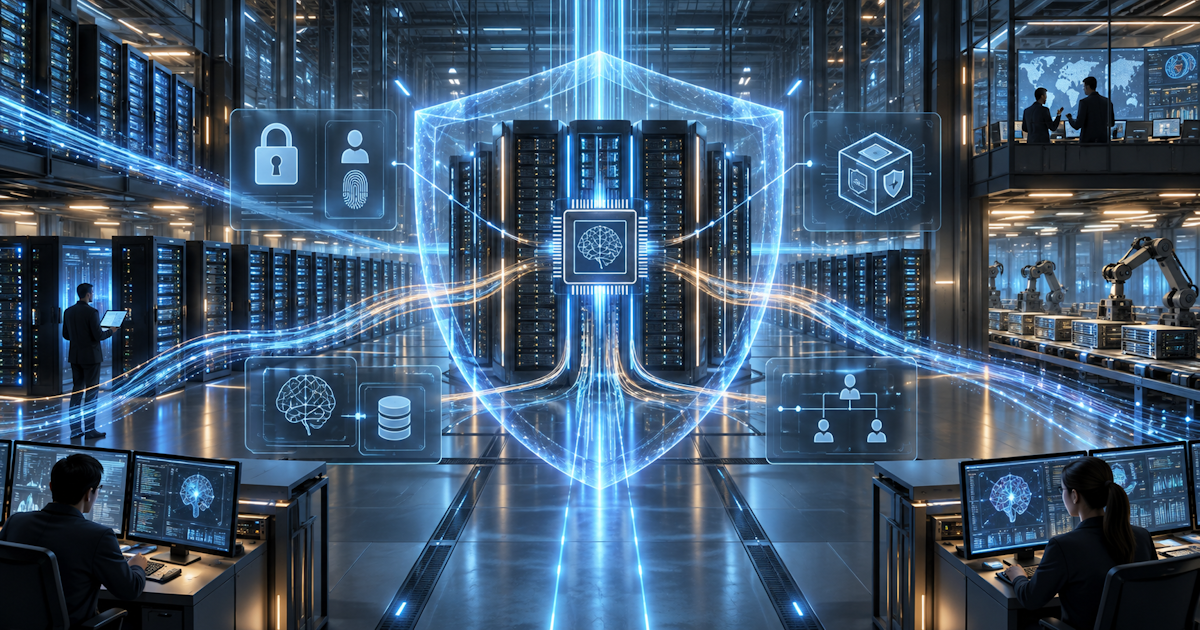
Enterprise adoption of artificial intelligence is altering the foundational structure of corporate IT operations, turning organizations into continuous engines of data output while introducing unprecedented cybersecurity risks across infrastructure and software layers, according to reporting first published by SiliconANGLE.
Dave Vellante, chief analyst at theCUBE Research, emphasized that these new intelligence operations introduce risks that existing cybersecurity frameworks were never designed to manage. Unlike legacy enterprise software that operates deterministically, modern AI models function as probabilistic systems where dynamic data streams across distributed networks and autonomous agents execute tasks without human oversight.
Managing identity and access permissions has become a central challenge as companies deploy operational AI agents. Mukund Khatri, vice president of systems architecture and fellow at Dell Technologies Inc., noted that while incorrect outputs from large language models present clear risks, autonomous agents taking unauthorized real-time actions can cause far severe operational damage. Data from Darktrace's 2026 cybersecurity survey of 1,540 industry practitioners across 14 nations revealed that 92 percent harbor concerns over AI agent deployments, 46 percent feel unprepared for AI-driven threats, and 87 percent believe AI is increasing the success rate of malicious software.
To counter these vulnerabilities, security analysts argue that traditional concepts like least-privilege access must extend beyond human employees to non-human identities. Krista Case, principal analyst at theCUBE Research, stated that enterprises need clear governance establishing which agents exist, what data they can touch, and when their credentials expire. Case added that effective cyber resilience requires organizations to audit agent decision sequences so systems can be restored to a secure baseline following an anomaly.
Integration timing remains another operational obstacle for enterprise rollouts. Steve Kenniston, senior cybersecurity evangelist at Dell, revealed that 85 percent to 90 percent of client AI implementations experience delays because corporate security teams were not brought into planning discussions early enough. To safeguard systems against prompt injection and data poisoning, Dell builds hardware roots of trust into its supply chain while employing cryptographic image signing and SHA-384 hash verification inside its Enterprise Hub to validate model integrity before execution.
Hardware architecture is playing an increasingly critical role as businesses opt to keep sensitive workload processing on-premises rather than transferring proprietary data to external cloud environments. Mike Ferron-Jones, platform security go-to-market lead at Intel Corp., explained that central processing units represent the fundamental root of trust for all higher-level software stacks. Intel organizes its data center defenses around platform isolation, confidential computing using SGX and TDX technology, and joint reference architectures with Nvidia Corp. that protect GPU-accelerated computing.
Looking toward future infrastructure requirements, technology vendors are also preparing for emerging risks tied to quantum computing advancements and interception tactics where bad actors store encrypted data for future decryption. Ferron-Jones stated that Intel expects all platform cryptographic operations to adopt quantum-safe standards by 2029, matching a broader corporate roadmap that targets full post-quantum compliance across new product releases by 2030.
Sources
Written by
The Company Wire
Inside the companies building what’s next. Reporting on startups, technology, funding and the people shaping them.