Silicon Valley Faces Expanding Public Backlash Over Data Centers and Surveillance Tech
Growing community opposition, legal resistance, and negative polling over AI infrastructure and surveillance hardware are creating significant headwinds for technology giants.
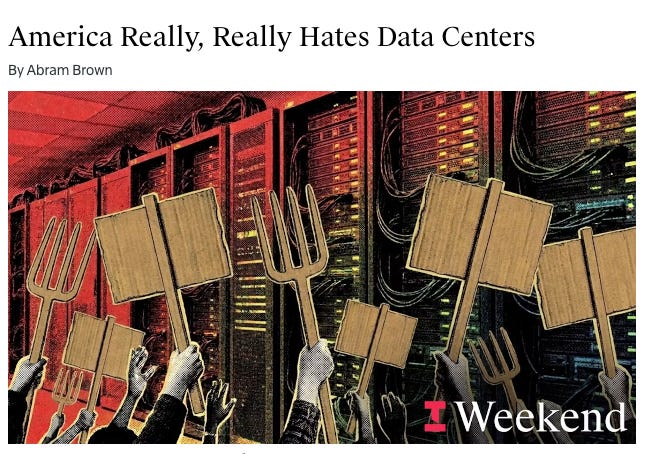
Growing public pushback against major technology infrastructure projects and hardware installations has triggered a defensive reaction across Silicon Valley, as communities increasingly oppose data centers, automated surveillance tools, and consumer artificial intelligence devices. According to commentary and reporting aggregated on Hacker News, the surge in grassroots opposition represents a broader rejection of the physical footprint required to support generative AI deployment, marked by local protests, legal challenges, and declining public enthusiasm for emerging tech products.
Data center expansion has emerged as a primary point of friction between technology companies and local municipalities. Recent survey data from Heatmap reveals that 75 percent of Americans now oppose the construction of data centers in their immediate residential areas. The opposition extends beyond municipal planning boards to active physical resistance against surveillance infrastructure, such as automated license plate reader systems deployed by Flock Safety. In one notable legal case, a grand jury declined to issue an indictment against an individual captured on video damaging Flock surveillance equipment, reflecting a shifting mood among local populations regarding public surveillance tools.
Public skepticism is similarly impacting consumer hardware and core generative software services. Meta Platforms Inc.’s AI-powered Ray-Ban smart glasses have faced heavy public criticism over personal privacy concerns. Broader polling data underscores a persistent trust deficit surrounding AI development, with just 9 percent of surveyed Americans stating they feel more excited than concerned about the technology's societal impact. These figures mark a shift from earlier industry expectations that consumer familiarity with AI applications would translate into political support for requisite physical infrastructure.
In response to rising community resistance, technology industry leaders and pro-AI policy commentators have altered their public positioning. While corporate representatives in early 2024 acknowledged communication shortfalls and emphasized the potential economic benefits of artificial intelligence, recent industry rhetoric has turned sharply critical of dissenters. Prominent industry figures and policy analysts have increasingly dismissed anti-data center movements as organized psychological operations funded by foreign governments, including the Chinese Communist Party, or as coordinated campaigns orchestrated by funded AI safety advocacy groups.
Other technology proponents have advanced extreme arguments against project delays, asserting that local opposition to facility construction stifles technological progress or restricts the development of future artificial general intelligence systems. Industry commentary has also questioned whether municipal planning decisions should accommodate public input when weighing strategic technological development. However, analysts note that community pushback is primarily driven by immediate local trade-offs rather than abstract policy debates, as residents weigh the operational disruptions of facilities against minimal local economic benefits.
Economic factors are further compounding public hostility toward massive corporate capital projects. Data indicates that the U.S. labor share of national income dropped to a record low of 53.7 percent this year, coinciding with broader public distress over sustained inflation and foreign conflict risks involving Iran. Furthermore, public declarations by leading technology executives regarding plans to automate corporate workflows have heightened worker apprehension. In this climate, large-scale industrial projects built under non-disclosure agreements for multi-trillion-dollar corporations encounter heightened public scrutiny.
Critics of data center expansion frequently contrast the facilities with traditional manufacturing or renewable energy projects. While industrial developments such as steel mills require significant land and energy, they typically generate substantial numbers of permanent, high-paying local jobs. Similarly, while wind farm installations face local zoning hurdles, they supply clean electricity directly into public energy grids. By contrast, data centers generally yield only temporary construction labor and a small handful of ongoing technical operations roles, while placing continuous demands on local power utilities, municipal water reserves, and electrical infrastructure.
Despite mounting municipal pauses and restrictive local legislation aimed at slowing facility development, major technology firms continue to allocate tens of billions of dollars toward enterprise AI scaling. Industry executives remain under strong pressure from institutional investors to deliver projected multi-trillion-dollar revenue returns from generative software services. As a result, technology companies face a growing disconnect between aggressive corporate infrastructure timelines and escalating municipal resistance across North American communities.
Sources
Written by
The Company Wire
Inside the companies building what’s next. Reporting on startups, technology, funding and the people shaping them.