U.S. Drafts Ultimatum Forcing 35 Nations to Choose Between American and Chinese AI Ecosystems
A leaked State Department document pressures allies to abandon Beijing's rival artificial intelligence initiatives or forfeit Western investment access.
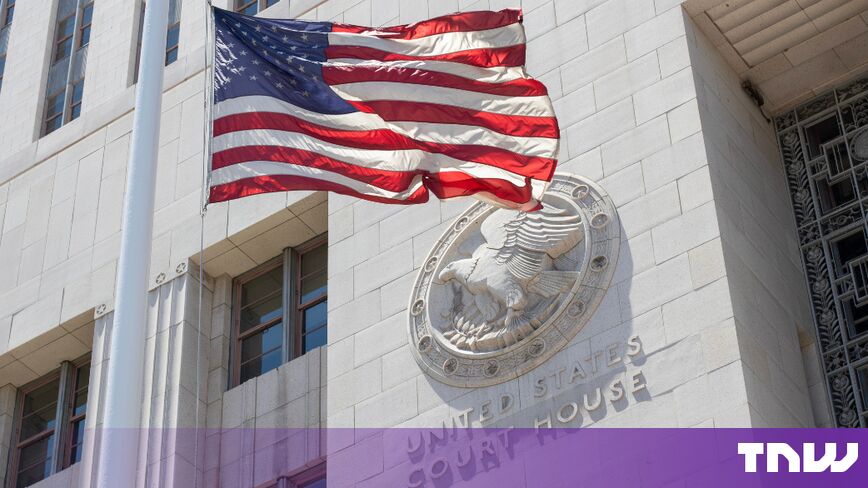
The U.S. government is preparing to issue an ultimatum to 35 foreign partner nations, demanding they commit exclusively to American-led technology initiatives or risk losing access to Western artificial intelligence investments. According to a draft letter first reported by Reuters on August 14 and detailed by The Next Web, Washington intends to deliver the warning to signatories of its "AI Opportunity Statement" established in June. The communication reflects growing frustration within American diplomatic channels over partner countries attempting to balance economic and technological ties between the United States and China.
The internal text uses stark diplomatic phrasing to press recipient countries into making a clear choice. "To be part of everything is to be part of nothing," the draft states, emphasizing that participating in the U.S. Pax Silica Declaration represents "not merely a membership subscription, but a commitment." The draft document reported by Michael Martina remains undated, and it is uncertain when or if the U.S. Department of State will dispatch the final text. State Department representatives declined to address the document directly, stating the agency does not comment on purportedly leaked internal documents.
Washington initiated the Pax Silica framework last year to safeguard critical supply chains across three interconnected pillars: advanced semiconductors, AI software models, and essential mineral reserves. Approximately two dozen nations have formally joined the initiative, including South Korea, Australia, Japan, and Kazakhstan. Members gain access to joint technological investment funds and coordinated export control structures. However, the broader 35-nation group targeted by the letter had previously signed only a symbolic commitment to a shared vision, leaving a non-binding gap that U.S. officials now seek to close through formal diplomatic pressure.
The immediate catalyst for the diplomatic shift appears to be Kazakhstan, which became the first Central Asian nation to join Pax Silica in June under an accession marked by Under Secretary of State Jacob Helberg. Shortly after securing its spot in the U.S. coalition, the mineral-rich nation also signed onto a rival international AI framework established by Chinese President Xi Jinping. China introduced the World Artificial Intelligence Cooperation Organization at a Shanghai conference roughly one month ago, positioning its open-weight AI architectures as an accessible alternative to proprietary American technologies. Kazakhstan is currently the only known country participating in both competing frameworks.
A senior U.S. official speaking to Reuters on condition of anonymity made clear that Washington views dual membership as unacceptable, stating that target nations "can't have it both ways." The official argued that no country can credibly present itself as a trusted partner within the Western tech ecosystem while simultaneously aligning with a Chinese initiative designed to advance a competing geopolitical strategy. The policy friction occurs as Beijing leverages its dominant market position in critical minerals while offering open-weight AI models. According to statistics cited by Hugging Face’s chief executive on CNBC this month, Chinese models currently account for 41 percent of global open-weight model downloads, challenging closed systems developed by firms like OpenAI and Anthropic.
The diplomatic campaign comes alongside tightening American domestic regulations and shifting corporate alliances. U.S. technology companies are themselves divided, with Nvidia and several major firms splitting from OpenAI and Anthropic earlier this year over the governance of open-weight models. Meanwhile, federal enforcement is escalating: the U.S. Department of Commerce is evaluating how Chinese entities access Nvidia hardware remotely, while the Department of the Treasury has floated outright sanctions against Chinese AI companies. Additionally, European capitals face potential pressure, as the European Union advances its own "Made in EU" sovereignty initiative requiring a 5 percent local-content baseline across compute infrastructure and hardware systems.
Industry observers remain divided on whether the American pressure campaign will succeed or backfire. China analyst Rui Ma noted on X that coercive demands may cost Washington more than they gain, arguing that global partners are evaluating a contrast between U.S. supply chain restrictions and Beijing's promotion of broadly accessible models. Simultaneously, software developers have raised concerns that over-reliance on either superpower compromises national technological autonomy. The ultimate impact of the draft letter hinges on three primary variables: whether Washington officially dispatches the document, how Kazakhstan responds to the implicit ultimatum, and which specific nations populate the full 35-country mailing list.
Sources
Written by
The Company Wire
Inside the companies building what’s next. Reporting on startups, technology, funding and the people shaping them.