UW Researcher and Hearvana Co-Founder Wins Marconi Young Scholar Award for On-Device Audio AI
Malek Itani earned global recognition for creating low-power neural networks that bring real-time semantic hearing to consumer hearables.
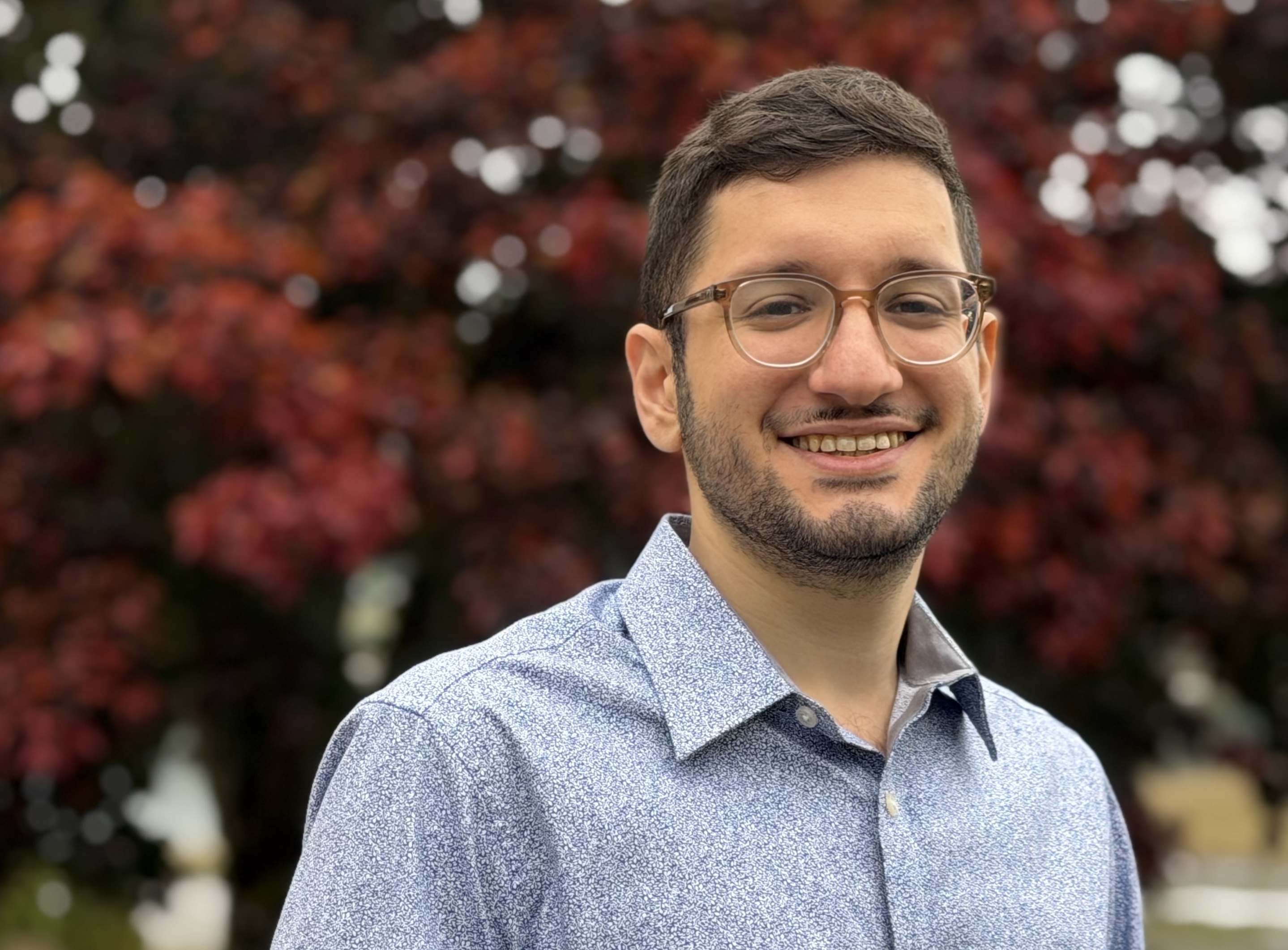
Malek Itani, a doctoral candidate at the University of Washington and co-founder of acoustic artificial intelligence startup Hearvana, has been named a recipient of the Marconi Society Paul Baran Young Scholar Award for his innovations in low-power hearing technology.
Selected as one of three international recipients from the largest candidate pool in the award's history, Itani was recognized for designing on-device machine learning algorithms capable of real-time target speech extraction, localized sound zoning, and semantic hearing on low-power hardware, including smart glasses, hearing aids, and wireless earbuds.
The recognition comes after Itani co-founded Hearvana alongside Shyam Gollakota, a professor at the UW Paul G. Allen School of Computer Science & Engineering, to bring their academic advances to the commercial market. As first reported by GeekWire, the university spinout raised $6 million in pre-seed venture capital funding last autumn to commercialize its edge-based acoustic platform.
Rather than relying on traditional active noise cancellation techniques, Hearvana's framework embeds miniature neural networks directly onto low-power silicon processors. The architecture provides users with selective audio filtering—such as damping ambient urban sound, boosting a specific speaker's voice within a noisy crowd, or creating customized sound perimeters—without needing external cloud compute power or excessively draining device battery life.
Itani's initial work inside the UW Mobile Intelligence Lab centered on acoustic swarms, utilizing self-deploying micro-robotic microphones to identify and segregate discrete speakers within shared environments. He later redirected that research toward personal audio hardware, developing edge architectures such as IF-MLPNet and the NeuralAids platform to execute complex voice separation models locally on energy-constrained wireless microcontrollers.
In statements provided to the Allen School Blog, Gollakota highlighted Itani's influence on the sector, noting that despite beginning his graduate studies with a focus on radio frequency and backscatter systems, the researcher quickly adapted to signal processing and deep neural network design to drive major advancements in spatial hearing.
Reflecting on the commercial trajectory of his laboratory work, Itani indicated that localized, semantic audio processing represents a foundational transition for personal electronics, with the technology ultimately intended for integration across billions of connected consumer units.
Itani and the remaining Marconi Society Young Scholar honorees are scheduled to receive their formal awards during the annual Marconi Awards Gala, taking place in San Francisco this November.
Sources
Written by
The Company Wire
Inside the companies building what’s next. Reporting on startups, technology, funding and the people shaping them.


