NewLimit Raises $435 Million to Advance Cellular Reprogramming Medicines
The longevity biotechnology company plans to move its first liver program toward human testing while expanding its discovery platform.
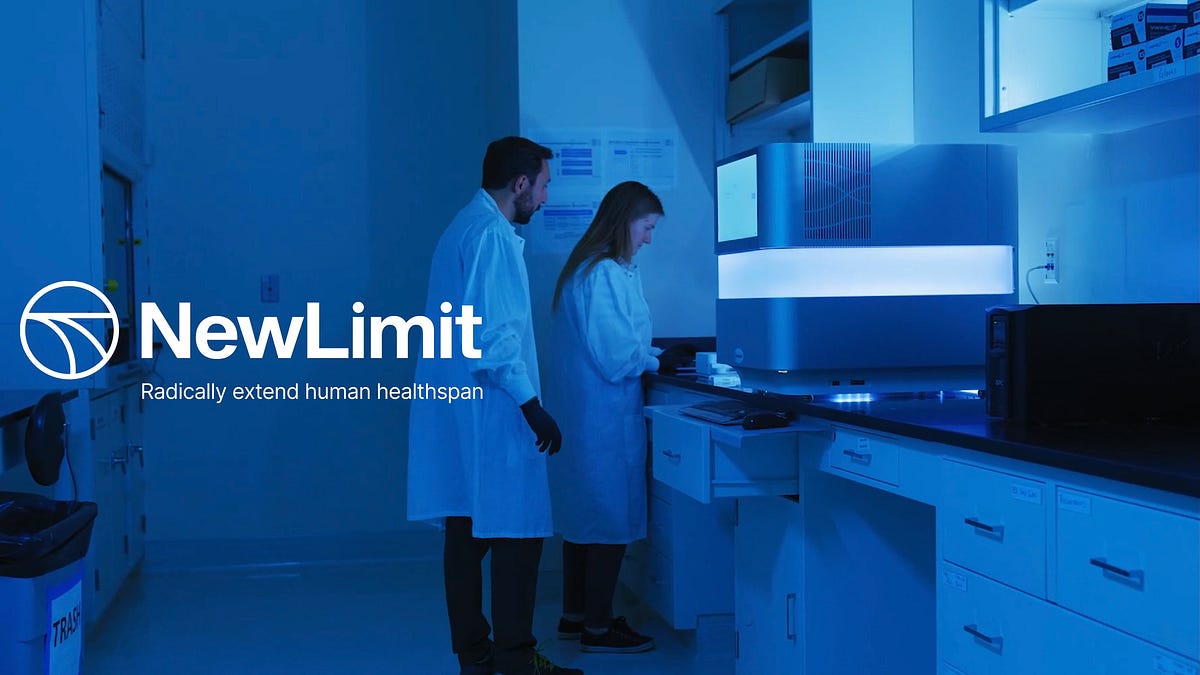
SOUTH SAN FRANCISCO, Calif. - NewLimit has raised $435 million in Series C financing to develop medicines that use epigenetic reprogramming to restore functions lost as cells age. The substantial capital infusion, led by Founders Fund, marks a significant milestone for the longevity biotechnology sector, which has seen heightened interest from venture capital groups aiming to address the fundamental biological drivers of age-related decline. Joining the lead investor in this round were Thrive Capital, Greenoaks, and Quiet Capital, alongside several returning investors who have signaled continued confidence in the company's long-term technical roadmap.
The South San Francisco company studies how gene regulation changes over time and uses machine learning with laboratory experiments to identify interventions that can reverse these shifts. Unlike traditional genetic engineering that might involve permanent edits to the genome, NewLimit’s approach focuses on the epigenome—the chemical markers that dictate which genes are turned on or off. By targeting this layer of cellular control, the company seeks to essentially reboot the operational software of a cell, returning it to a more functional, youthful state while maintaining its specialized identity.
Its first program is focused on the liver, where it aims to improve the performance of aged cells without changing their underlying DNA sequence. The liver was selected as an initial target due to its regenerative capacity and the well-documented ways in which metabolic and immune functions degrade in the organ as patients age. The goal is to develop a therapeutic that can be delivered to the liver to restore specific youthful expression patterns, potentially mitigating the onset of chronic conditions that currently lack effective regenerative treatments.
The financing is intended to support preclinical work and preparations for a first human study planned for next year. This timeline places NewLimit at the forefront of a highly competitive field, as the transition from laboratory bench to bedside is often the most precarious phase for biotechnology startups. Moving into human trials requires not only a validated therapeutic candidate but also a rigorous demonstration of safety and a clear pathway for administration that meets stringent regulatory standards.
NewLimit is also building a broader discovery engine that could generate programs for additional tissues beyond the liver. By leveraging large-scale datasets and automated laboratory workflows, the company intends to map the epigenetic landscapes of various organ systems including the immune system and the cardiovascular environment. This platform-centric strategy is designed to create a pipeline of candidates, allowing the company to pivot or expand its therapeutic reach as different biological insights emerge from its screening process.
Investors are backing a platform with potentially wide applications rather than a single drug candidate, a trend increasingly common in high-stakes biotech ventures. The diversity of the cap table, featuring both technology-focused firms and traditional life science backers, suggests a belief that the intersection of computational biology and regenerative medicine is reaching a point of commercial viability. By funding a discovery engine, these investors are essentially betting that the underlying methodology for reprogramming can be generalized across the human body.
Reprogramming biology carries significant uncertainty, particularly regarding the precision required to avoid unintended consequences. One of the primary risks in cellular rejuvenation is the potential for oncogenesis; if a cell is reprogrammed too aggressively or incompletely, it may lose its functional constraints and begin to divide uncontrollably. NewLimit's challenge lies in managing this delicate balance, ensuring that treated cells gain the benefits of a more youthful profile without reverting to a pluripotent state that could lead to tumor formation.
Changes must be precise enough to improve cell function without causing uncontrolled growth or other harmful effects. The technical barriers are formidable, as the epigenome is incredibly complex and varies across different cell types and individuals. To succeed, the company’s machine learning models must accurately predict how a specific intervention will interact with the multi-dimensional regulatory networks of a living organism, rather than just isolated cells in a petri dish.
The company will need strong animal data, scalable manufacturing, and regulatory agreement before testing whether laboratory findings translate safely to people. Documenting efficacy in non-human primates or other sophisticated models will be a prerequisite for filing an Investigational New Drug application. Furthermore, the ability to manufacture these advanced medicines at a scale sufficient for clinical trials—and eventually commercial distribution—remains a hurdle for the entire field of epigenetic therapy.
The large round gives NewLimit time to pursue those milestones and absorb setbacks common in early biotechnology. Developing new therapeutic modalities rarely follows a linear path, and the $435 million buffer provides the necessary runway to iterate on laboratory findings and refine delivery mechanisms. In a market where early-stage biotech funding can be volatile, this level of capitalization allows the management team to focus on long-term scientific objectives rather than immediate fundraising needs.
Its reported $3.1 billion valuation reflects high expectations for the platform and the potential for a paradigm shift in how age-related diseases are treated. Such a valuation places NewLimit among the most valuable private companies in the longevity space, drawing comparisons to other heavily funded ventures like Altos Labs. However, the premium valuation also increases the pressure on the company to deliver unambiguous results during its upcoming clinical phases, as the market for longevity medicine is heavily scrutinized by both scientists and regulators.
The next value-creating step will not be another financing, but credible clinical evidence that cellular age can be modified in a medically useful way. While the Series C provides the resources to reach the clinic, the ultimate success of the venture will be judged by whether the liver program can demonstrate a statistically significant improvement in patient outcomes. Analysts have noted that the coming twenty-four months will be a defining period for the company as it attempts to bridge the gap between computational theory and human biology.
As NewLimit moves toward its 2025 goal for human testing, the biotechnology industry will be watching for signs that the epigenetic approach is both safe and durable. The promise of reprogramming remains one of the most ambitious frontiers in medicine, offering a potential alternative to the management of chronic disease by addressing the root cause of cellular degradation. For now, the successful closing of the $435 million round ensures that one of the sector's most prominent players has the means to test that promise in the most rigorous setting possible.
Sources
Written by
The Company Wire
Inside the companies building what’s next. Reporting on startups, technology, funding and the people shaping them.