Osteoboost Health Raises $8 Million to Expand Its Bone Health Wearable
The Redwood City company will scale access to an FDA-cleared prescription belt designed for people with low bone density.
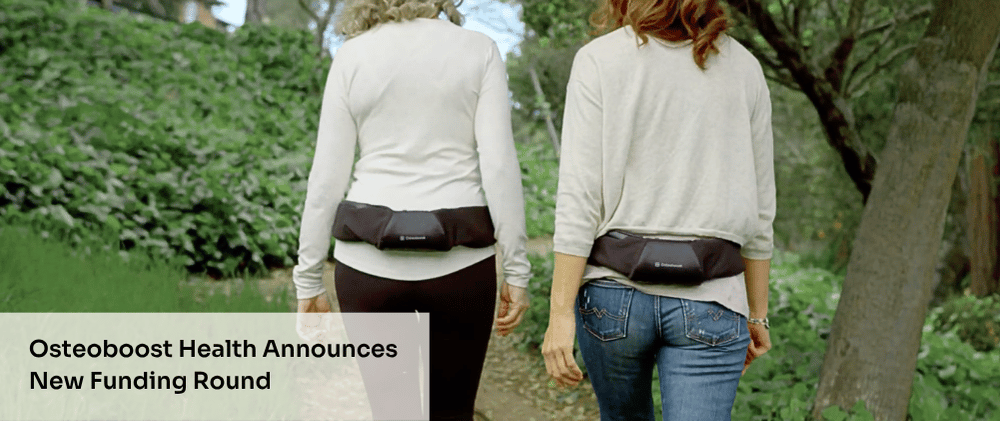
REDWOOD CITY, Calif. - Osteoboost Health has secured $8 million in its latest financing round, intended to widen the market reach of its prescription wearable device targeting osteopenia. The investment was led by Ambit Health, with participation from a syndicate of investors including Emmeline Ventures, the Disrupt Health Impact Fund, and additional backers. Based in Redwood City, the company intends to deploy the fresh capital toward scaling its manufacturing capabilities, funding further clinical research, and driving commercial growth across the United States. The funding follows a significant regulatory milestone for the startup and positions it to enter a competitive but underserved segment of the digital health and medical hardware markets.
The core of the company’s offering is a Class II medical device cleared by the U.S. Food and Drug Administration. The wearable is designed to be worn around the hips, where it delivers calibrated mechanical stimulation directly to the pelvic region. This localized vibration is intended to support and maintain bone strength in the spine and hips, the two areas most susceptible to the long-term effects of bone density loss. By targeting these specific skeletal regions, the device aims to provide a mechanical intervention that addresses the physical degradation associated with aging and hormonal shifts in specific patient populations.
Osteoboost is specifically prescribed for postmenopausal women who have been diagnosed with low bone density, a condition often referred to as osteopenia. This demographic represents a critical focus for healthcare providers, as postmenopausal women face a significantly increased risk of progressing to osteoporosis and suffering debilitating fractures. In the current healthcare landscape, the transition from healthy bone density to a clinical diagnosis of osteoporosis often occurs over many years, creating a window for intervention where non-pharmacological options may play a significant role in patient management.
Industry analysts note that the device arrives at a time when the medical technology sector is increasingly focused on chronic condition management through non-invasive means. While medication remains a cornerstone of bone health, the Osteoboost device is designed to complement existing clinical care rather than replace primary interventions such as professional diagnosis, weight-bearing exercise, nutrition, or prescribed medication. By providing a mechanical alternative, the company offers a bridge for patients who may be seeking diverse ways to manage their bone health alongside traditional medical advice.
One of the primary value propositions of the wearable is its role during the prolonged period when a patient’s bone loss is being actively monitored by a clinician. Many patients find themselves in a clinical gray area where they have begun to lose bone density but have not yet reached the threshold for intensive drug therapy. A wearable device may give these patients another viable option during this monitoring phase, particularly for individuals who cannot tolerate the side effects of certain medications or those who are not yet ready to commit to long-term drug regimens.
The success of Osteoboost’s commercial strategy will hinge largely on physician adoption and the broader integration of the device into standard orthopedic and gynecological workflows. Because the device is available only by prescription, the company must convince healthcare providers of the clinical utility and ease of implementation within a busy practice. Furthermore, the company faces the significant challenge of securing insurance coverage and reimbursement, which remains a high hurdle for new medical hardware that does not fit neatly into traditional billing codes for pharmaceutical or surgical interventions.
Beyond the initial regulatory clearance, the company must also address the issue of patient adherence. For any wearable device to show efficacy in a real-world setting, patients must use the equipment consistently and according to the prescribed schedule. In the bone health space, where changes in hardware-driven density are often slow to manifest, maintaining high levels of user engagement is a known difficulty. The Redwood City team will likely need to leverage data and perhaps digital coaching platforms to ensure that the $8 million in new capital translates into measurable health improvements for its user base.
While the FDA clearance establishes that the product has met the necessary regulatory pathways for its intended use, most industry experts agree that commercial success requires more than just a government stamp of approval. Osteoboost must continue building a body of evidence regarding long-term patient outcomes to satisfy the demands of both cautious clinicians and skeptical payers. Demonstrating that the device can reliably slow the progression of bone loss over several years will be essential for the company to move beyond the early-adopter phase and into the medical mainstream.
Economically, the company must also find a way to make the device work for health plans that are increasingly focused on cost-effectiveness. In an era of value-based care, medical device manufacturers are under pressure to prove that their interventions reduce the total cost of care by preventing more expensive events, such as hip fractures or hospitalizations. The new funding gives Osteoboost the runway to conduct the health economic studies necessary to make this case to major insurers, although these studies often take years to yield definitive results.
Patients and consumers are advised to approach new medical technologies with a balanced perspective. While the data supporting mechanical stimulation is growing, the company emphasizes that users should discuss any bone-health treatment with a qualified clinician before changing their existing routines. The integration of a device like Osteoboost into a health plan should be seen as one component of a holistic approach to skeletal health, which includes regular screenings, proper calcium and vitamin D intake, and lifestyle modifications.
The new injection of capital will specifically allow Osteoboost to increase its production capacity to meet expected demand as it expands its sales force. Reaching more prescribers is a tactical priority, as the company seeks to build a network of advocates within the medical community. This expansion comes at a time when other digital health companies are struggling to secure late-stage funding, suggesting that investors see specific value in FDA-cleared hardware that addresses a clear and widespread clinical need.
As the company moves from being a developer of a novel device to a provider of routine care, the most meaningful milestones to watch will be durable use and broader reimbursement. If Osteoboost can secure favorable coverage from major national insurers, it would significantly lower the barrier to entry for the millions of women who currently fall into the osteopenia category. This would also validate the investment from Ambit Health and its partners, demonstrating that there is a sustainable market for specialized bone health wearables.
Ultimately, the company’s trajectory will be defined by its ability to provide clear evidence that its treatment changed outcomes for patients at risk. The medical technology market is littered with cleared devices that failed to achieve commercial scale due to a lack of long-term data or poor integration into the patient’s life. Osteoboost’s $8 million round serves as a vote of confidence in its potential to overcome these hurdles, providing the resources necessary to transition from a startup with a promising tool to a standard player in the bone health ecosystem.
In the coming months, the Redwood City firm is expected to report on its progress regarding physician outreach and any new clinical data that surfaces from ongoing studies. For now, the focus remains on execution: scaling manufacturing without compromising quality and ensuring that the first wave of prescription users has a seamless experience. As the population continues to age, the demand for non-invasive bone health solutions is only likely to grow, placing Osteoboost at the center of a significant public health conversation.
Sources
Written by
The Company Wire
Inside the companies building what’s next. Reporting on startups, technology, funding and the people shaping them.

.png)