Baidu Revenue Drops for Fifth Straight Quarter as Advertising Decline Outpaces AI Growth
Surging demand for GPU cloud infrastructure failed to offset a 19 percent slump in search advertising, sending shares lower following missing market estimates.
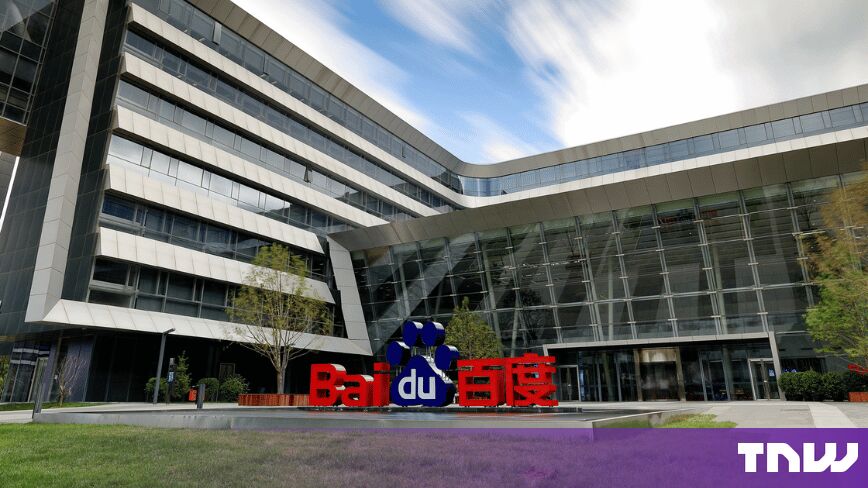
Chinese technology platform Baidu reported a fifth consecutive quarter of declining top-line results on Tuesday, as contractions in its core digital advertising unit continued to outpace expansion across its enterprise artificial intelligence division. Total revenue for the second quarter fell 4 percent year-over-year and 2 percent sequentially to RMB 31.3 billion ($4.62 billion), according to financial data reported by The Next Web.
Net income attributable to the company plunged to RMB 2.3 billion ($342 million) from RMB 7.3 billion during the same period last year, marking a 68 percent drop highlighted by Bloomberg. The earnings miss prompted selling pressure in US trading, where Baidu shares tumbled up to 10 percent to $93.70 per share. Revenue landed below Wall Street expectations, coming in under both the Bloomberg analyst consensus of RMB 31.6 billion and the LSEG estimate of RMB 31.96 billion cited by Reuters.
Baidu's legacy online marketing division delivered RMB 13.1 billion in revenue, representing a 19 percent drop year-over-year. Analysts attributed the marketing downturn to sustained economic headwinds in domestic property markets alongside cautious corporate advertising budgets. Countering that contraction, Baidu's Core AI-powered Business generated RMB 12.5 billion, representing a 25 percent increase to reach half of overall core revenue. Within that segment, AI Cloud Infrastructure rose 50 percent to RMB 7.3 billion, while revenue from its rebranded GPU Cloud rental service jumped 283 percent as enterprise clients sought public cloud AI accelerators.
To maintain its position against domestic artificial intelligence competitors, Baidu significantly raised infrastructure spending. Capital expenditures excluding video streaming unit iQIYI tripled during the quarter to RMB 11.4 billion, up from RMB 3.78 billion a year earlier. The spending surge comes amid heightened market pressure on Baidu's proprietary Ernie large language model, which Reuters noted has gone months without a major technical update while competing models like Moonshot AI's Kimi and Alibaba's Qwen gain ground. Chief executive Robin Li defended the strategy on an analyst call, stating, "In a market like this, we believe long-term competitiveness ultimately comes down to sustained technology investment, application-driven approach, and patience."
Despite margin pressure from capital investments, Baidu closed the quarter with RMB 283.1 billion ($41.72 billion) in cash, cash equivalents, and short-term investments, alongside RMB 3.4 billion in positive operating cash flow. Chief financial officer Haijian He highlighted that cash generation remained stable while pointing to the Baidu App's 644 million monthly active users in June as an distribution base for commercial AI software. On the corporate structure front, Baidu confirmed plans to complete a dual-primary listing in Hong Kong before year-end and announced it is proceeding with a spinoff and separate Hong Kong IPO for its custom chip division, Kunlunxin.
The company also cited operational growth within its Apollo Go autonomous vehicle business, which expanded to 28 cities and completed over 350 million total autonomous test kilometers. Abroad, Apollo Go initiated open-road testing in London alongside ride-hailing partners Uber and Lyft, launched commercial driverless operations in Dubai, and secured driverless trial permits in Hong Kong following a temporary regulatory pause in Wuhan earlier this spring. Nevertheless, Bloomberg Intelligence analyst Robert Lea cautioned that Baidu's long-term enterprise value hinges on converting unprofitably scaling AI units into sustained margin expansion against larger domestic cloud competitors.
Sources
Written by
The Company Wire
Inside the companies building what’s next. Reporting on startups, technology, funding and the people shaping them.


