Unitree Stock Slumps 45% From Peak After Shanghai IPO, Erasing $30 Billion in Valuation
A post-debut drop in the Chinese humanoid robot maker's shares has sparked fierce debates over listing regulations, valuation bubbles, and retail investor protections.
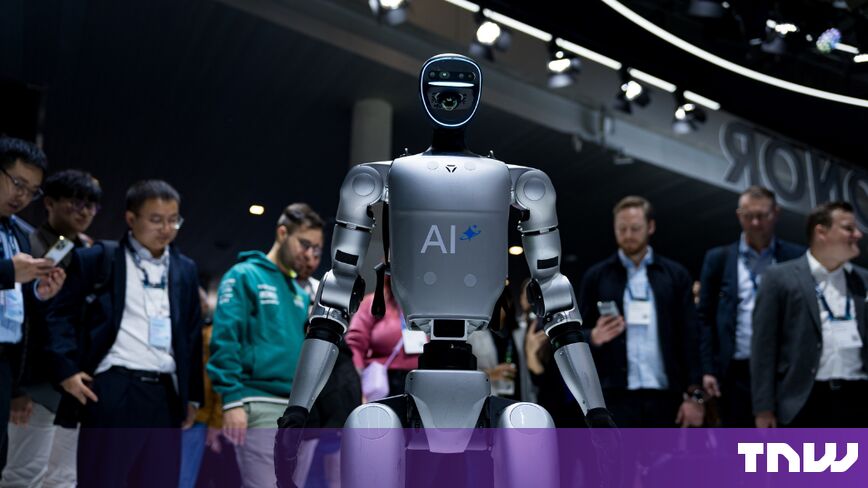
Shares of Chinese humanoid robotics manufacturer Unitree have fallen approximately 45 percent from the all-time peak recorded on their Shanghai trading debut, according to reporting by The Next Web referencing data from Reuters. The Hangzhou-based company saw its intraday market capitalization reach $66 billion before a three-day market slide erased around $30 billion in market valuation.
Unitree went public on Shanghai's STAR Market on Aug. 19 at an offering price of 150.8 yuan per share, establishing an initial market value near $9 billion. Driven by intense trading activity, the equity ended its first session up 460 percent, surpassing the 226 percent average first-day surge recorded by Chinese initial public offerings over the preceding three years. Prior to the float, financial analysts had projected the robotics maker's value at roughly $7 billion or more. Financial disclosures in the firm's prospectus revealed that adjusted net profit for the first quarter of 2026 declined 53 percent year-over-year to 40 million yuan, or approximately $5.95 million.
The severe gap between the initial offer price and peak trading levels led financial observers to question the market's pricing mechanics. Dong Baozhen, chairman of Beijing-based asset management firm Lingtong Shengtai, told Reuters that the opening market valuation was inflated by investor excitement surrounding technological innovation. Domestic exchanges in China maintain strict oversight over IPO pricing, which analysts say can restrict underwriters from aligning offer rates with spot demand. Furthermore, tight regulations on short-selling prevent institutional traders from taking immediate counter-positions against inflated equity valuations.
Retail enthusiasm for the listing reached historic levels, with small-scale investors oversubscribing the public offering by more than 8,000 times—a record for the STAR Market—yielding an allocation rate of about 0.018 percent. This scarcity forced the vast majority of retail buyers to acquire shares after public trading opened. Abraham Zhang, chairman of venture firm China Europe Capital, stated that institutional loopholes permitted major shareholders to capitalize on inflated prices at the expense of secondary market participants. Trinity Synergy Investments hedge fund manager Yuan Yuwei similarly criticized the dynamics, citing short-selling restrictions as a primary driver of speculative spikes and subsequent multi-year declines.
Despite the stock drop, some market participants cautioned against viewing the slide as a fundamental rejection of the humanoid robotics industry. Gao Xingkun, a fund manager at China Southern Asset Management, argued during an online presentation that evaluating early-stage hardware developers strictly on short-term earnings misreads the sector, comparing the current development phase to the early years of China's electric vehicle market. Unitree founder Wang Xingxing, who retains roughly a one-third stake in the business, recently stated that the field is nearing a transformative 'ChatGPT moment' as commercialization efforts advance.
Unitree's public listing reflects broader supply constraints within Chinese equity markets. Regulatory scrutiny limited Shanghai to 21 public debuts through the first seven months of the year, compared to 104 in Hong Kong, fueling aggressive investor interest when new tech issues arrive. Memory chip manufacturer CXMT experienced a similar 466 percent debut surge on the Shanghai exchange last month. Backed by prominent investors including Tencent, Alibaba, and artificial intelligence developer DeepSeek, Unitree competes against global entities such as Tesla and Hyundai Motor Group's Boston Dynamics.
The sharp price movements come as several domestic robotics competitors prepare for their own public offerings in China, using Unitree's market reception as a benchmark. Meanwhile, the enterprise contrast remains sharp with European robotics builders like UMA, an early-stage startup launched by a former Tesla Optimus engineer, operating with significantly lower capital pools. Market commentators noted that while rapid listing swings create short-term capital drama, they provide little clarity regarding sustained commercial demand for humanoid robotics products.
Sources
Written by
The Company Wire
Inside the companies building what’s next. Reporting on startups, technology, funding and the people shaping them.


