Google Launches $1,899 Pixel 11 Pro Fold With Qi2 Charging and Updated Silicon
The search giant's latest flagship foldable brings IP68 dust resistance and Tensor G6 processing, but carries a $100 price increase over last year's model.

Google has launched the Pixel 11 Pro Fold, its latest flagship foldable smartphone, bringing minor design refinements, updated processing hardware, and elevated artificial intelligence capabilities alongside a $100 price increase over its predecessor to $1,899, according to testing and analysis by Wired. The updated handset introduces an IP68 dust and water resistance rating alongside 25-watt Qi2 magnetic wireless charging, marking notable technical milestones in a folding device segment where hardware durability and charging standards frequently trail traditional slate smartphones.
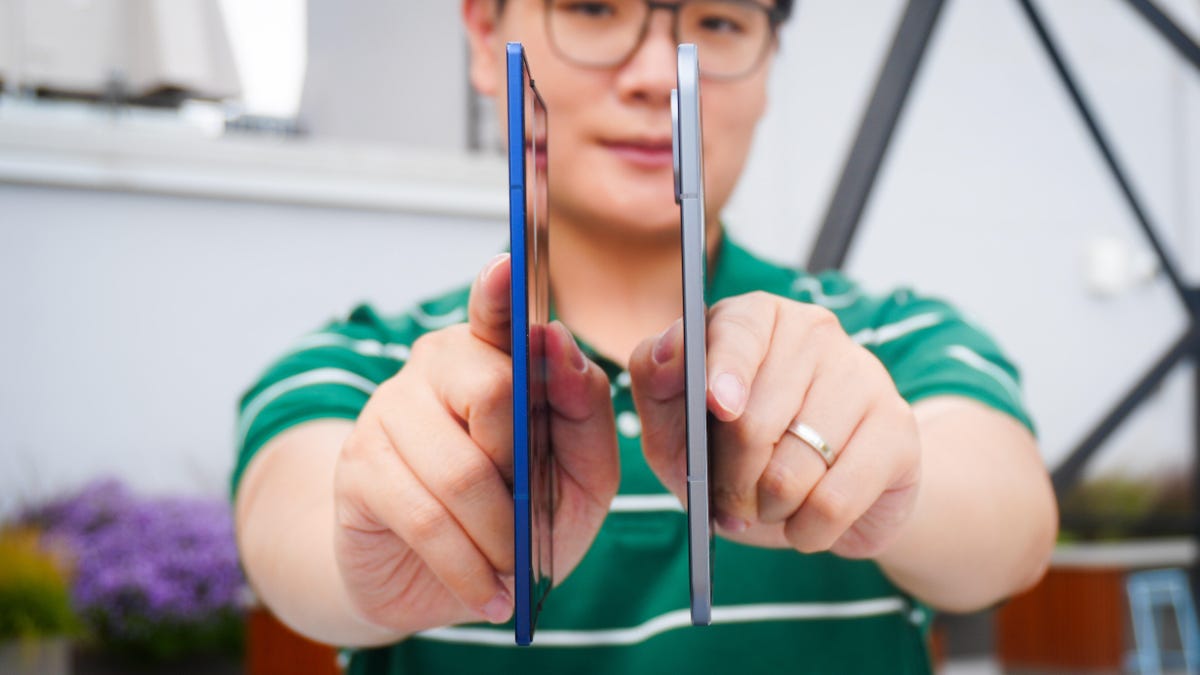
The physical chassis of the Pixel 11 Pro Fold underwent modest physical trim, shedding 19 grams and a fraction of a millimeter in thickness compared to the Pixel 10 Pro Fold, Wired reported. Despite these adjustments, the device weighs 239 grams and measures 10.1 millimeters thick when folded, maintaining a heavier profile than direct market rivals. For comparison, Samsung’s Galaxy Z Fold8 weighs 201 grams at 9.7 millimeters, the Fold8 Ultra weighs 215 grams at 8.9 millimeters, and Honor’s international Magic V6 weighs 219 grams at 8.75 millimeters. However, Google’s horizontal rear camera housing helps minimize device rocking when laid flat on surfaces.
Constructed with a matte-textured glass back in either Obsidian or Olive Green, the foldable features two high-brightness OLED displays capable of reaching 3,600 nits peak brightness with variable refresh rates up to 120Hz. These include a 6.5-inch cover display and an 8-inch unfolding internal main display, though a visible crease remains along the screen hinge. The device achieves a complete IP68 ingress protection rating, outperforming Samsung’s IP48-rated foldables by offering full dust resistance alongside shallow water submersion protection. Biometric authentication relies on a power-button fingerprint reader alongside a ambient-light-dependent facial recognition system.
Underneath the exterior, the Pixel 11 Pro Fold incorporates Google’s new Tensor G6 processor, paired with 16 gigabytes of RAM across storage tiers of 256 gigabytes, 512 gigabytes, and 1 terabyte. Despite the updated silicon, real-world testing by Wired revealed occasional software freezes, particularly when using split-screen multitasking in Gmail or unfolding the internal display after opening an app on the cover screen. Additionally, non-optimized applications frequently required restarts to scale properly across the inner display's aspect ratio, while frame rate drops occurred during graphically intensive titles such as Wuthering Waves and Genshin Impact.
Due to interior structural limits in foldable frames, Google equipped the Fold with camera specifications closer to the entry-level $899 Pixel 11 rather than its flagship Pro siblings. The camera array features a 48-megapixel main sensor, a 10.8-megapixel telephoto lens offering 5X optical and 30X digital zoom, a 10.5-megapixel ultrawide sensor with macro functionality, and two 10-megapixel selfie cameras. The setup omits the 50-megapixel main sensor, 48-megapixel ultrawide, 48-megapixel telephoto, and 42-megapixel front camera found on the $1,099 Pixel 11 Pro and $1,299 Pro XL. Hardware features include HiLight, a set of colored LEDs inside the flash module that display custom ambient notifications for incoming calls and Gemini AI activity.
To achieve its slimmer profile, Google reduced the internal battery capacity to 4,806 milliamp-hours, down from the 5,015 milliamp-hour battery in last year's model. Google estimates the device provides roughly 24 hours of standard operation, compared to over 30 hours on non-folding Pixel 11 models. In battery drain tests conducted by Wired, continuous video streaming consumed 6 percent of total charge per hour, while casual gaming utilized 9 percent. Power options include 30-watt wired charging and 25-watt Qi2 magnetic wireless charging, utilizing built-in magnets for pad alignment.
Software integration remains a core differentiator for Google's mobile platform, driven by deeper Gemini artificial intelligence features and platform exclusives. The Pixel 11 Pro Fold includes Rambler, a conversational voice-to-text drafting tool previously detailed by Wired reporter Julian Chokkattu, as well as contextual AI overviews that suggest direct calendar events within messaging threads. Camera software adds customizable photo styles via Camera Looks, hands-free clip recording using Magic Capture, and a creator teleprompter mode. The multitasking interface also adds Bubbles, allowing users to keep floating chat head icons active over split-screen applications.
Priced at $1,899 without an increase in base storage, the Pixel 11 Pro Fold enters an increasingly competitive ultra-premium foldable market. The phone competes directly against Samsung's Galaxy Z Fold8 at $1,900 and Galaxy Z Fold8 Ultra at $2,100, as well as international options like the $2,100 Honor Magic V6. With persistent industry expectations surrounding a potential folding iPhone from Apple, Google’s latest hardware release highlights the ongoing balancing act technology companies face between high price points, complex engineering, and software features in foldable devices.
Sources
Written by
The Company Wire
Inside the companies building what’s next. Reporting on startups, technology, funding and the people shaping them.