Apple Configures MacBook Pro Past $14,500 as AI Memory Crunch Hits Premium Hardware
High-capacity flash storage and unified memory now account for more than 60 percent of the laptop's top-tier pricing.
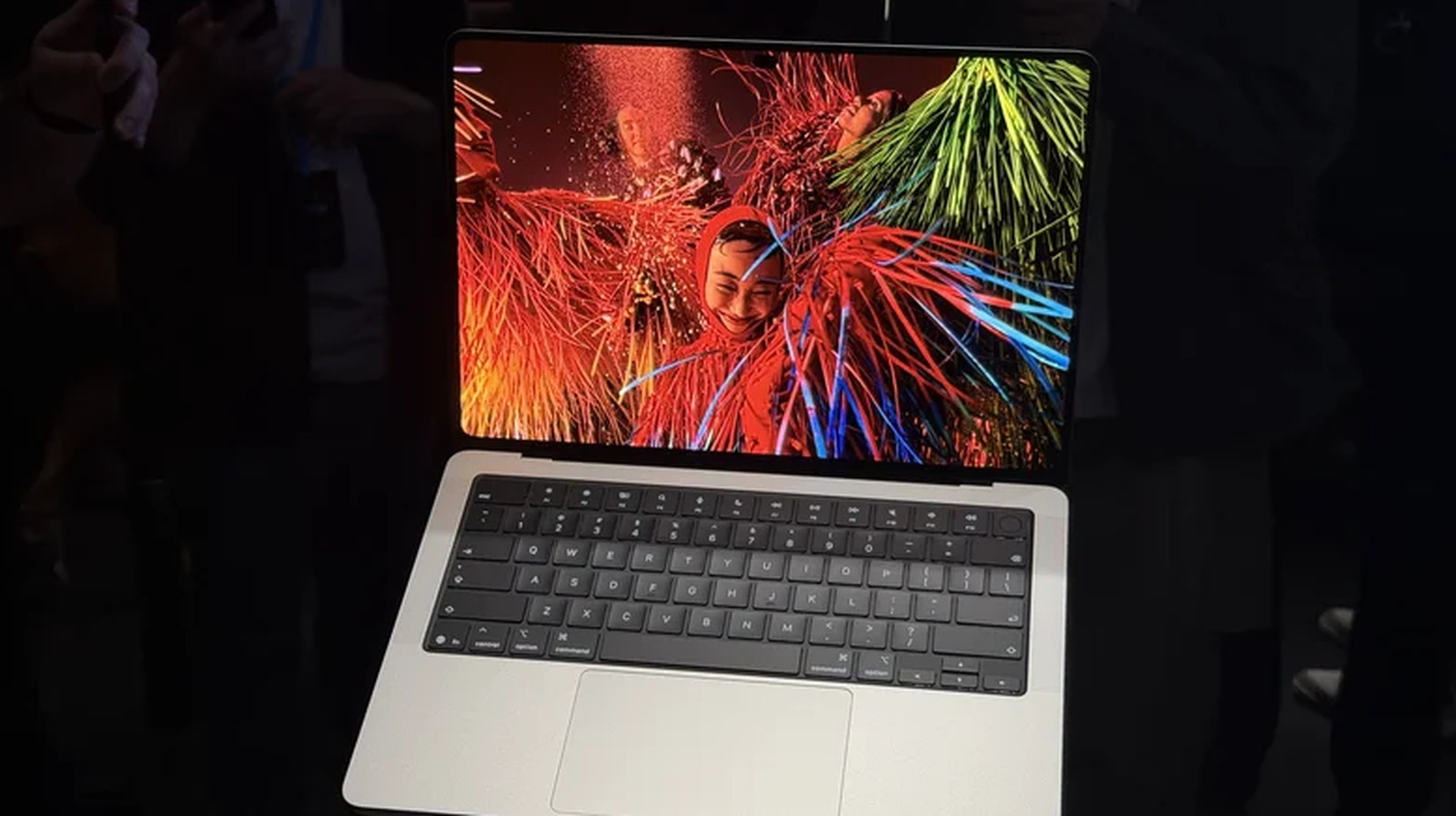
Apple's top-of-the-line MacBook Pro now reaches $14,549 on the company's online store, driven almost entirely by steep surcharges for onboard unified memory and solid-state storage rather than the newly introduced touchscreen display.
The pricing breakdown, reported by Engadget (https://www.engadget.com/2308988/apple-macbook-pro-proled-tops-out-at-15000/), illustrates how sharp component price increases across the semiconductor supply chain are squeezing the upper tier of commercial hardware. Memory and storage upgrades account for $9,000—roughly 62 percent—of the total purchase price for a fully specified 16-inch model featuring Apple's PROLED XDR Display.
The baseline for the top-tier configuration begins with Apple's M5 Max processor, equipped with an 18-core CPU, a 40-core GPU, 48GB of unified memory, and a 2TB solid-state drive at $5,399. From there, Apple charges $1,000 to expand internal storage to 4TB, $3,000 to reach 8TB, and $7,000 to max out the machine at 16TB. Moving the unified memory from 48GB to 128GB adds another $2,000, while upgrading to anti-reflective nano-texture glass adds $150.
The 16TB tier marks the largest internal drive Apple has ever offered in a laptop, doubling the previous 8TB ceiling established when the initial M5 Max models launched in March. Memory expansion remains tied directly to silicon tiers: customers seeking 128GB of RAM must purchase the top 40-core GPU edition of the M5 Max, as the 32-core variant is restricted to 36GB and the M5 Pro caps out at 64GB.
The redesigned PROLED XDR Display contributes relatively little to the price increase. When configured to match the maximum specifications of the continuing non-touch 16-inch MacBook Pro, the touchscreen model costs $10,549, representing a $400 markup over the non-touch version's $10,149 sticker price.
Instead, the escalating figures reflect sustained inflation across DRAM and NAND flash markets. In March 2026, a maxed-out 16-inch MacBook Pro with an M5 Max chip, 128GB of RAM, and an 8TB drive carried a retail price of $7,349. By late June, Apple raised that exact build to $10,149, pointing to surging enterprise demand from artificial intelligence data centers competing for memory capacity. Apple noted at the time that it had absorbed rising component costs as long as feasible before adjusting customer prices.
Industry data corroborates that pressure. Market research firm Counterpoint tracked a 50 percent quarter-over-quarter jump in mobile DRAM prices and an increase of more than 90 percent in NAND flash costs during the first quarter of 2026 alone.
Apple is pitching the high-memory systems at enterprise engineers, 3D artists, and developers executing large language models directly on device. The M5 Max provides 614GB/s of memory bandwidth, sharing memory dynamically between CPU and GPU cores so that large local AI models can reside in unified RAM without offloading to cloud clusters.
The smaller 14-inch MacBook Pro tops out at $14,249 when maxed out with identical silicon, memory, and storage, while the entry threshold to secure 16TB of internal capacity currently sits at $11,499 on a 14-inch model with 36GB of unified memory.
Sources
Written by
The Company Wire
Inside the companies building what’s next. Reporting on startups, technology, funding and the people shaping them.