HP’s EliteBoard G1a Keyboard PC Faces Performance and Pricing Hurdles in Initial Independent Tests
Independent lab testing of HP’s all-in-one keyboard computer highlights robust spill resistance and easy maintenance alongside thermal constraints and steep configuration costs.
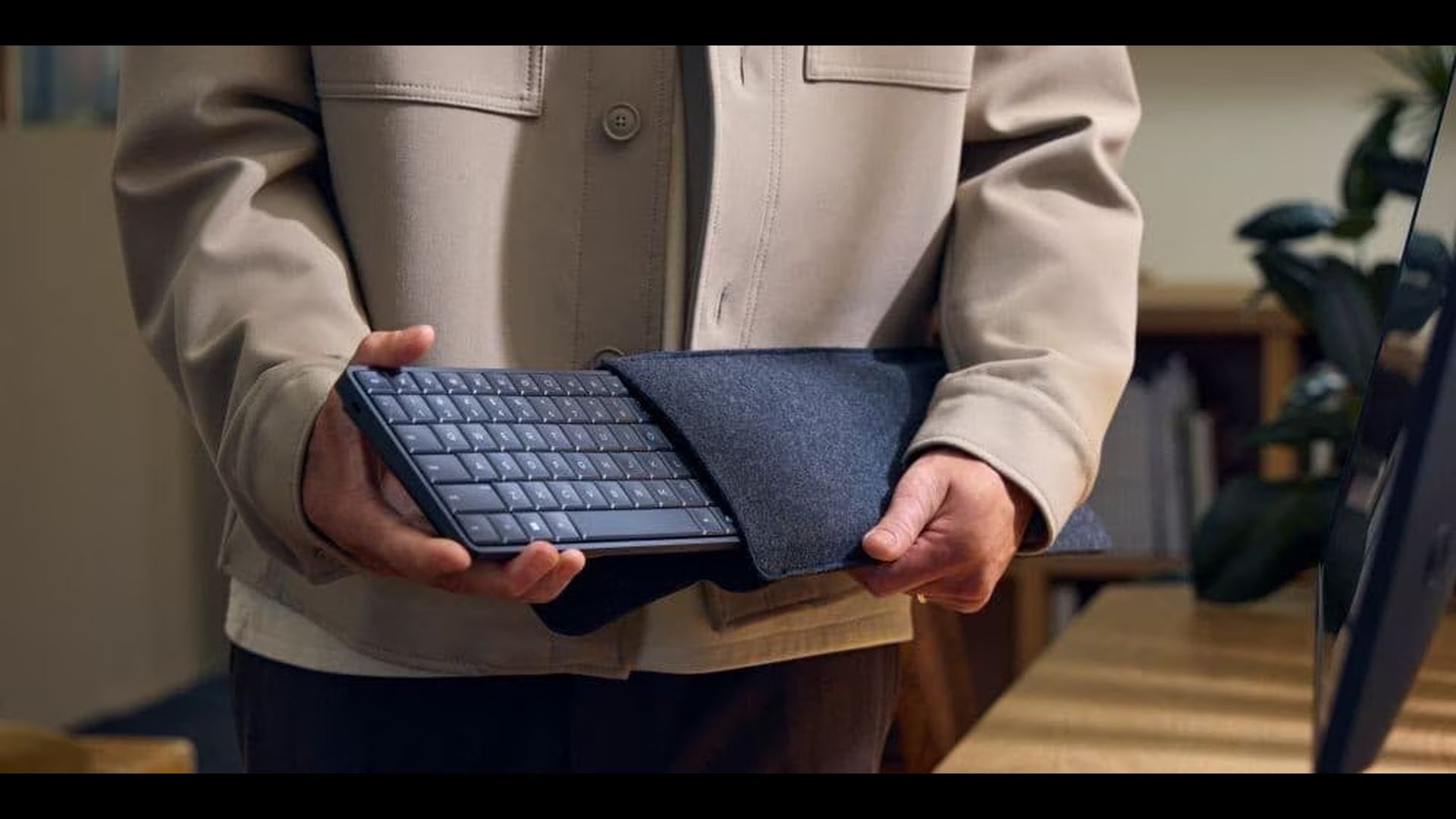
HP’s EliteBoard G1a, a compact Windows personal computer built directly inside a full-sized keyboard chassis, has undergone independent hardware testing by German publication ComputerBase, as reported by TechRadar Pro. First showcased at CES 2026, the device earned praise for solid build quality, liquid spill resistance, and simple maintenance. However, lab results indicate that thermal power limits, single-channel memory configurations, and steep enterprise pricing present notable trade-offs for commercial deployments.
The tested unit is powered by AMD’s Ryzen AI 7 PRO 350 processor—a Kraken Point silicon design featuring four Zen 5 cores, four Zen 5c cores, integrated Radeon 860M graphics, and an NPU rated at 50 TOPS. The test machine paired the processor with a single 32GB DDR5-5600 SO-DIMM module and a 1TB PCIe 4.0 SSD. Measuring 358 by 119 by 18 millimeters and weighing 670 grams, the chassis houses two rear USB-C ports (one USB4 port with DisplayPort 2.1b and one 10Gbps port), Wi-Fi 7, Bluetooth 6.0, stereo speakers, and dual microphones.
Designed for enterprise and field environments, the EliteBoard G1a meets MIL-STD-810 standards and validated HP's claims of spill resistance and easy cleaning during testing. HP indicates that the top keyboard module can be swapped out in under 10 minutes, and teardowns confirmed that the bottom panel detaches quickly to provide direct access to the RAM, SSD, and Wi-Fi card. The system omits a built-in touchpad, shipping instead with an HP 675M wireless mouse. The port selection means users connecting to HDMI monitors, wired Ethernet, or legacy USB-A peripherals must budget for an external USB-C hub.
Benchmarks revealed several performance trade-offs inherent to the compact form factor. Because the unit ships with a single SO-DIMM installed, the APU operates in single-channel memory mode. To maintain comfortable key surface temperatures, AMD’s Skin Temperature Aware Power Management (STAPM) caps package power at roughly 75% of its target (around 25W) following an initial burst above 50W. Consequently, the EliteBoard G1a achieved a multi-core score of 794 in Cinebench 2024, trailing the 841 recorded by Sapphire’s Edge AI mini PC using the same chip. Gaming benchmarks were similarly modest, averaging 14.1 frames per second in Cyberpunk 2077 at 1080p on high settings.
Despite HP's Next Gen AI PC marketing, onboard local AI workloads faced practical constraints. In LM Studio, the Qwen3 14B model ran at 3.9 tokens per second on the CPU and 4.2 tokens per second on the GPU, while the 50 TOPS NPU could not be engaged for the task. Reviewers also encountered driver maintenance hurdles: neither HP’s update tools nor Windows Update advanced the AMD graphics driver beyond an October 2025 release, requiring a manual installation of AMD's Adrenalin software.
Battery life proved to be a notable strength. The evaluated model included an internal 32Wh battery, standard across German configurations though optional or unavailable in certain other markets. While HP rates the battery for 3.5 hours of runtime, ComputerBase measured six hours and 21 minutes in the Procyon office benchmark and four hours and 18 minutes during 4K YouTube playback.
Pricing remains a significant barrier to adoption. In Germany, the tested configuration carries an MSRP of €2,149, with a base four-core variant starting at €1,299. In the United States, HP’s online configurator adds $1,900 to step up from a base 16GB RAM and 512GB SSD configuration to 32GB across two modules and a 2TB SSD, taking the total price to $4,632, while the advertised 64GB option was absent from the store. These price points place the EliteBoard G1a in a narrow niche between conventional mini PCs and standard business laptops.
Sources
Written by
The Company Wire
Inside the companies building what’s next. Reporting on startups, technology, funding and the people shaping them.