Volvo Rolling Out Connected Road Hazard Warnings for Electric Vehicles in Europe
A software update for the EX60, EX90, and ES90 leverages a multi-brand European data-sharing consortium to alert drivers to animals, accidents, and roadworks.
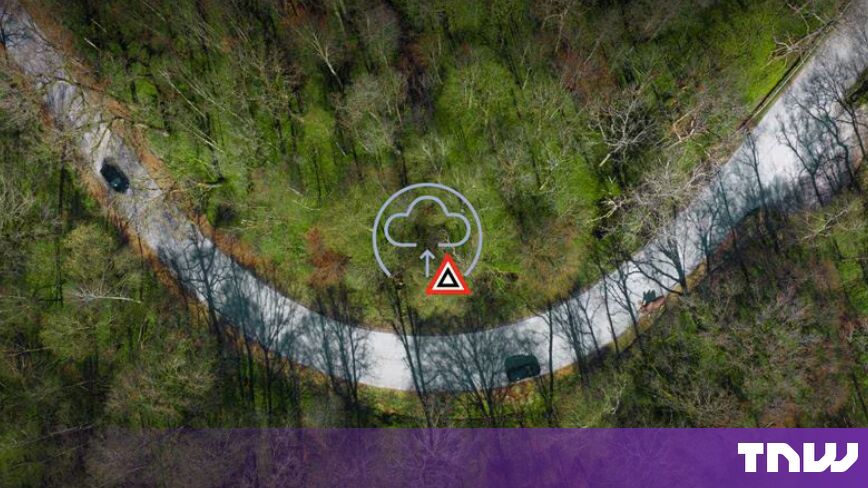
Volvo Cars is expanding its connected vehicle safety architecture with a software update for its EX60, EX90, and ES90 electric models. As first reported by The Next Web, the update introduces four real-time hazard notifications designed to warn drivers of large animals such as deer, pedestrians and cyclists, upcoming roadworks, and traffic collisions ahead.
The system operates on a vehicle-to-vehicle intelligence network that relays hazards detected by one car to trailing vehicles in the area. The new notifications augment Volvo's existing connected safety suite—which includes Slippery Road Alert and Hazard Light Alert—first deployed by the automaker in 2016.
Volvo initially tested its early hazard warning systems through regional trials across Sweden and Norway before expanding the features across Europe in 2019. That original network enabled participating vehicles to exchange automated warnings regarding icy road conditions and activated hazard lights.
To power the expanded warning categories across European roads, Volvo utilizes Data for Road Safety, a joint data-sharing framework. Established following a 2017 agreement by European transport ministers in Amsterdam, the initiative created a platform for sharing safety data years before vehicle data ownership became formalized under the European Union's Data Act.
The Data for Road Safety ecosystem relies on data contributions from several competing carmakers, including BMW, Ford, Mercedes-Benz, and Volvo. The data pool also integrates information from location technology providers HERE and TomTom, vehicle analytics software firm NIRA Dynamics, and transport authorities representing eight European Union member nations.
The structure of these hazard notifications reflects long-standing European regulatory directives. A 2013 EU delegated regulation designated specific categories for safety-related traffic data, explicitly citing obstacles such as animals, pedestrians, and debris. This collaborative approach mirrors broader European regulatory trends, such as the General Safety Regulation that mandated driver-monitoring cameras on all new vehicles sold in the bloc starting in July.
While European deployments utilize the multi-brand data exchange, Volvo has not disclosed how the alert system will source traffic data in North America, where no equivalent cross-industry data consortium exists. Because crowdsourced hazard warnings rely heavily on vehicle network density, data sourcing remains key to the system's effectiveness in non-European markets.
“Every time a Volvo car shares safety intelligence, it helps other drivers prepare earlier to avoid accidents and feel safer,” said Åsa Haglund, head of the Volvo Cars Safety Centre, in a statement regarding the safety feature expansion.
The Geely-owned Swedish vehicle manufacturer continues to use Scandinavian markets as a testing ground for digital services prior to international rollouts. Earlier this month, Volvo debuted its Safety Coach application in Sweden and Norway, allowing vehicle owners to monitor driving behavior scores and share the data with auto insurers.
Sources
Written by
The Company Wire
Inside the companies building what’s next. Reporting on startups, technology, funding and the people shaping them.