AI Governance Moves Toward Real-Time Authorization and Cryptographic Proof
Traefik Labs and SUSE executives argue that multi-agent systems require contextual access policies, tamper-evident logs, and sovereign infrastructure.
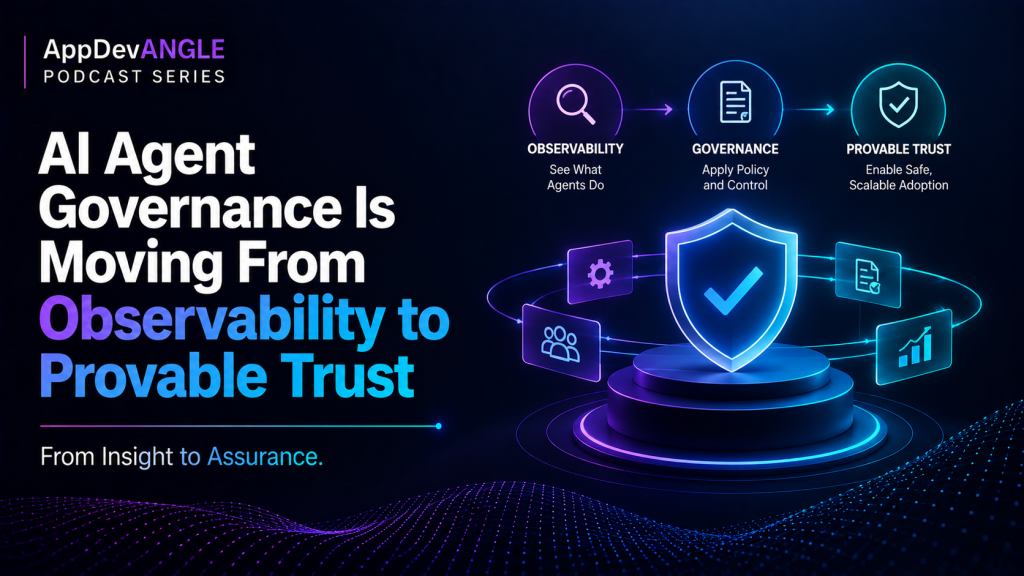
As autonomous artificial intelligence agents expand across enterprise production workloads, conventional observability models are proving insufficient for governance. Rather than relying on retrospective post-event logging, enterprise architectures must establish real-time contextual authorization and cryptographic proof of permissions across multi-agent workflows, according to industry executives interviewed on theCUBE Research’s AppDevANGLE podcast and reported by SiliconANGLE .
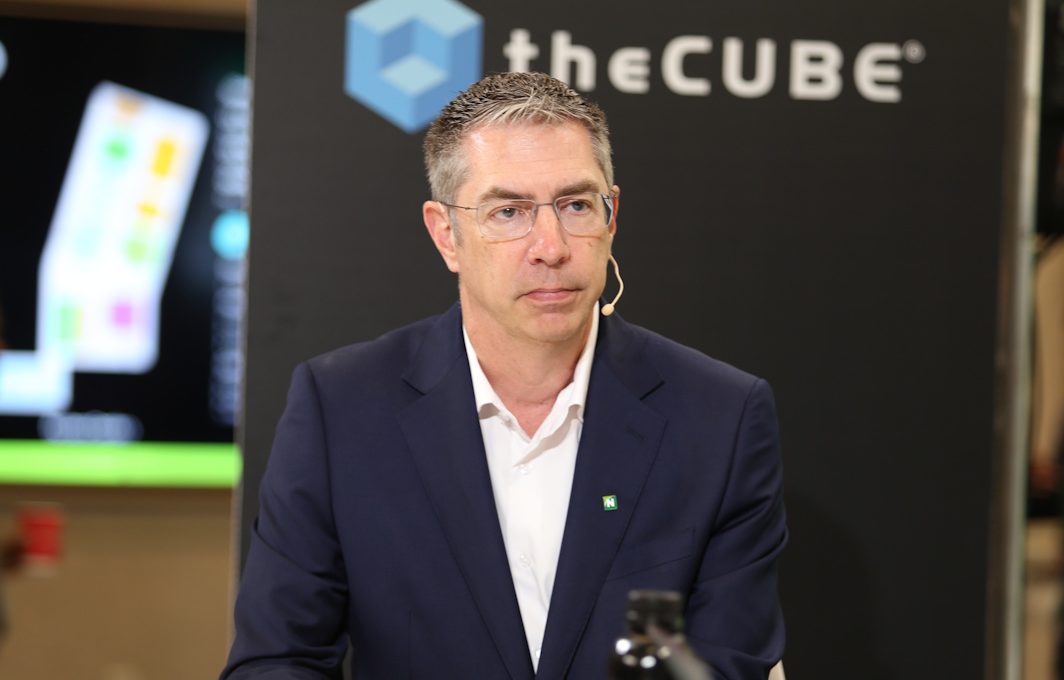
The challenge stems from the operational mechanics of agentic systems, where tasks, credentials, and access rights pass across subagents, application programming interfaces, and external tools at machine speed. Sudeep Goswami, chief executive officer of Traefik Labs Inc., noted that static credentials cannot determine whether an agent is permitted to execute a specific action within a given operational context. Goswami argued that as tasks delegate from one machine agent to another, the granted scope of authority must shrink to prevent permission leakage across systems.
Managing this machine-to-machine delegation layer is becoming urgent as the sheer volume of software agents inside enterprises expands. Andreas Prins, who leads sovereignty strategy at SUSE Group, compared the necessary architectural shift to the evolution of continuous integration and continuous delivery pipelines, which codified security policies and approvals directly into release workflows. Prins cited a recent case where an executive discovered an internal engineering group had created approximately 8,000 agents without centralized tracking of their active functions.
To enforce governance rules, organizations are focusing on API gateways and edge enforcement points where agents interact directly with applications and infrastructure. Goswami emphasized that effective governance systems must record both permitted and denied actions in context, providing verifiable proof that security guardrails actively intercept improper commands. Data from denied requests also creates a feedback loop for engineering teams to refine overly permissive prompts or correct workflow design flaws.
Beyond real-time enforcement, autonomous systems introduce trust challenges because the software generating audit records often controls those same logs. Goswami compared standard log files to a vehicle odometer that can be altered by the owner without external detection. To establish verifiable auditability, architectures are adopting cryptographic logging paired with independent third-party verification mechanisms to prove that evidence has not been altered after generation.
Data sovereignty requirements further complicate architecture design, particularly in heavily regulated sectors like defense, healthcare, and financial services. Research cited during the discussion indicated that 47% of surveyed organizations operate across a mix of connected and disconnected environments, while 11% deploy generative AI specifically within on-premises or air-gapped infrastructure. Goswami warned that reliance on externally hosted software-as-a-service control planes can compromise operational sovereignty, making customer-controlled compute and policy infrastructure necessary for sensitive workloads.
Achieving operational sovereignty requires coordination across multiple stack layers, including compute hardware, Kubernetes infrastructure, gateway controls, open-weight models, and provenance verification engines. Because no single vendor provides an end-to-end sovereign stack, infrastructure providers like SUSE and gateway management firms like Traefik Labs are developing modular, interoperable architectures to allow enterprises to scale agentic automation while maintaining verifiable governance.
Sources
Written by
The Company Wire
Inside the companies building what’s next. Reporting on startups, technology, funding and the people shaping them.