Alibaba Unveils Zhenwu V900 AI Chip and Outlines Plan for 20-Gigawatt Data Center Expansion
The Chinese tech giant is accelerating its silicon roadmap with plans for massive GPU clusters while targeting a fivefold cloud capacity growth by 2032.
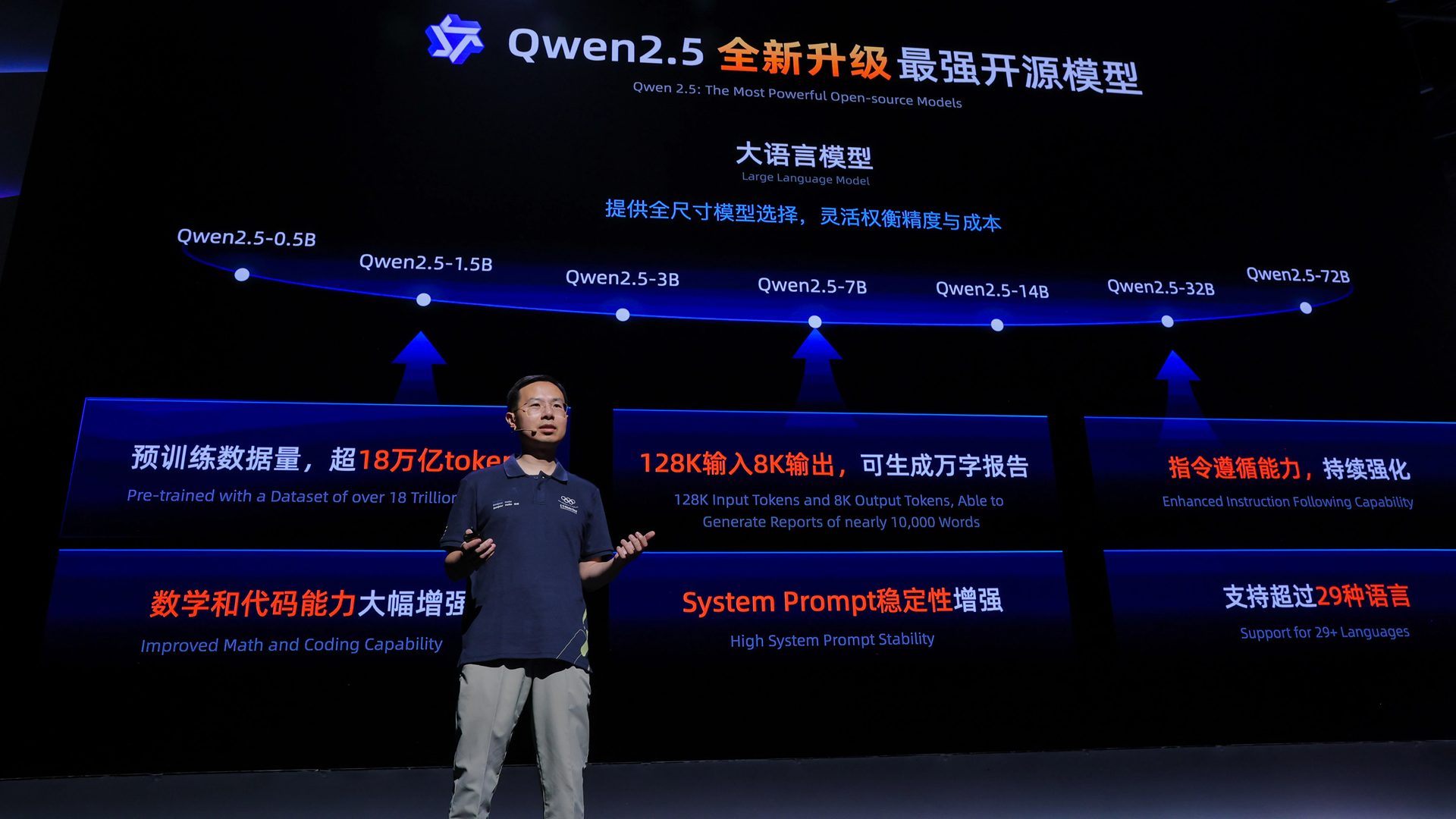
Alibaba Group unveiled its latest artificial intelligence processor, the Zhenwu V900, at its annual Apsara Conference in Hangzhou, while setting an ambitious long-term target to expand its global cloud data center footprint past 20 gigawatts by 2032. Chief Executive Officer Eddie Wu described the V900, designed by Alibaba's T-Head semiconductor division, as the most powerful AI chip currently produced in China. The company highlighted the component as a full-fledged graphics processing unit rather than an application-specific integrated circuit, positioning it directly against high-end enterprise hardware from Nvidia.
The Hangzhou-based technology giant claimed the Zhenwu V900 offers three times the performance of its prior-generation hardware and is architected to scale within distributed clusters containing as many as 500,000 parallel units. Early technical details reported by Chinese tech publication Zhidx indicate the chip features 216 gigabytes of memory alongside chip-to-chip bandwidth of 1,200 gigabytes per second. Alibaba revised its release schedule to bring the hardware to enterprise clients two quarters earlier than its original third-quarter 2027 estimate. T-Head Vice President Gao Hui stated the unit plans to sustain an annual release cadence moving forward, with a successor named the J900 slated for release in the third quarter of 2028.
Despite the accelerated deployment schedule, Alibaba withheld several critical technical metrics for the V900, omitting its floating-point operations per second capabilities, manufacturing process node, foundry partner, total power requirement, and internal memory bandwidth. As detailed in reporting by TechRadar Pro (https://www.techradar.com/pro/alibaba-wants-to-expand-data-center-capacity-past-20-gw-by-2032-says-its-new-v900-ai-chip-can-scale-to-500-000-card-clusters-but-will-chinas-most-powerful-ai-chip-be-enough-to-displace-nvidia-gpus), these selective disclosures contrast with competing domestic offerings, such as Huawei's Ascend 960DT. Huawei's processor, which debuted in the same quarter after earlier schedule adjustments, publicizes 2 petaFLOPS of FP8 compute power, 288 gigabytes of memory, 9.6 terabytes per second of memory bandwidth, and a 2.2 terabyte-per-second interconnect capability.
The theoretical scaling threshold of 500,000 cards represents an immense operational benchmark for Alibaba. In May 2026, T-Head disclosed that cumulative shipments across its entire Zhenwu chip line had just crossed 560,000 units, meaning a single fully populated V900 cluster would require nearly the complete volume of silicon the division has produced over its history. Furthermore, operating such massive clusters poses severe power challenges; if individual V900 units draw energy comparable to Nvidia's 700-watt H200 accelerator, the combined power requirements for compute infrastructure alone would strain regional electrical networks, particularly given China's reliance on older semiconductor fabrication processes due to U.S. equipment export bans.
To support its expanding silicon portfolio and cloud workloads, Alibaba Cloud aims to reach 20 gigawatts of operational data center capacity by 2032, a figure cited by Chief Executive Eddie Wu and reported by the South China Morning Post. According to financial analyst notes from Nomura cited by Sina, Alibaba currently operates approximately 4 gigawatts of infrastructure capacity. Fulfilling the 2032 target will require a fivefold expansion over the next six years through a mix of proprietary builds, leased real estate, and third-party financial arrangements. Wu acknowledged that current supply chain constraints across data center equipment are bottlenecking infrastructure scaling, even as medium- and long-term customer demand continues to outpace available capacity.
Alibaba's aggressive silicon push comes amid significant shifts in the Chinese semiconductor market driven by trade restrictions and government directives. U.S. export controls have sharply curtailed Nvidia's ability to ship advanced chips to Chinese enterprise customers. Nvidia noted in its regulatory filings for the quarter ending July 26 that Hopper architecture data center shipments to China accounted for less than 1% of its $89 billion in segment revenue. Beijing has simultaneously urged domestic technology companies and research laboratories to substitute foreign silicon with domestic accelerators, limiting Nvidia's ability to distribute its H200 chips even after securing export licenses from Washington.
Operating in a market increasingly insulated from global suppliers, Alibaba's primary challenge with the V900 is not displacing Nvidia's top-tier global architectures like Blackwell or Rubin, but rather establishing a dependable local alternative to older international options like the H200. The company faces stiff competition inside China from established domestic vendors like Huawei and a rising crop of local fabless chip startups, alongside broader supply chain constraints that could temper production yields and large-scale deployments across its cloud facilities.
Sources
Written by
The Company Wire
Inside the companies building what’s next. Reporting on startups, technology, funding and the people shaping them.