Developers Question Future of Anthropic’s Model Context Protocol as AI Capabilities Advance
Rapid improvements in large language models prompt software engineers to shift from specialized agent protocol wrappers toward direct HTTP APIs and command-line interfaces.

A growing movement among software engineers and artificial intelligence infrastructure developers indicates that the Model Context Protocol (MCP), originally designed to standardize interactions between large language models and external tools, may be losing relevance due to rapid advancements in foundational AI capabilities. As discussed on Hacker News (https://maharship.com/blog/why-mcp-was-always-a-bad-idea/), technical developers are increasingly deleting dedicated MCP server deployments in favor of direct application programming interface (API) consumption and native command-line interface (CLI) interactions.
Anthropic officially unveiled the Model Context Protocol on November 25, 2024, offering an open framework intended to help software agents connect with external data repositories and third-party web services. At the time of its release, generative AI models lacked the advanced reasoning capabilities and general-purpose autonomous workflows present in contemporary systems. Prior to the launch of tools such as Claude Code, frontier models were unable to reliably construct and execute complex programmatic requests on their own, making structured tool protocols an essential intermediary for basic software integrations.
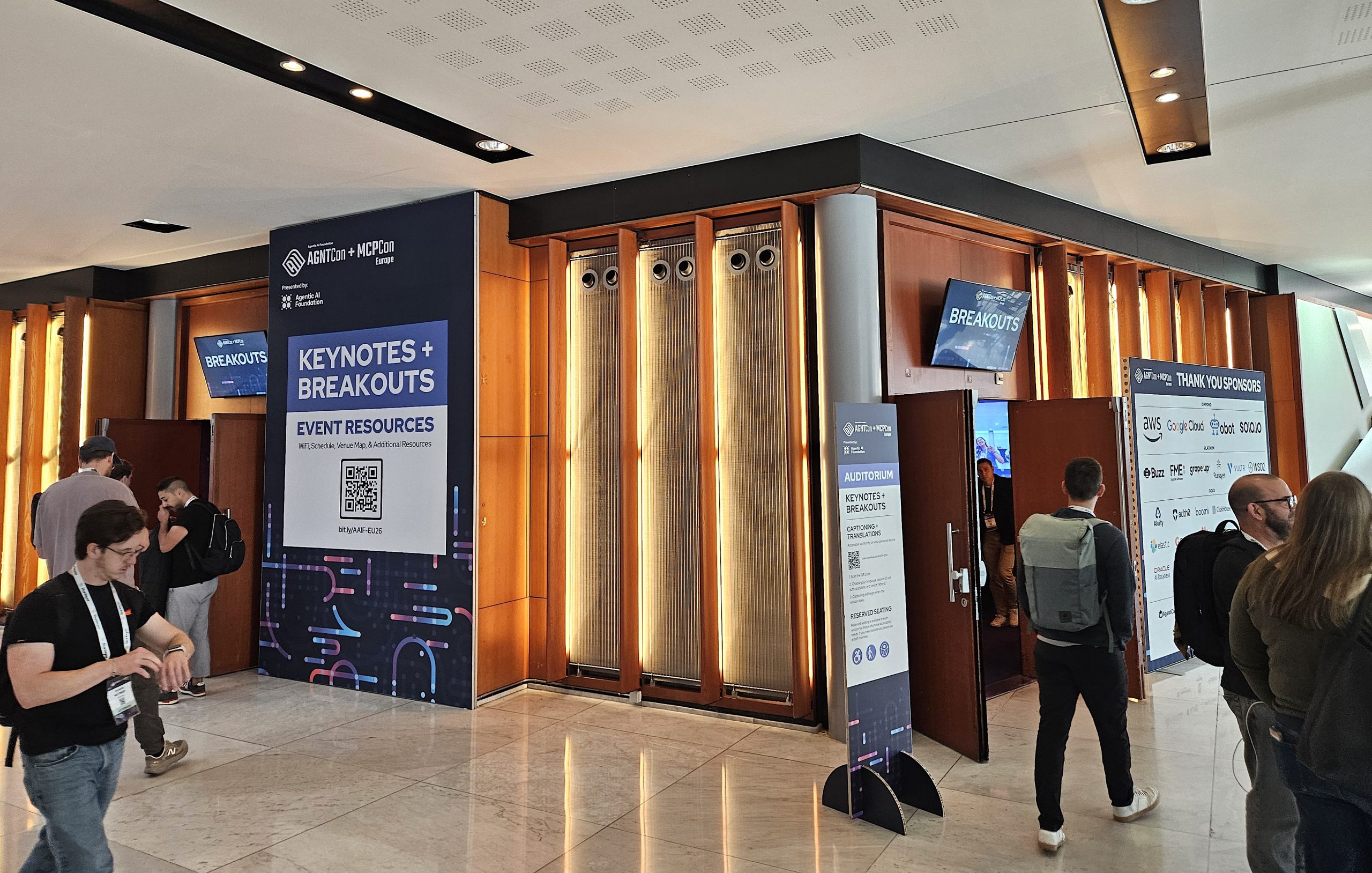
Following its initial release, MCP experienced widespread adoption across both consumer technology applications and enterprise software environments. Anthropic managed the open-source project during this initial phase of ecosystem growth before formally transferring stewardship of the protocol on December 9, 2025. On that date, Anthropic donated MCP to the newly established Agentic AI Foundation, an open-source organization operating under the governance of the Linux Foundation.
As developers integrated growing numbers of MCP servers into their setups to expand agent capabilities, the ecosystem began encountering significant performance bottlenecks stemming from context window bloat. Because each individual MCP server introduced multiple tools alongside detailed input schemas, the cumulative volume of administrative tool definitions quickly overloaded model context windows. In response to these operational constraints, harness development platforms including Composio, MintMCP, and Pipedream introduced centralized credential management and generic search-and-execute patterns, offering short-term solutions designed to minimize tool schema payload sizes.
Despite these middle-layer workarounds, continuous improvements in underlying language models have fundamentally altered how agents interact with external services. Modern LLMs now possess the ability to execute code locally, reason about expansive codebases, and interact directly with system terminals. Equipped with terminal access, models can execute commands like `--help` to autonomously discover CLI capabilities and draft custom scripts for unencountered APIs. Highlighting this shift, Cloudflare engineers Kenton Varda and Sunil Pai introduced Code Mode on September 26, 2025, enabling models to aggregate multiple service calls into unified scripts executed within sandboxed environments.
Given the ability of modern LLMs to write code, compose service calls, and digest documented HTTP endpoints directly, software developers are increasingly calling for the end-of-life of middle-layer protocols like MCP. Proponents of this shift argue that existing HTTP APIs, standard content negotiation mechanisms, and mature authentication frameworks already provide the necessary infrastructure for agentic workflows. Under proposed standards, agent clients attach specific request headers, such as `Accept: text/markdown`, signaling to target web servers that they should return rendered Markdown text instead of HTML markup or verbose JSON structures.
The push toward standardized HTTP content negotiation for AI agents has already attracted support from prominent software industry figures. Malte Ubl, a software engineer at Vercel, publicly advocated for expanding content negotiation by instructing agent harnesses to pass the client's preferred programming language within the standard `Accept-Language` HTTP header. This mechanism allows documentation servers to automatically prioritize language-specific SDK examples—such as Python documentation—over generic documentation. Shopify founder and Chief Executive Officer Tobi Lütke endorsed Ubl's proposal shortly after its publication and confirmed that Shopify implemented the header routing standard across its official developer documentation.
As AI agents become increasingly adept at writing scripts, parsing command-line outputs, and invoking HTTP endpoints directly, developer interest is pivoting away from specialized integration protocols toward fundamental web standards. While minor challenges remain regarding the token verbosity of machine-readable CLI outputs like JSON and XML, proponents of native API integration argue that leveraging documented web endpoints and terminal tools provides a far more durable and scalable foundation for agentic software design than continuing to build dedicated MCP server wrappers.
Sources
Written by
The Company Wire
Inside the companies building what’s next. Reporting on startups, technology, funding and the people shaping them.