Enterprise AI Strategy Shifts From Model Selection to Proprietary Context Loops
Corporations are treating foundation models as interchangeable commodities, focusing investment on internal data architectures and token optimization.

Corporate strategy surrounding enterprise artificial intelligence is undergoing a significant shift as technology executives re-evaluate how language models fit into long-term infrastructure. For several years, enterprise AI adoption typically began with standardizing around a single dominant platform, such as Microsoft Copilot, OpenAI's GPT, Google Gemini, Anthropic's Claude, or xAI's Grok. In some cases, U.S. organizations have also explored open or low-cost international models like DeepSeek and Qwen. However, according to an analysis first reported by Fast Company Tech, corporate decision-makers are increasingly treating the selection of an underlying model as a standard economic optimization problem rather than a long-term strategic commitment to a single vendor.
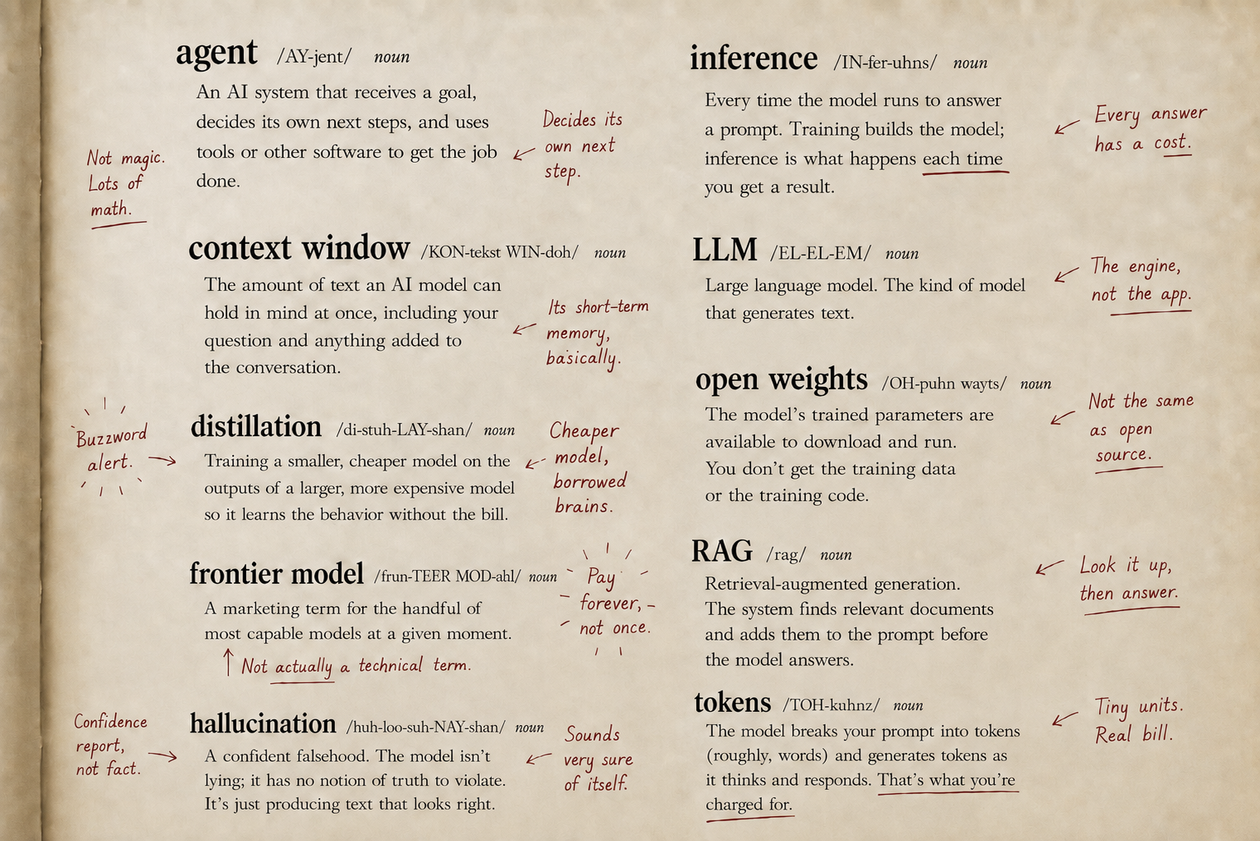
This evolving perspective compares the foundational model to a computer microprocessor: a vital infrastructural component, but only one piece of a broader technological stack. Organizations are recognizing that utilizing massive, high-cost frontier models for routine internal queries results in excessive expenditure without delivering proportional value. To mitigate these overhead costs, enterprises are turning to architectural routing solutions. Projects such as UC Berkeley’s open-source RouteLLM demonstrate how companies can dynamically direct simpler tasks toward lower-cost models while escalating complex queries to high-capacity reasoning engines, preserving answer quality while managing token budgets effectively.
The rapid adoption of models with aggressive pricing structures, particularly offerings from Chinese developers like DeepSeek and Qwen, has reinforced the perception that underlying models are becoming highly commoditized and easily substitutable at the API layer. Because language models can now be swapped with minimal technical friction, enterprise value is migrating upward into software application layers, proprietary data integration, and workflow orchestration. Concepts like "tokenmaxxing"—the practice of providing employees with continuous access to the largest available model regardless of task parameters—are increasingly viewed within corporate IT departments as economically impractical.
Technology giant Microsoft, long considered a benchmark for enterprise IT adoption, has actively responded to these shifting market dynamics. Through its Phi family of small language models, Microsoft is positioning targeted models as optimal solutions for focused, domain-specific tasks. Rather than attempting to eclipse large models in total parameter scale, small language models are designed to deliver strong domain performance using constrained computational resources, giving enterprises greater control over internal data security and task-specific efficiency.
Under this shifting framework, enterprise AI implementation is best understood through three distinct architectural tiers: foundational general intelligence, institutional context, and institutional learning. Developing general intelligence requires vast capital and remains outside the practical scope of non-AI technology companies. Consequently, true corporate differentiation relies on the second and third tiers. Institutional context comprises an enterprise's unique knowledge assets, including internal documentation, operational rules, organizational relationships, and historical records.
The third tier, institutional learning, incorporates ongoing operational feedback, evaluation metrics, and decision loops that capture what strategies successfully produce results over time. AI developer Anthropic has emphasized the importance of context engineering—the precise management of external state, system instructions, integrated tools, and operational history—over simple prompt engineering or continual model upgrades. This approach reinforces publicly stated positions from Microsoft CEO Satya Nadella regarding the necessity of organizations owning their proprietary learning cycles rather than relying solely on standardized, commercial model deployments shared across disparate industries.
The long-term competitive advantage of any institution lies in its ability to accumulate and operationalize historical data, such as faculty expertise, student outcomes, administrative decisions, or corporate evaluation loops. When two institutions utilize the exact same foundational model, their operational intelligence diverges based on the depth of the organizational context integrated into their feedback loops. Without a dedicated context architecture, companies risk renting external capabilities without retaining internal intelligence. As a result, enterprise leaders are evaluating AI strategy based on institutional sovereignty—ensuring that proprietary learning remains intact even if the underlying model provider is replaced.
Sources
Written by
The Company Wire
Inside the companies building what’s next. Reporting on startups, technology, funding and the people shaping them.