Google and UK Government Launch AI Trial to Eliminate Ocean Flight Contrails
Operation Blue Skies will use artificial intelligence models and air traffic control routing to bypass climate-warming atmospheric layers over the North Atlantic.
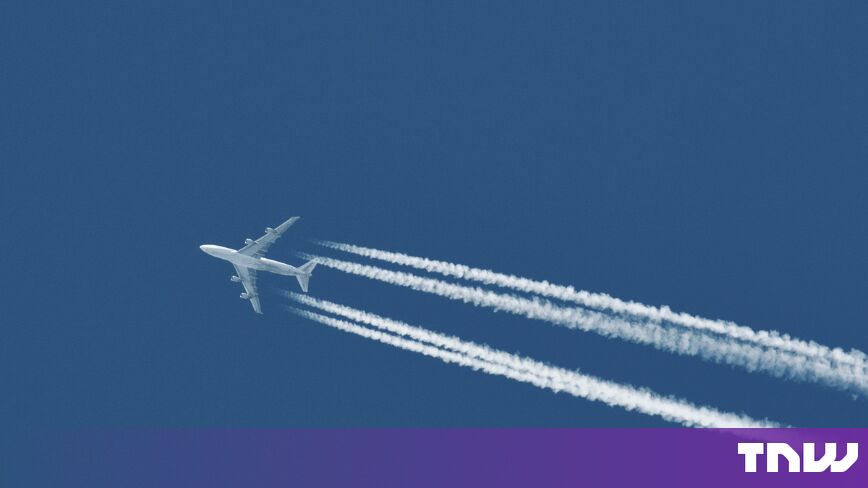
Google and the United Kingdom government have unveiled Operation Blue Skies, a 30-month, £5 million initiative using artificial intelligence to steer commercial aircraft away from climate-warming contrails across the North Atlantic, as first reported by The Next Web. The project represents the first effort to test contrail avoidance across an entire oceanic flight corridor.
Contrails form when water vapor in jet exhaust freezes into ice crystals around soot particles. While many vanish within minutes, contrails created in cold, humid atmospheric conditions linger and expand into cirrus clouds that trap heat radiating from Earth. According to Google and its project partners, contrail warming accounts for roughly one-third of the global aviation sector's overall climate impact.
The operational trial will focus on the Shanwick airspace sector, which encompasses the eastern portion of the North Atlantic corridor. Coordinated by the Aerospace Technology Institute (ATI), which oversees public funding for the project, the Shanwick zone accounts for approximately 5% of global contrail warming, primarily during winter months. As reported by the BBC and New Scientist, testing will focus on evening and night flights, when contrails produce the most severe warming effect due to the absence of daytime sunlight reflection.
To execute the maneuvers, Google generates predictive AI models by combining satellite imagery, flight tracking data, and weather forecasts from the UK Met Office. These models are sent to NATS, the UK's air traffic control provider, whose controllers instruct pilots to adjust flight altitudes by up to 2,000 feet using routine control channels. Paul Hodgson, Google's technical lead on the trial, noted in a briefing reported by New Scientist that a full deviation through Shanwick consumes about 100 kilograms of additional fuel per aircraft, creating a carbon penalty of less than 1% relative to the tonnes of contrail warming prevented.
The initiative is supported by £2.65 million from the UK Department for Transport via the ATI Programme, with industry partners covering the remainder. Google is contributing pro bono with £1.4 million in in-kind research, engineering time, and computing infrastructure. ATI confirmed that all government grant funding will flow to non-profit, academic, and aviation partners rather than Google. The consortium includes Google UK, NATS, Contrails.org, the Met Office, and independent verification teams from Imperial College London and the University of Cambridge.
Testing will take place over two four-month phases during the winters of 2026–2027 and 2027–2028, spanning 20 to 40 test days each season. Out of roughly 10,000 flights entering Shanwick during trial hours each year, air traffic control will reroute a designated subset to gather statistical data. While Google previously conducted limited trials with carriers such as American Airlines—reducing contrail formation by 60% to 70%, according to the BBC—Operation Blue Skies is the first project to issue mandatory rerouting instructions across an entire airspace sector.
UK Aviation Minister Keir Mather framed the initiative as an example of British leadership in sustainable aviation, pointing to £219 million already allocated by the government toward sustainable aviation fuels. The effort comes as tech giants like Google face rising scrutiny over the energy demands of AI data center expansions. Final results from Operation Blue Skies will undergo independent academic evaluation and will be published in scientific journals following the conclusion of both winter testing cycles.
Sources
Written by
The Company Wire
Inside the companies building what’s next. Reporting on startups, technology, funding and the people shaping them.