LinkedIn Reports 40% Decrease in AI Slop Views Following New User Reporting Tool
The Microsoft-owned platform has processed over one million flags on low-quality AI posts as it moves to clean up member feeds.
LinkedIn's newly introduced feature allowing members to report low-quality generative AI content is already demonstrating measurable results, according to executive updates from the professional networking service. First reported by Engadget, the platform has seen user engagement with flagged material drop significantly shortly after launching the feedback option.
The reporting mechanism, labeled "seems like AI slop," has been activated more than one million times by users since its initial deployment a few weeks ago. Hari Srinivasan, Chief Product Officer at LinkedIn, disclosed the milestone, noting that members are currently encountering 40 percent fewer views on content categorized by the system as AI slop compared to baseline metrics recorded prior to the rollout.
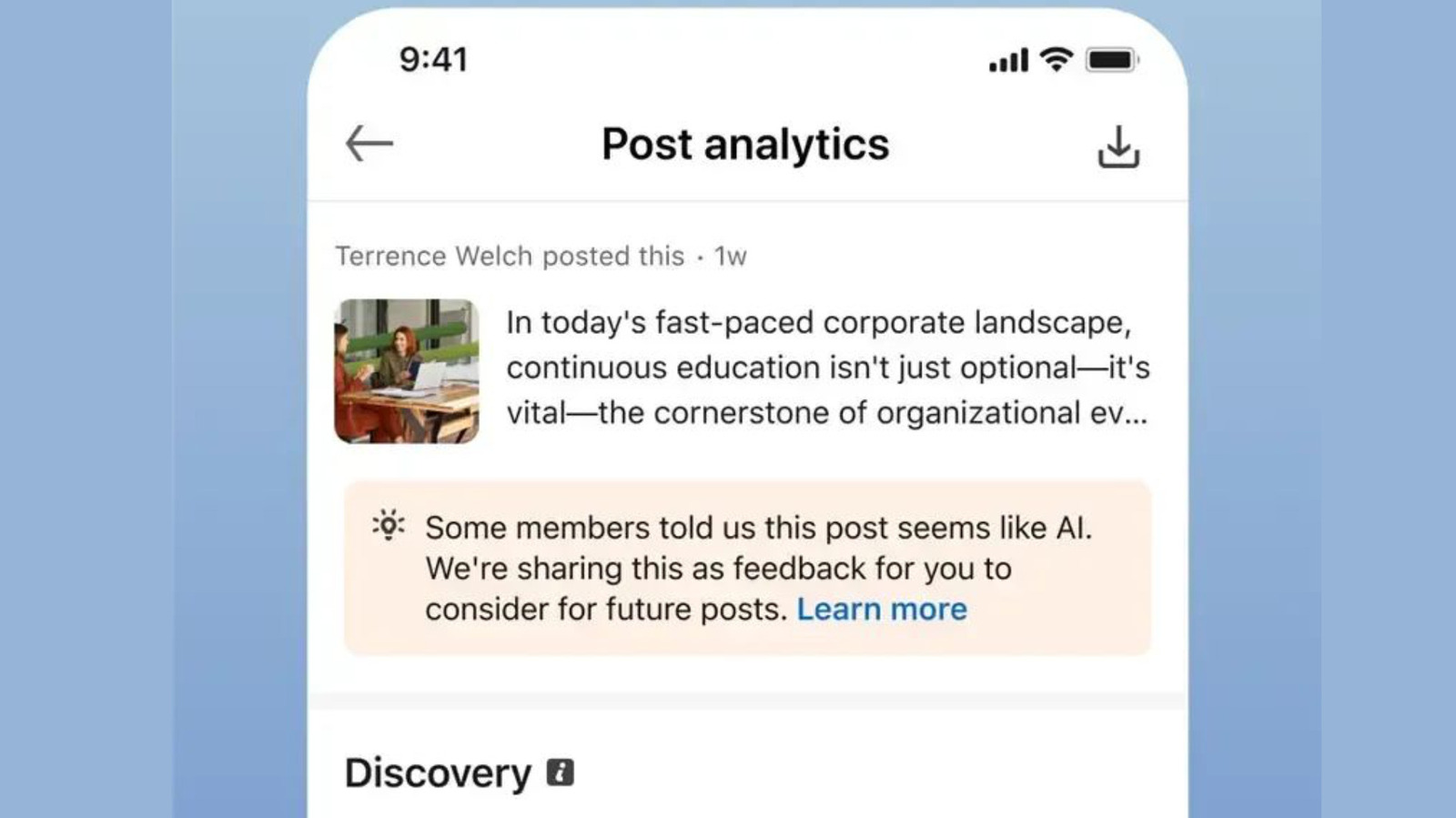
In addition to lowering the visibility of flagged content, LinkedIn is extending transparency tools to content creators. The Microsoft-owned network is launching a new notification system that informs users when one of their published posts has been flagged by peers as AI slop. This feedback will be accessible directly through the application's built-in post analytics panel.
While LinkedIn has not publicly detailed the exact inner workings of its suppression algorithms, Srinivasan indicated that the business relies on multiple data points to compute feed distribution. He added that the company built internal guardrails to prevent members from abusing the reporting function to unfairly target or harass specific accounts.
The initiative marks a continued effort by LinkedIn to sanitize its main feed from automated text generation. Previous programmatic updates aimed to curb the algorithmic reach of posts featuring telltale artificial intelligence sentence structures, such as the widely reused rhetorical template "it's not X, it's Y."
Automated text and low-effort posts have become a widespread challenge across social media networks, but LinkedIn has faced particular scrutiny due to its professional ecosystem. Research conducted by AI detection firm Pangram estimated that over 40 percent of longform text posts on the platform were likely generated using artificial intelligence tools.
The aggressive stance against low-quality AI content represents a subtle strategic pivot for the company. Historically, LinkedIn actively encouraged its user base to leverage large language models to draft content, including offering a prominent "enhance" button designed to automatically rewrite posts and private messages.
LinkedIn formally retired the native "enhance" writing assistant concurrently with the release of the AI slop reporting button. The shift highlights the platform's balancing act between integrating Microsoft's broader AI capabilities and maintaining the quality of user-generated discourse on its primary feed.
Sources
Written by
The Company Wire
Inside the companies building what’s next. Reporting on startups, technology, funding and the people shaping them.