McKinsey Employs Knowledge Graphs to Give Enterprise AI Contextual Precision
Partner James Kaplan outlines how graph architectures and semantic layers help large organizations structure messy data for agentic workflows.
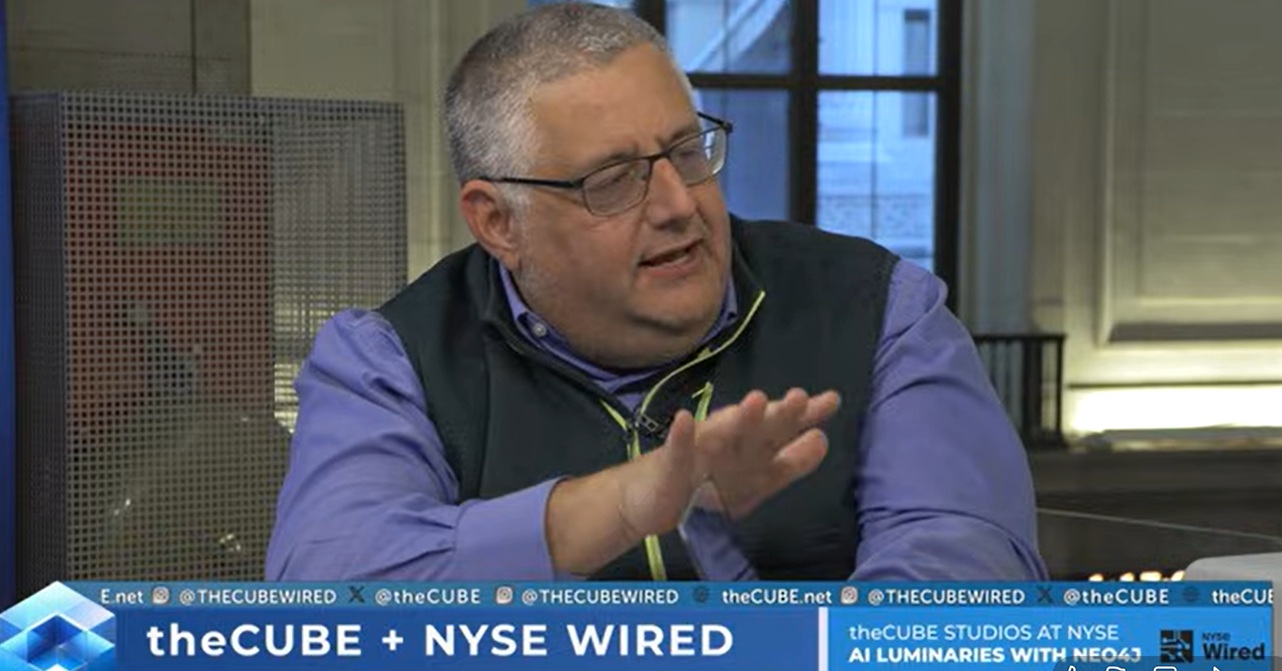
Enterprise artificial intelligence applications require more than raw data; they require the relational context that explains how distinct business elements interact. According to James Kaplan, a distinguished partner at McKinsey & Company, knowledge graphs bridge that gap by mapping explicit commercial relationships alongside corporate records to support executive decision-making.
Kaplan discussed the role of graph architectures in an interview with John Furrier for theCUBE + NYSE Wired: AI Luminaries series, broadcast by SiliconANGLE Media's livestreaming studio, as reported by SiliconANGLE (https://siliconangle.com/2026/10/09/mckinsey-connects-enterprise-data-using-knowledge-graph-ai-neo4jdatatoknowledge/). While consumer internet platforms like LinkedIn and Wikipedia have long relied on graph structures to map connections between individuals and concepts, enterprise IT has historically favored relational databases.
While relational databases handle high-volume transactional data reliably, Kaplan noted they struggle to capture ambiguous or complex real-world relationships. Modern AI models can now process unstructured enterprise information, convert it into structured data, and programmatically generate deterministic business rules stored directly within graph environments.
McKinsey has integrated this approach into its own platform, dubbed EcliptOS. The AI operating system is designed to connect executive strategy to operational execution through agentic workflows, supported by a semantic data layer that links data points and business logic.
Rather than forcing organizations to replace their underlying data repositories, graph architectures allow companies to create a virtual graph layer across disparate databases. Because graph schemas remain flexible, enterprises can structure messy, legacy data without extensive manual interventions from data analysts, allowing autonomous software agents to navigate corporate information with full operational context.
Sources
Written by
The Company Wire
Inside the companies building what’s next. Reporting on startups, technology, funding and the people shaping them.