Microsoft Outlines Maia 300 Chip Details as Hyperscalers Expand In-House AI Silicon
The cloud provider plans multi-gigawatt deployments by 2027 to optimize inference workloads and cut reliance on external processor margins.
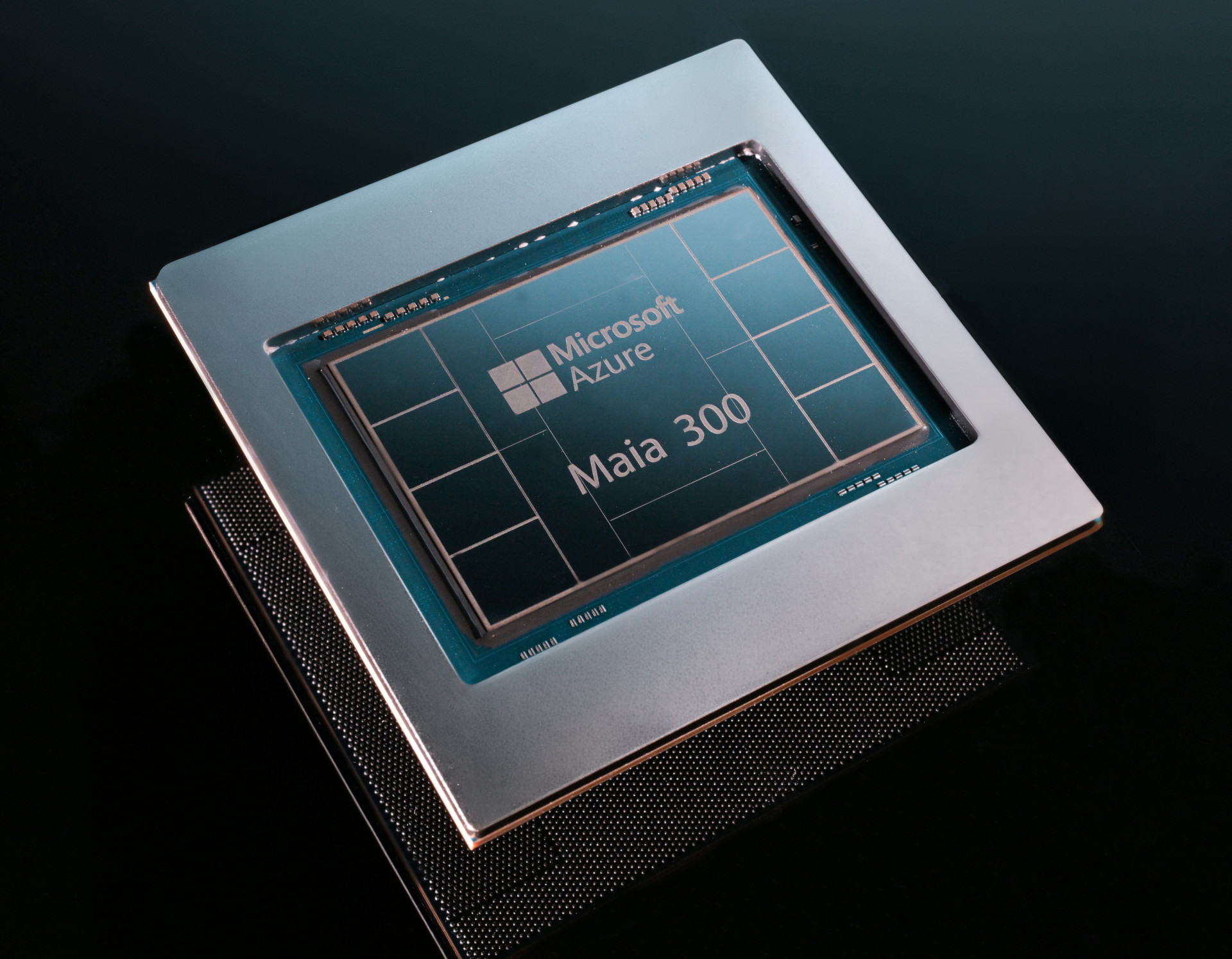
Microsoft has detailed the architecture for its next-generation artificial intelligence accelerator, the Maia 300, outlining plans to scale the custom silicon to multi-gigawatt cloud deployments beginning in 2027, according to reporting by TechRadar Pro (https://www.techradar.com/pro/microsofts-maia-300-swaps-raw-compute-for-a-2-5x-memory-bandwidth-gain-as-it-moves-to-make-in-house-silicon-its-main-ai-engine-while-claiming-a-40-percent-efficiency-bump-could-going-the-google-route-be-the-pin-that-pops-the-nvidia-ai-bubble).
Writing in an official blog post, Scott Guthrie, executive vice president of Cloud + AI at Microsoft, stated that the Maia hardware line will serve as the primary inference platform for Microsoft's internal applications and cloud services. Architectural specifics provided by Rani Borkar, president of Azure Hardware Systems and Infrastructure, and Saurabh Dighe, corporate vice president of systems planning and architecture, reveal a design calibrated to address memory bottlenecks in long reasoning chains and model inference.
According to a breakdown of Microsoft's technical specifications by StorageReview cited by TechRadar Pro, the Maia 300 departs from the single-die layout of the Maia 200 in favor of a multi-chiplet package. Compute dies are manufactured on TSMC's N2P process, while memory-controller and input/output functions reside on separate dies. Equipped with eight HBM4 stacks, the accelerator provides 288GB of memory and 18TB/s of bandwidth per package, compared to 216GB and 7.1TB/s on the prior generation.
The transition to proprietary hardware comes as hyperscale cloud providers seek to manage infrastructure expenditures. TechRadar Pro noted that Nvidia generated $89 billion in data center revenue out of $96.2 billion in total sales during its fiscal quarter ending July 2026, with chief financial officer Colette Kress indicating that hyperscalers accounted for $49 billion of that total. In July, Microsoft disclosed to investors that its Maia 200 achieved up to 40% operational cost savings compared to leading GPU systems when running OpenAI and internal workloads.
Despite the planned multi-gigawatt expansion, custom silicon will initially represent a fraction of Microsoft's compute deployments. CNBC reported that Evercore ISI analysts project Maia accelerators will account for approximately 10% of Microsoft's overall AI chip expenditure by the first quarter of 2027. Microsoft Chief Executive Officer Satya Nadella noted earlier in 2026 that internal hardware development would complement, rather than completely replace, external accelerator purchases from suppliers such as Nvidia and AMD.
Microsoft's deployment strategy aligns with broader custom silicon initiatives across the cloud sector. Alphabet Chief Financial Officer Anat Ashkenazi stated during a July earnings call that Google has begun recognizing revenue from third-party data center sales of its Tensor Processing Units, while Anthropic has secured 3.5 gigawatts of TPU capacity through Broadcom. Additionally, Amazon Chief Executive Officer Andy Jassy confirmed in April 2026 that Amazon's custom chip portfolio—encompassing Trainium, Graviton, and Nitro—had surpassed a $20 billion annual revenue run rate.
Sources
Written by
The Company Wire
Inside the companies building what’s next. Reporting on startups, technology, funding and the people shaping them.


