Miro CEO Andrey Khusid Says AI Demands Ground-Up Workflow Redesign
Speaking in Turin following Miro's $1.355B sale agreement with Bending Spoons, Khusid argued enterprise efficiency requires rethinking operating models from first principles.
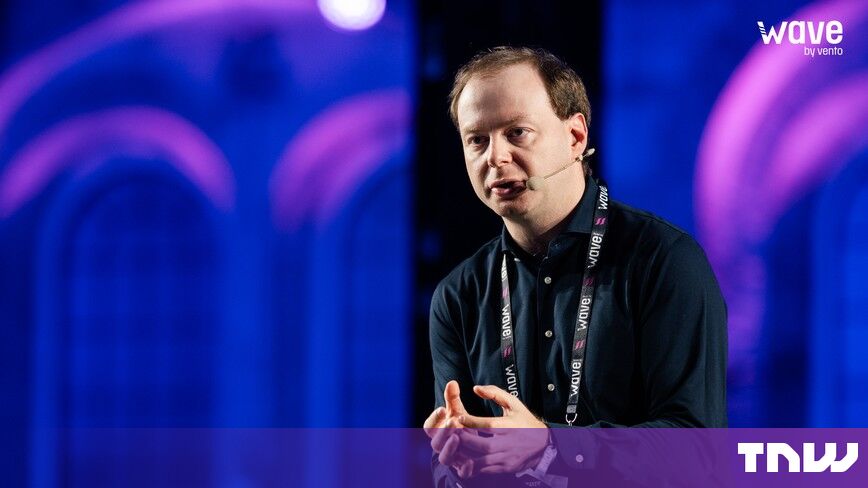
Layering artificial intelligence onto existing corporate hierarchies and legacy processes will not deliver the technology's full productivity promise, according to Miro co-founder and chief executive Andrey Khusid. Speaking at the Wave by Vento conference in Turin, Italy, Khusid argued that organizations must redesign workflows from first principles around automated systems before determining where human input adds distinct value, as reported by The Next Web (https://thenextweb.com/news/miro-andrey-khusid-ai-productivity-gains-redesign-work-wave-by-vento).
The discussion, titled 'Thinking Together in the Age of AI' and moderated by Les Echos tech editor Charlie Perreau, marked Khusid's first public appearance since Milan-based Bending Spoons agreed to acquire Miro for $1.355 billion. That transaction is slated to close in the fourth quarter subject to approvals. According to Bending Spoons, Miro generates roughly $600 million in annual recurring revenue. The buyout price represents a significant reset from January 2022, when Miro was valued at $17.5 billion following a $400 million funding round. While Khusid declined to discuss transaction specifics, he remarked positively on his presence in Italy, calling it 'maybe a new home for Miro.'
Addressing broader adoption challenges, Khusid noted that while individual use of tools such as ChatGPT and Claude is now widespread, shifting enterprise operations remains complex. Work in established companies moves across siloed personnel holding fragmented context. To capture productivity gains, Khusid said businesses must first consolidate that context. At Miro, the company tested this by establishing parallel teams executing identical functions with AI, refining the resulting workflows, and scaling the model across the organization.
Khusid also warned against unmanaged content generation. While generative tools allow quieter team members to rapidly turn prompts into visual prototypes, uncoordinated AI output risks overwhelming teams with low-value content—a phenomenon highlighted in a June Harvard Business Review report on workplace 'workslop.' Khusid argued that organizational accountability is essential to counter this fatigue, requiring staff to take full ownership of any material they bring to colleagues.
Contrasting legacy institutions with newer ventures, Khusid observed that early-stage startups operate around centralized intelligence repositories rather than siloed human hierarchies, enabling faster and higher-quality decision-making. Established enterprises must rebuild their intelligence infrastructure and evaluate existing roles to keep pace, particularly as UK business AI adoption tripled by July despite remaining largely superficial across most firms.
Looking ahead, Khusid indicated that core model capabilities have stabilized sufficiently to make performance over the next three years predictable, allowing Miro to engineer against sustained trends rather than reacting to every model release. Miro, which writes substantial portions of its code with AI assistance, is developing shared digital canvases where humans and AI agents collaborate directly, with voice, conversation, and visual decision-making serving as primary interaction layers.
Sources
Written by
The Company Wire
Inside the companies building what’s next. Reporting on startups, technology, funding and the people shaping them.