U.S. Army Soldiers Test Field-Assembled Attack Drone With 3D-Printed Ordnance
The 2nd Cavalry Regiment conducted a live-fire demonstration in Germany using modified commercial components to bypass contractor support.
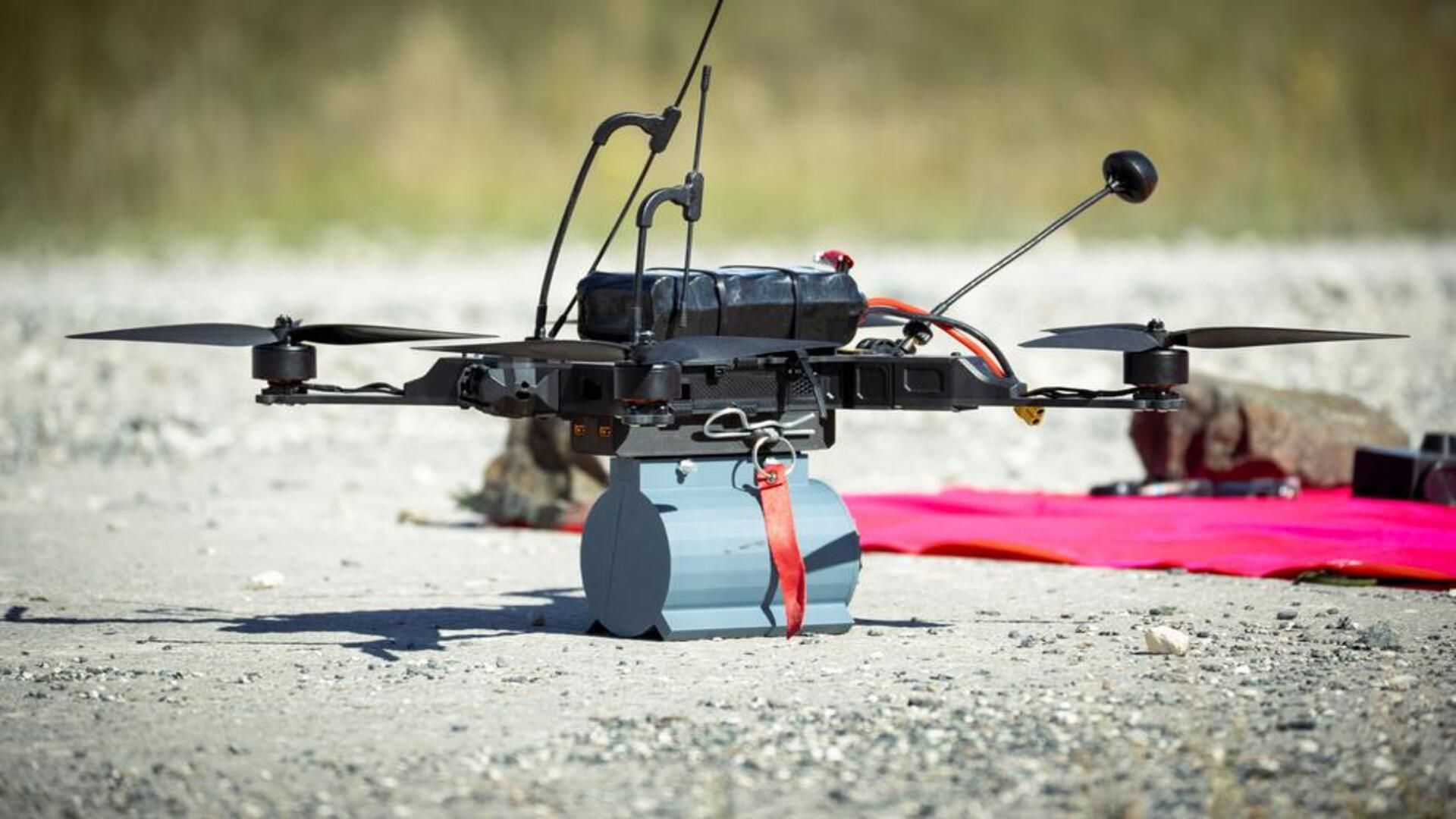
U.S. Army soldiers with the 2nd Cavalry Regiment have conducted a live-fire exercise using an attack drone assembled and operated entirely by military personnel, as reported by TechRadar Pro (https://www.techradar.com/pro/us-army-shows-off-its-in-house-dragoons-drone-with-3d-printed-bombs-that-can-fly-up-to-12-miles). The test took place on Sept. 30, 2026, at the Grafenwoehr Training Area in Germany, demonstrating an effort to build tactical hardware directly on the front line.
The unit utilized an Orqa MRM2-10 airframe, which soldiers built from manufacturer-supplied components before outfitting it with an electronic safety switch and an in-house 3D-printed explosive casing. Dubbed the "Dragoon bomb" after the unit's nickname, the container can hold nearly two pounds of payload. For the demonstration, soldiers packed the housing with 250 grams of C-4 explosive and M6 low-voltage blasting caps.
During the exercise, Staff Sgt. Angel Caliz piloted the ordnance-bearing drone over a mile to its target in under five minutes, with impact footage relayed by an observation drone. The baseline configuration can strike targets beyond three miles, while adding a secondary receiver could extend operational reach beyond 12 miles, though range remains subject to operating conditions.
Unit leaders noted the casing design can be adapted for shaped charges to defeat light armor or packed with ball bearings for fragmentation. First Lt. Eugene Lee, a reconnaissance platoon leader, noted that a shaped-charge configuration could disable smaller tanks with precise placement. Army officials drew comparisons between the system's role and the shoulder-fired AT4, aiming to provide small units with low-cost precision strike capability.
Capt. Michael Bapp, a company commander in the regiment, said the demonstration followed more than two years of internal development and represents a potential first for the conventional Army in executing a live, kinetic drone strike without direct defense contractor assistance.
The initiative mirrors lessons from drone warfare in Ukraine and the Middle East, where low-cost commercial hardware has disrupted traditional engagements. To scale tactical manufacturing, the Army now runs a three-week course covering additive manufacturing and piloting, alongside parallel development programs across the Navy and Marine Corps.
Sources
Written by
The Company Wire
Inside the companies building what’s next. Reporting on startups, technology, funding and the people shaping them.


