Production AI Forces Enterprise Storage Redesign Around Tiering, Caching, and Open Formats
Industry executives at the Supermicro Open Storage Summit outline how operationalizing artificial intelligence requires replacing raw compute with tiered storage and open lakehouses.
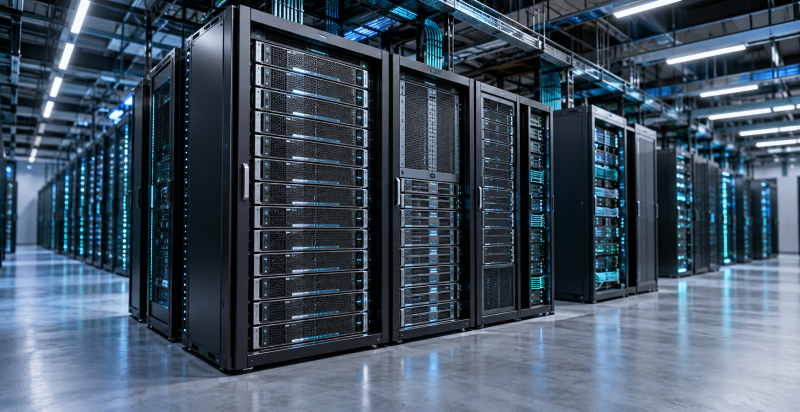
As enterprise artificial intelligence workloads shift from isolated pilots into continuous production systems, the primary bottleneck is moving from model selection to data infrastructure. According to panel discussions at the Supermicro Open Storage Summit, reported by SiliconANGLE , organizations are restructuring how they store, tier, and govern data to manage costs and sustain accelerator utilization.
Rob Strechay, an analyst at theCUBE Research, noted during the summit that production success now hinges on deployment discipline rather than model tuning alone. "The organizations succeeding today are focusing less on models and more on operationalization," Strechay said, pointing out that organizations must align data teams, infrastructure administrators, and business stakeholders around repeatable deployment pipelines.
A core technical challenge is balancing graphics processing unit utilization against the steep cost of solid-state storage. Greg DiFraia, senior vice president of AI and alliance partnerships at Scality Inc., explained that workloads operating across tens or hundreds of petabytes cannot economically reside entirely in high-speed flash. Infrastructure architectures must balance active high-throughput storage against capacity-oriented tiers to keep compute engines saturated without inflating infrastructure budgets.
Storage hierarchies are also adjusting to expanding context windows and agentic AI frameworks. When intermediate inference calculations exceed GPU memory limits, offloading key-value (KV) caches to fast external tiers enables organizations to preserve memory bandwidth. Anat Heilper, director of AI architecture at Vast Data Inc., emphasized that combining platforms like Vast Data, Solidigm Inc. flash media, and Super Micro Computer Inc. systems allows companies to substitute storage throughput for compute capacity, cutting latency while increasing KV cache hit rates.
Financial institutions face direct balance-sheet implications from data throughput constraints. Moiz Kohari, vice president of enterprise AI and data intelligence at DataDirect Networks Inc., speaking alongside Vince Chen, senior director of solutions architecture at Supermicro, noted that firms managing massive asset bases face significant capital lockup if risk calculations run slowly. Accelerating data ingestion and retrieval unlocks regulatory capital reserves for other uses. To reduce integration friction, Chen noted that Supermicro is delivering pre-validated, standardized deployment profiles with hardware and storage partners.
As internal user adoption grows, infrastructure teams must apply traditional operational disciplines to new AI workloads. Ruhi Sehgal, agentic AI solutions marketing lead at Nutanix Inc., warned that scaling agentic services introduces severe resource contention across multi-tenant environments, requiring proven administrative controls for security, multi-tenancy, and performance tuning.
Simultaneously, data lakes are converging on open storage standards to unify legacy analytics with AI pipelines. Greg DeMichillie, vice president of product and technical marketing at MinIO Inc., pointed to the rapid adoption of Apache Iceberg and the Iceberg REST catalog across platforms powered by Advanced Micro Devices Inc. processors and Supermicro servers. On the unstructured data front—spanning documents, images, and telemetry—Supermicro senior product manager Sherry Lin and Cloudian Inc. vice president Peter Sjoberg outlined architectures integrating Hammerspace Inc. data orchestration, Cloudian object stores, and Seagate Technology LLC capacity layers to maintain continuous governance from ingestion to archival.
Sources
Written by
The Company Wire
Inside the companies building what’s next. Reporting on startups, technology, funding and the people shaping them.