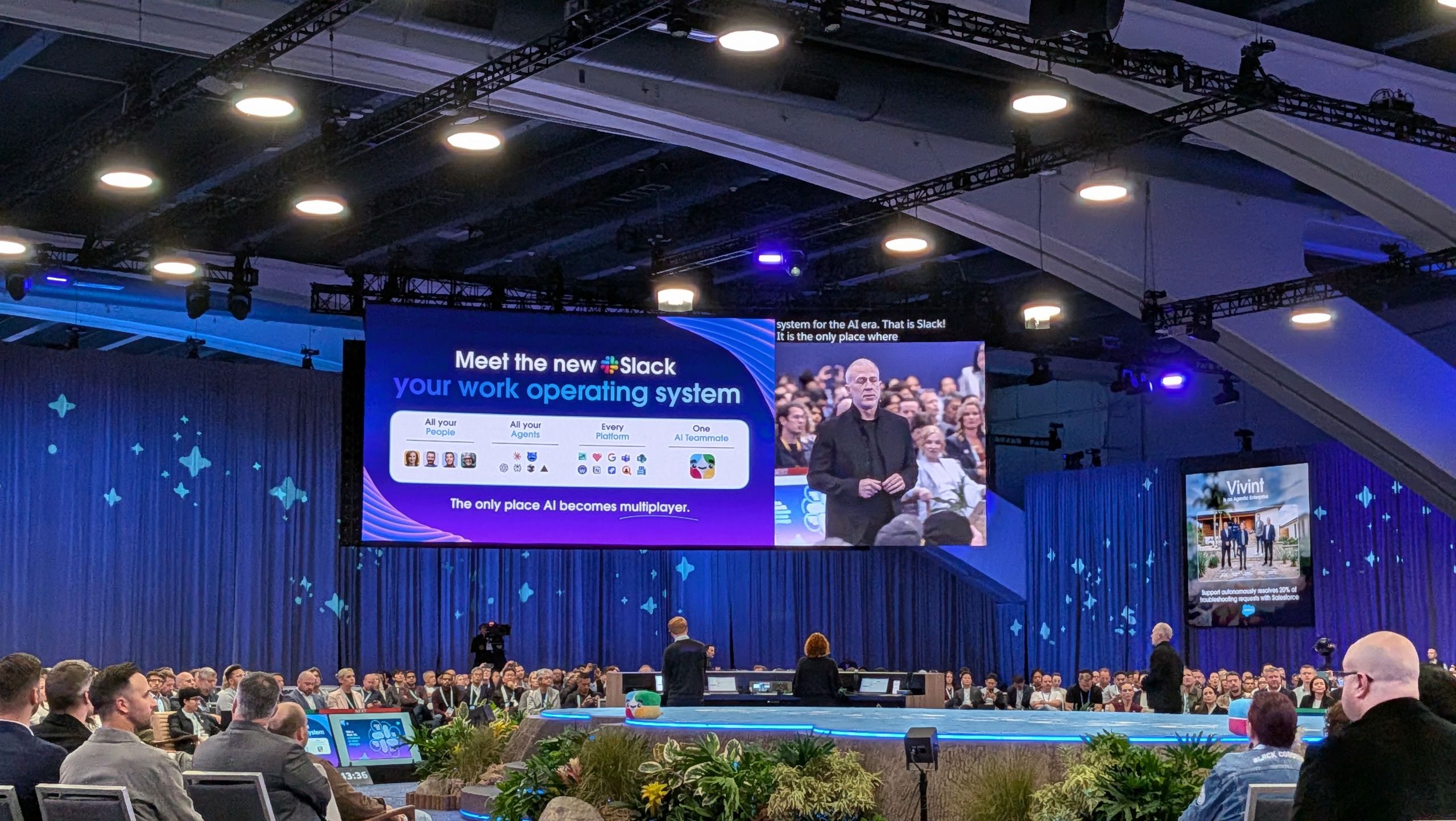
Salesforce Shifts Toward Headless Enterprise AI Strategy Following Dreamforce 2026
Research shows enterprise customers are accessing Salesforce data through third-party AI clients like Claude, with 75% of early headless evaluators expecting platform spend to rise.
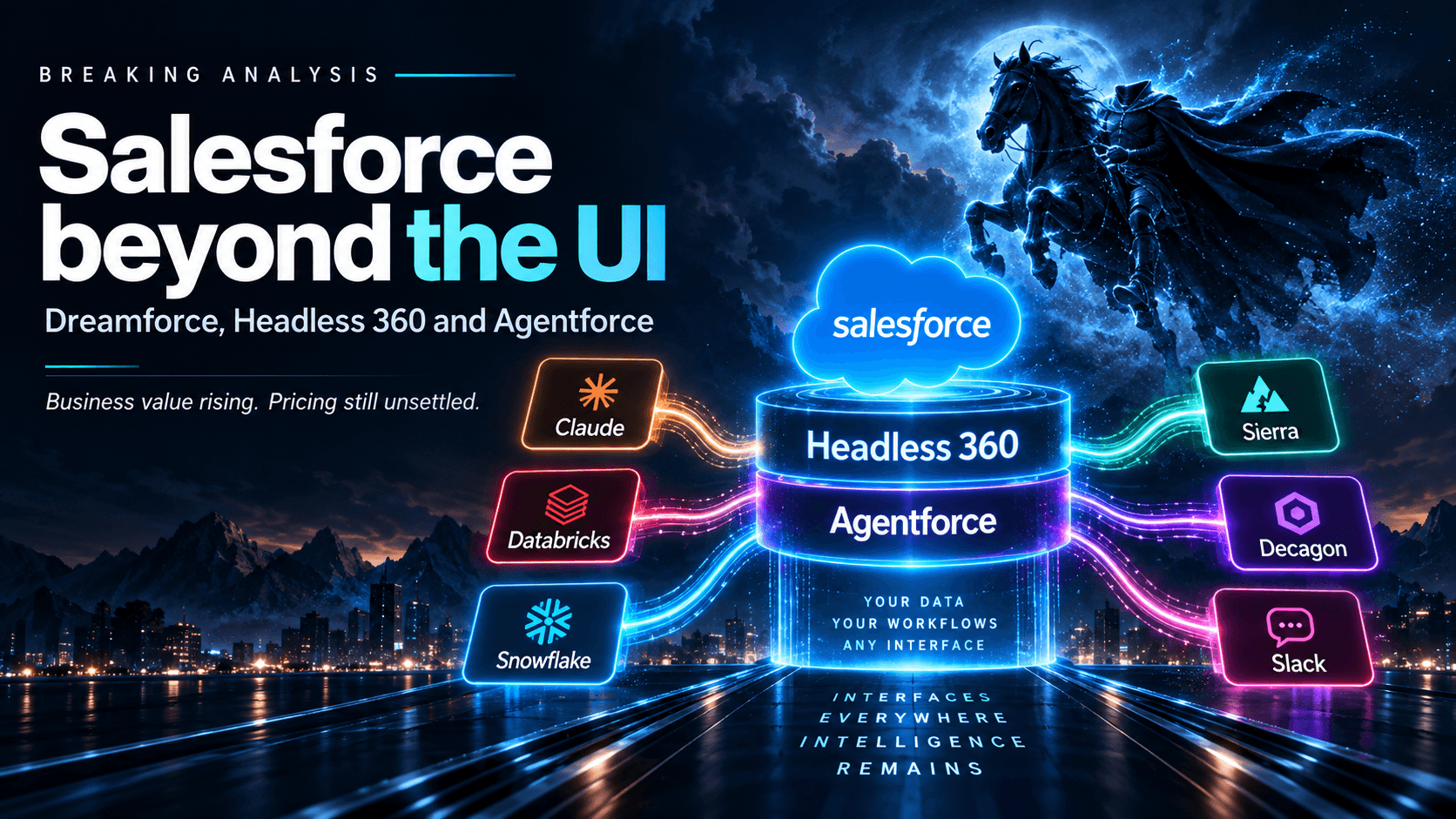
Salesforce Inc. is leaning into an enterprise architecture where users interact with business data and workflows outside its traditional application interface, relying on artificial intelligence agents to generate on-demand user interfaces within client surfaces such as Anthropic's Claude or Slack, according to an analysis published by SiliconANGLE following the CRM provider's Dreamforce 2026 conference in San Francisco.
The architectural shift represents a progression from fixed command-line, graphical, browser, and mobile screens toward agentic user interfaces built dynamically around tasks. Central to Salesforce's post-Dreamforce roadmap is an enterprise AI harness uniting Data 360, MuleSoft's Agent Fabric, and Application 360 semantics. This framework bridges general-purpose large language models with enterprise context, blending deterministic software workflows with stochastic model reasoning.
Accompanying channel research from enterprise research firm Qualitate—founded by former Enterprise Technology Research data scientist Sagar Kadakia—offers early benchmarks on enterprise adoption. Drawing from 20 in-depth customer interviews conducted within five business days of Dreamforce, Qualitate found that while Agentforce deployments remain early and concentrated in pilots or proofs of concept, roughly three-quarters of respondents are open to adoption, while one-quarter expressed no interest.
Qualitate's research found no early evidence that Agentforce funding is cannibalizing existing Salesforce budgets, with the most common project allocations sitting between 5% and 15% of current Salesforce spend. Notably, among the subset of enterprise customers who have modeled or experienced the financial impact of headless access, 75% expect total Salesforce spending to increase rather than decline.
Under the headless model, branded as Headless 360, Salesforce exposes data definitions and business logic through application programming interfaces and Model Context Protocol (MCP) servers. External clients such as Claude or Slack's Slackbot use plugins to query Salesforce's semantic layer, while coding agents generate tailored task interfaces on demand, bypassing traditional screens such as the Salesforce Lightning interface.
According to SiliconANGLE, approximately 90% of respondents asked about headless access are already using Salesforce outside its native UI or actively planning to do so. Among respondents shifting to headless deployments, seven of eight cited corporate consolidation around a preferred large language model, reflecting developer standardization on tools like Claude Code or Microsoft environments.
The shift follows multi-year data engineering across Salesforce's product portfolio, integrating previously siloed acquisitions like Tableau and Slack into unified platforms such as Data Cloud and Data 360. As enterprise workflows increasingly run through third-party AI interfaces like Claudeforce and Slackforce, Salesforce's platform value will depend on maintaining its semantic layer, business context, and operational controls as the underlying foundation for external AI agents.
Sources
Written by
The Company Wire
Inside the companies building what’s next. Reporting on startups, technology, funding and the people shaping them.