SpaceX Partners With Nvidia for 'Starmind' Orbital AI Data Center Project
Elon Musk's space firm plans to deploy up to one million satellites carrying Nvidia Vera Rubin chips into low Earth orbit starting in 2027.
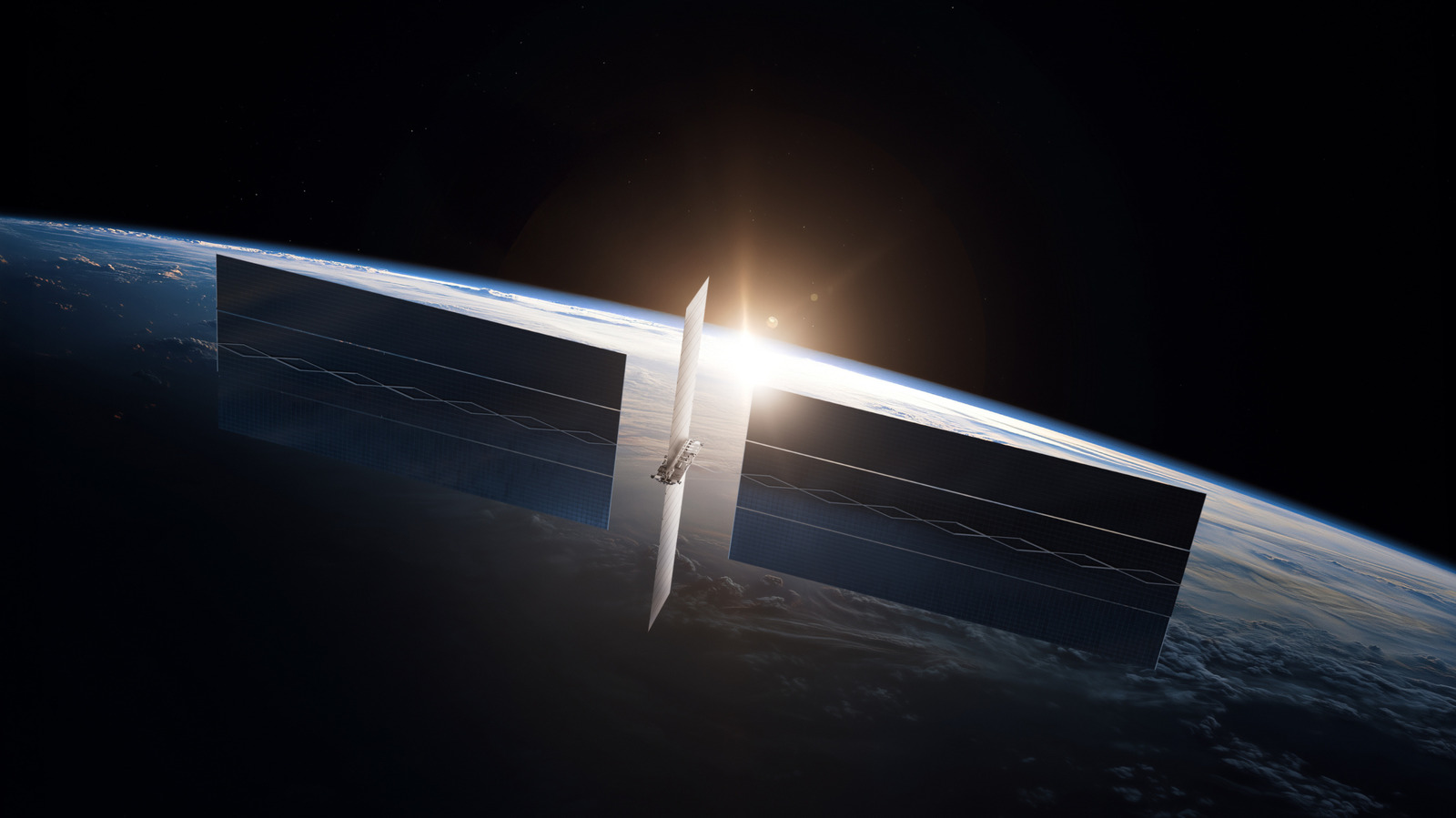
SpaceX is planning an orbital data center constellation comprising up to one million satellites designed to support off-planet artificial intelligence compute workloads. Dubbed Starmind, the initiative will begin deployment with an initial fleet of satellites designated AI1, powered by semiconductor technology from Nvidia Corp. The Federal Communications Commission filing and details disclosed during a recent quarterly earnings call outline an aggressive timeline, with SpaceX Chief Executive Elon Musk indicating that initial satellite launches are targeted for 2027.
The Starmind network is intended to bypass power grid, physical land, and cooling constraints that currently limit terrestrial data centers, providing dedicated infrastructure for Musk’s artificial intelligence startup, xAI. SpaceX revealed on X that the AI1 spacecraft will utilize Nvidia's Vera Rubin NVL72 rack-scale platform—referred to as Space-1—which combines Vera CPUs and Rubin GPUs. According to Nvidia, the architecture delivers up to 25 times more AI compute performance than its previous generation H100 GPUs.
Each AI1 satellite is designed to function as an orbital equivalent of a single Nvidia server rack, housing approximately 72 processors and producing an average computing output of 175 kilowatts. To supply power, the spacecraft will feature a solar array generating 210 kilowatts while maintaining a sun-synchronous orbit that keeps the platform in direct sunlight 98 percent of the time. SpaceX plans to manage processor thermal output through 1,700-square-foot liquid radiators designed to dispel heat into space, while processed data will be relayed back to Earth via high-speed laser links integrated into the Starlink network.
While SpaceX eventually aims to manufacture its own custom semiconductors through Terafab—a planned $119 billion joint chip manufacturing facility with Tesla Inc.—the reliance on Nvidia's cutting-edge chips for early deployments brings substantial technical risks. In reporting on the technical hurdles facing the project, Engadget highlighted expert concerns regarding the survivability and performance of modern processor architectures operating in radiation-heavy orbital environments.
A central technical issue involves radiation-induced soft errors, commonly known as bit flips, where cosmic radiation forces binary code values to invert. Modern high-performance chips feature extremely small transistors requiring lower electrical charges to represent state changes, making them significantly more susceptible to solar storms and background orbital radiation than legacy hardware. Dr. Benjamin Lee, an electrical engineering professor at the University of Pennsylvania, noted that while contemporary AI architectures can detect and fix data corruption, the continuous execution of error-correction mechanisms creates computational overhead that slows overall processing speeds.
Despite these challenges, tech firms are increasingly testing space-based hardware solutions. Last year, startup Starcloud launched Nvidia H100 GPUs into orbit to test operational longevity, while internal Google research demonstrated that its V6e Trillium TPU compute trays could function reliably in orbit for up to five years. Addressing skepticism in a June promotional video, Musk stated that the required core systems do not rely on unproven technology, noting that much of the Starmind architecture builds directly upon designs developed for Starlink V3 satellites.
Economic and launch logistics pose additional barriers to deploying the Starmind constellation. According to a July 2026 policy brief from management consulting firm Bain, orbital data centers require launch economics between $50 and $100 per kilogram to achieve commercial viability. Currently, SpaceX’s Falcon Heavy rocket launches payloads at approximately $1,500 per kilogram. Furthermore, because the large AI1 satellite payload cannot fit inside a Falcon 9 fairing, the launch schedule is completely dependent on SpaceX achieving regular operational capability with its Starship launch system.
Hardware durability and environmental impact present further long-term challenges. Industry research underscores the frequency of component issues in large-scale AI operations; a study published by Meta Platforms Inc. following its Llama 3 model training revealed hardware failures occurring roughly every three hours across ground servers. In orbit, repairing faulty equipment is unfeasible, requiring SpaceX to replace defective spacecraft via continuous launches. Researchers and policy experts have also raised concerns that deploying up to one million additional satellites into low Earth orbit will exacerbate orbital congestion, increase collision hazards with space debris, and create negative environmental side effects.
Sources
Written by
The Company Wire
Inside the companies building what’s next. Reporting on startups, technology, funding and the people shaping them.