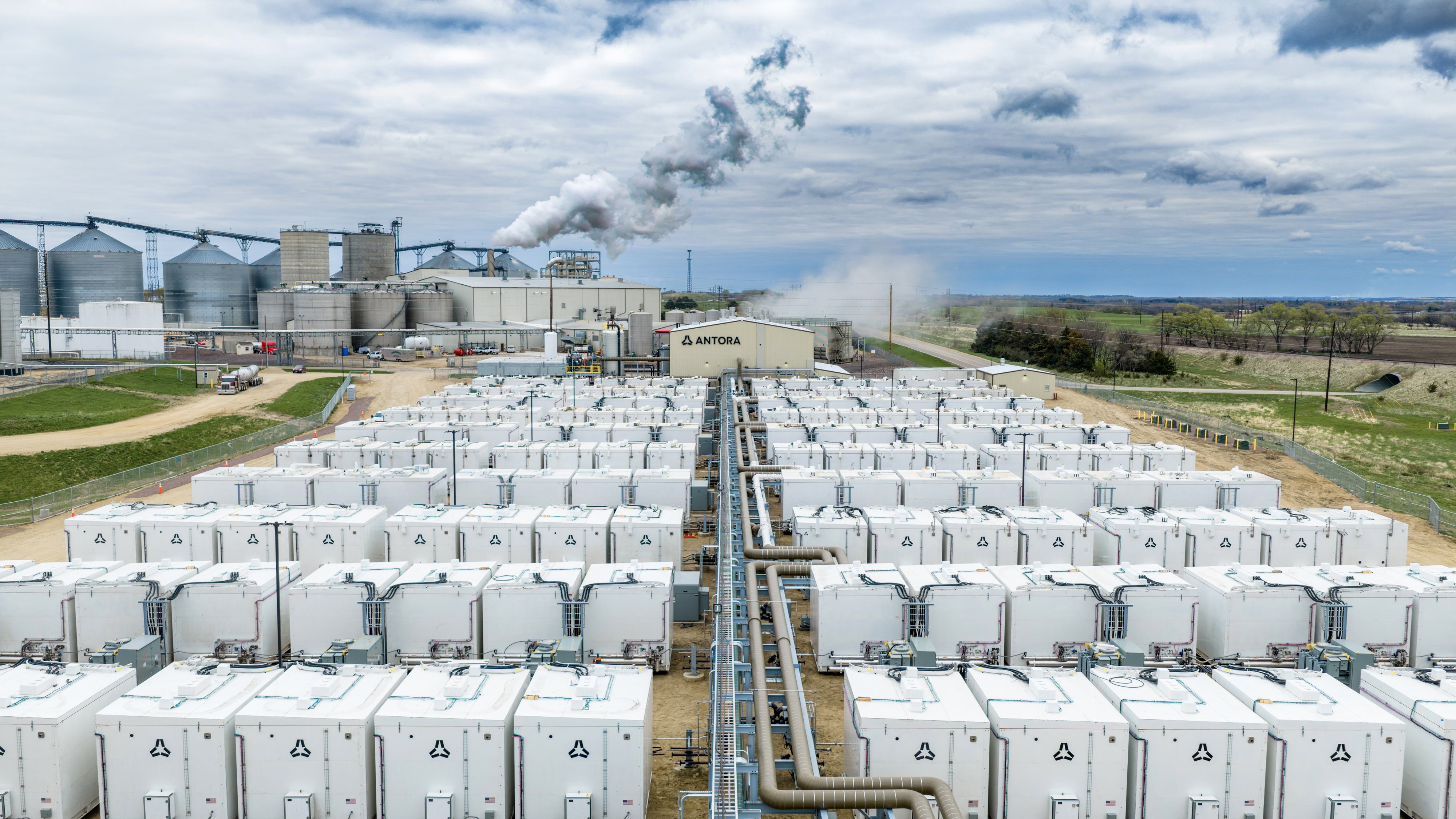
The New AI Infrastructure Race Is Creating a Generation of Billion-Dollar Startups
Investors are pouring record amounts into the companies building the data, chips, and software powering the next phase of artificial intelligence. The scale of the buildout is now rewriting how private markets price risk.

The most expensive companies in private technology today do not sell software to consumers, run marketplaces, or own a social graph. They sell electricity, cooling, silicon, networking gear, storage, orchestration software and the unglamorous plumbing that makes a large language model answer a question in under a second. Over the trailing twelve months, investors have committed roughly $94 billion to these businesses, and eleven of them crossed a billion-dollar valuation for the first time this quarter alone.
That number would have been implausible three years ago. In 2023, the median Series B in AI infrastructure was a little under $30 million; today it sits near $95 million, and the largest rounds in the category now rival late-stage growth financings in sectors that took decades to mature. What has changed is not investor enthusiasm for artificial intelligence — that was already saturated — but the recognition that the constraint on the entire field is physical.
"Everybody spent 2023 arguing about models," said one growth investor who has led three infrastructure rounds in the past year and asked not to be named because the firm does not comment on active deals. "Then they looked at the deployment timelines and realized the bottleneck is a substation in Ohio."
The buildout nobody planned for
The scale of the current construction cycle is difficult to overstate. Operators are contracting for gigawatts of capacity on multi-year horizons, signing power purchase agreements that outlast the depreciation schedule of the hardware they intend to install. Utility interconnection queues in several U.S. markets now stretch past four years, which has turned any site with existing grid capacity into an asset with a scarcity premium attached.
That premium has spawned an entire class of company. There are developers who do nothing but acquire and permit land near transmission infrastructure. There are firms specializing in liquid cooling retrofits for buildings designed a decade ago for a fraction of today's rack densities. There are startups selling firmware that squeezes an additional few percent of utilization out of accelerator fleets — a rounding error at small scale, and a nine-figure line item at the scale the largest labs now operate.
Each of these businesses has a characteristic that venture investors historically avoided: heavy capital intensity, long payback, and revenue tied to physical delivery. Each is also, at the moment, growing faster than almost any software company in the portfolio.
Why the capital looks different this time
The composition of the money matters more than the total. Traditional venture funds are participating, but they are no longer setting the terms. Infrastructure credit funds, sovereign wealth vehicles, pension allocators and the balance sheets of the hyperscalers themselves now supply the majority of dollars in rounds above $200 million.
Those investors bring different instruments. Structured equity with liquidation preferences above 1x has reappeared. So have revenue-linked ratchets, milestone tranches tied to megawatts energized rather than ARR, and debt facilities collateralized by hardware. A headline valuation in this category tells you less than it used to; two companies announcing identical numbers may be describing entirely different economic realities for their founders.
"We have seen term sheets where the preference stack means common holders need a three-x from the announced price just to break even," said a founder who raised a large round earlier this year and reviewed several competing offers. "Nobody writes that in the press release."
That opacity is not necessarily a sign of trouble. Capital-intensive industries have always financed themselves this way; the novelty is watching venture-style companies adopt the capital structure of a utility while still being covered as startups.
The concentration problem
Beneath the aggregate figures sits an uncomfortable fact: a small number of buyers account for most of the revenue. Four companies represent an outsized share of committed compute spend industry-wide, and for many infrastructure startups a single one of them is more than half of bookings.
Investors underwriting these rounds are effectively underwriting the capital expenditure plans of a handful of very large firms. If those plans hold, the current growth rates are defensible. If any one of them re-phases its buildout by even two quarters — a routine event in industrial procurement — several well-funded startups will discover that their pipeline was a single customer's planning assumption.
Some founders have responded by deliberately capping exposure. One networking hardware company told The Company Wire it turned down an order that would have doubled its year because accepting it would have pushed a single customer past 70 percent of revenue ahead of a planned financing. Others have taken the opposite approach, arguing that the moment to capture share is precisely when the largest buyers are spending most aggressively.
Margins, and the part investors are quietest about
The margin structure of these businesses varies enormously and is frequently misunderstood. Companies reselling capacity operate at gross margins in the teens to low thirties, comparable to a specialty contractor. Those selling orchestration and scheduling software sit in the seventies. In public commentary the two get grouped together under a single label, which flatters the first and understates the durability of the second.
Depreciation is the second complication. Accelerator hardware bought today carries a useful-life assumption that has been quietly extended across the industry — from three years to five, and in some filings six. That extension flows directly to reported profitability. It is defensible if older hardware continues to find work at lower price points, and expensive if a generational leap makes it uneconomic to run.
"Depreciation schedules are doing a lot of heavy lifting in the models I see," said an analyst who covers the sector for an institutional allocator. "Change one assumption and a profitable business becomes a break-even one."
The talent bottleneck
Capital is abundant; the people who can deploy it are not. The pool of engineers who have actually operated large accelerator fleets at scale numbers in the low thousands globally, and they mostly know each other. Compensation for senior infrastructure engineers with relevant experience has risen faster than for research scientists, reversing a two-year pattern.
Power engineering has become the harder hire. Utility-scale electrical engineers were, until recently, a mature and slow-moving profession; they are now being recruited by startups offering equity packages that no regional utility can match. Several companies have responded by acquiring small engineering firms outright, less for their contracts than for their staff.
What happens if it slows
Every investor interviewed for this story was asked the same question: what does the downside look like? The answers were consistent in structure and varied in severity.
The optimistic case is that demand growth continues to outrun supply through the end of the decade, contracted capacity converts to renewals, and the category matures into something resembling regulated infrastructure — lower multiples, durable cash flow, occasional consolidation.
The pessimistic case is not a collapse in demand but a change in its shape. If inference costs fall faster than usage rises, or if model efficiency improvements reduce the compute required per unit of output, the capacity contracted at today's prices becomes surplus. In that scenario the asset-light software layers survive comfortably and the leveraged capacity businesses do not.
Most people close to the market place the probability of the second case somewhere between meaningful and uncomfortable, and continue to invest anyway — partly because the first case remains more likely, and partly because sitting out a buildout of this size carries its own career risk.
The signals worth watching
Three indicators will resolve the ambiguity faster than any valuation headline. The first is contract duration: if new capacity agreements shorten from multi-year to annual, buyers are hedging. The second is the secondary market for accelerators, where sustained price weakness would confirm that supply has caught demand. The third is the mix of capital — a rotation from equity to debt at the top of the market would indicate that the people with the best information have started pricing risk differently.
For now, none of the three has turned. Contracts are lengthening, secondary pricing remains firm, and equity continues to clear at prices that would have been unthinkable in 2023.
"This is the least speculative boom I have participated in," one investor said. "There is real revenue, real delivery, and real scarcity. That is also exactly what people said in 1999 about fiber."
The Company Wire will continue reporting this story. If you have information to share, contact our newsroom directly — we protect our sources.
Written by
Sophie Alberg
Sophie covers venture financing, late-stage rounds and the investors writing the checks. She joined The Company Wire in 2021 after six years reporting on private markets.