Oak Launches With $60 Million for an AI-Native Identity Operating System
The Tel Aviv and San Francisco startup wants one continuously updated graph for employees, software accounts, service identities and AI agents.
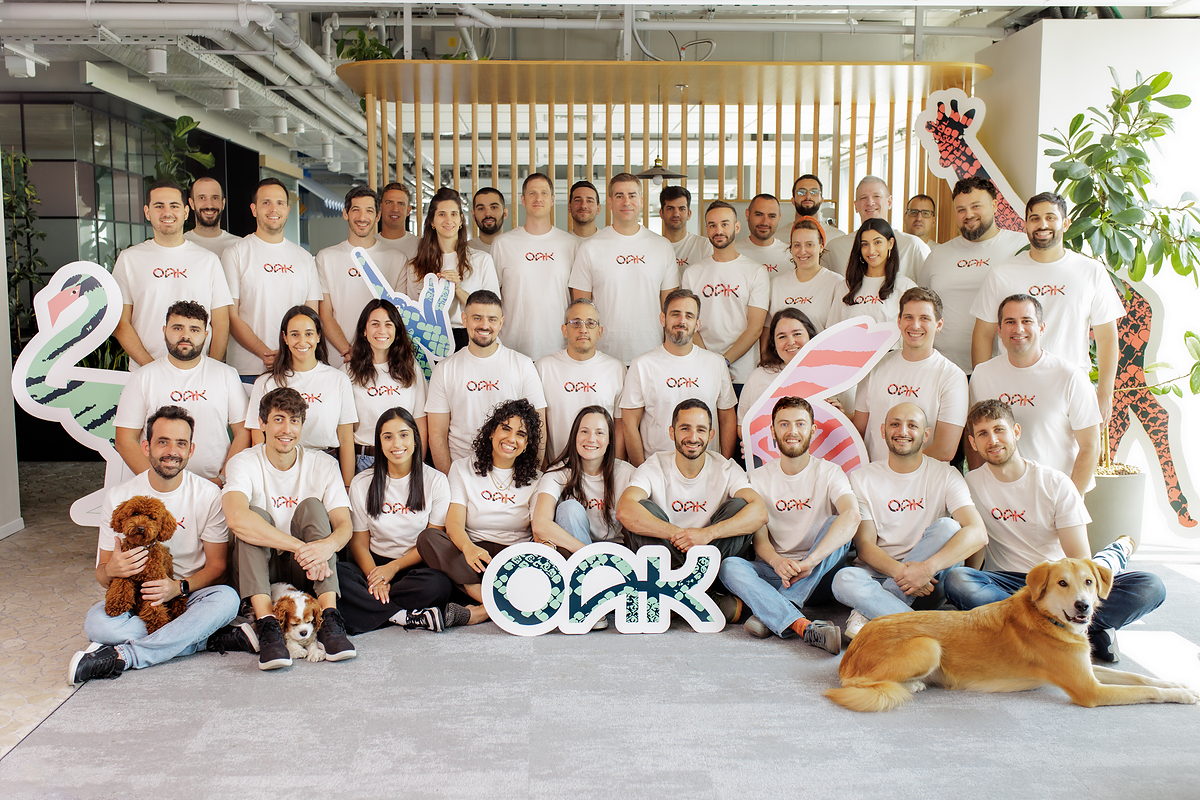
SAN FRANCISCO, Calif. - Oak has emerged from stealth with $60 million in seed financing to build identity infrastructure for companies deploying AI agents. The robust infusion of capital characterizes a new era of infrastructure investment aimed at addressing the unique security vulnerabilities created by autonomous systems. Accel, Greylock, and CRV co-led the round, with participation from Hetz Ventures, AlphaDrive Capital, and a group of security and technology executives, marking one of the largest seed rounds for a cybersecurity firm in recent history. The backing from high-profile venture firms underscores the growing consensus in Silicon Valley that current identity management frameworks are insufficient for the speed and scale of AI-driven automation.
The company was founded by Chief Executive Shai Morag and Chief Product Officer Tal Marom, two seasoned figures in the cybersecurity landscape. Oak operates from Tel Aviv and San Francisco, with staff split across the two locations when the financing was announced. This dual-presence strategy allows the firm to tap into the deep engineering talent pool of the Israeli cybersecurity sector while maintaining a direct connection to the Silicon Valley enterprise market. As part of its growth roadmap, Oak plans to expand its U.S. presence, particularly in sales and customer success functions, as it works with larger enterprise customers who are increasingly prioritizing the governance of non-human identities.
Oak is building what it calls an AI-native identity operating system, a shift from the static databases that defined previous generations of identity and access management. The platform maintains a live graph of human users, applications, machine accounts, and agents, then maps the access and relationships among them. By visualizing these connections in a dynamic graph, the system aims to provide a real-time view of an organization’s attack surface. This model is intended to help security teams answer not only who has a credential, but what an automated identity can reach and which actions it has taken, bridging a critical visibility gap in modern cloud environments.
The emergence of AI agents has intensified an existing identity problem that has plagued IT departments for years. While traditional identity management focused on human employees logging into software, the modern enterprise is now populated by thousands of machine-to-machine connections. AI agents exacerbate this because they can create accounts, invoke tools, and act at a speed that manual reviews cannot match. Analysts have noted that the rapid proliferation of these autonomous entities creates a shadow layer of permissions that is often invisible to legacy security tools, making the need for a programmatic approach to identity more urgent than ever.
Central to Oak’s value proposition is the ability to maintain a current graph that could help teams identify excessive permissions or a chain of access across systems. In many corporate breaches, attackers do not break in but rather log in using over-privileged service accounts. By mapping the lineage of an action—from a human prompt to an AI agent’s execution—Oak intends to provide the forensic trail necessary to stop lateral movement before it leads to data exfiltration. The platform’s ability to flag anomalous behavior in real-time is a key differentiator in a market where speed is the primary defensive advantage.
Industry observers point out that the product must integrate deeply without becoming another privileged point of failure. Because an identity operating system requires high-level access to an organization’s most sensitive directories and cloud configurations, it becomes a high-value target itself. Consequently, customers will expect strong isolation, logging, and recovery capabilities to ensure that the security tool does not unintentionally increase the enterprise risk profile. Oak faces the challenge of proving that its architecture is as resilient as the systems it aims to protect, particularly as it handles the high-volume data streams of Fortune 500 companies.
Oak says the platform is generally available and already deployed with enterprises, a sign that the startup spent its stealth period focused on product-market fit and technical validation. The $60 million seed round will support engineering, security expertise, and go-to-market expansion. This significant war chest allows the company to compete for top-tier talent in a highly competitive hiring environment, particularly for cloud-native security engineers and AI researchers who understand the intricacies of large language model integrations.
The size of the financing reflects the urgency investors see around machine identity as a fundamental layer of the modern tech stack. The identity market has historically been dominated by heavyweights focused on user authentication, but the shift toward software-defined everything has tilted the focus toward machine and service identities. Investors are increasingly betting on specialized platforms that can handle the sheer volume of non-human actors, which now outnumber human users by orders of magnitude in many sophisticated cloud deployments. Oak’s entry into this space represents a bet that the next generation of identity will be defined by connectivity rather than mere storage.
Oak's position in the market will depend on whether its graph stays accurate as environments change and whether it helps security teams reduce risk without slowing useful automation. The velocity of modern DevOps and AI development means that a static map is obsolete the moment it is generated. For Oak to succeed, its platform must maintain high fidelity across multi-cloud and hybrid environments, ensuring that security policies are enforced even as new agents are spun up and spun down in seconds. This requires a level of performance and reliability that few startups can achieve at scale.
The broader cybersecurity industry is currently grappling with the double-edged sword of artificial Intelligence. While AI provides new tools for defense, it also gives adversaries the ability to automate credential stuffing and social engineering at scale. The launch of an AI-native identity system arrives at a time when CISOs are looking for 'autonomous defense' capabilities that can keep pace with 'autonomous threats.' Analysts suggest that the identity layer is the most logical place to anchor these defenses, as every action in a digital environment eventually requires a permission check.
As Oak scales its operations in San Francisco, it will face stiff competition from both established identity providers and a new wave of well-funded startups. The success of the venture will likely hinge on its ability to build a robust ecosystem of integrations. By connecting to common enterprise software and cloud platforms, Oak seeks to become the central clearinghouse for authorization. The company's focus on AI agents provides a timely entry point, but its long-term viability will depend on its capacity to serve as the unified source of truth for all types of identity across the enterprise.
In the coming months, the industry will be watching for case studies and performance benchmarks that demonstrate Oak’s impact on operational security. The fundamental question for the company is whether it can transform identity from a reactive compliance exercise into a proactive security asset. With significant capital and a team of veteran founders, Oak is positioned to influence how companies think about the relationship between their human workforce, their software tools, and the rapidly growing population of AI-driven agents.
Sources
Written by
The Company Wire
Inside the companies building what’s next. Reporting on startups, technology, funding and the people shaping them.