TextQL Raises $17 Million as Blackstone Backs Enterprise Data Agents
The analytics startup is using strategic capital to expand software that lets employees ask questions across fragmented company data in ordinary language.
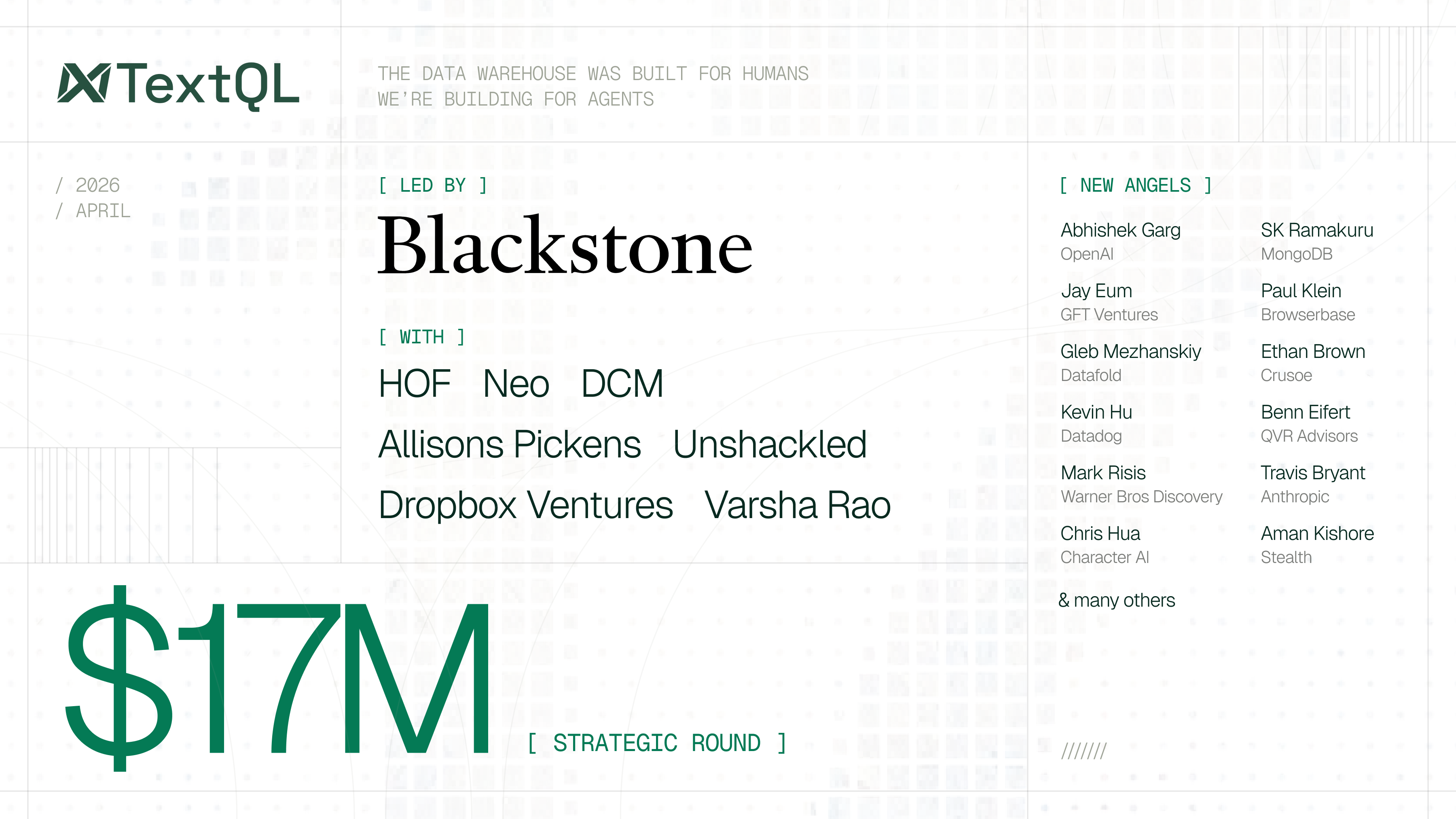
SAN FRANCISCO, Calif. - TextQL has announced it has raised $17 million in strategic financing, a round anchored by Blackstone Innovations Investments that underscores the heightening demand for sophisticated data orchestration within the enterprise. The funding round saw participation from a broad coalition of venture firms and technology leaders, including Hall of Fame investor HOF Capital, Neo, DCM Ventures, and Unshackled Ventures, alongside several prominent technology executives. Based in San Francisco, TextQL is positioning itself at the center of the generative AI transition by building autonomous agents designed to facilitate data analysis for non-technical employees, allowing them to bypass the traditional requirement of writing complex SQL queries or navigating intricate business intelligence dashboards.
The core challenge TextQL seeks to address is the increasing fragmentation of corporate information. In a modern enterprise environment, critical data is rarely stored in a single repository; instead, it is distributed across diverse cloud data warehouses, various business intelligence platforms, and a multitude of operational applications. This dispersion often creates a bottleneck where only data scientists or specialized analysts can extract meaningful insights. TextQL acts as a connective layer between these systems, utilizing natural language processing to allow any user to ask a question in plain English, which the software then translates into actionable computational steps.
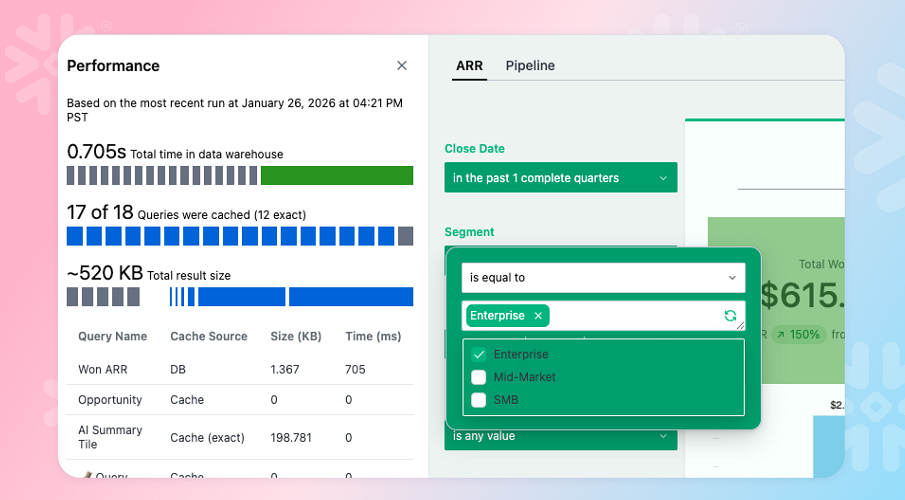
The mechanics of the platform involve more than just a simple chat interface. When a query is initiated, the software identifies the relevant data sets across the organization’s ecosystem, generates the necessary analysis, and delivers a formatted answer. Crucially, the system provides supporting context and documentation, ensuring that the resulting data can be reviewed and verified by human teams. This focus on the audit trail is a response to a growing industry realization that while speed is important, the provenance of a data point is critical for high-stakes decision-making in a corporate setting.
Blackstone serves as both a primary investor and a significant enterprise reference for the startup, representing a strategic partnership that goes beyond mere capital injection. By integrating TextQL within its own operations, Blackstone provides the startup with a high-pressure environment to refine its software against the complex requirements of a global investment firm. TextQL has stated that its platform is currently utilized by a range of organizations, including Scale AI and Dropbox, indicating that its utility spans both traditional finance and modern technology sectors. The company reported rapid year-over-year revenue growth alongside the announcement of the round, suggesting strong product-market fit in a competitive software-as-a-service environment.
Securing strategic backing from a firm like Blackstone provides TextQL with an insider’s view of large-scale enterprise requirements, particularly regarding security, compliance, and multi-departmental data governance. However, the startup faces the task of ensuring its product maintains independent value for customers outside of its investor base. The success of such a tool often hinges on its ability to integrate seamlessly with incumbent technologies from vendors like Snowflake, Databricks, and Salesforce, rather than attempting to replace them entirely.
The rise of natural-language analytics represents a paradigm shift in how companies approach business intelligence, promising to democratize access to information that was previously siloed. Industry analysts have noted that the primary hurdle for this technology is not just lingual fluency, but the inherent risk of 'hallucination' or inaccuracy. A fluent, well-formatted answer can often appear more authoritative than the underlying data actually justifies, leading to potential misinterpretations if the software does not strictly adhere to the company’s source of truth.
To mitigate these risks, TextQL focuses on managing the difficult logic of definitions, permissions, and conflicting metrics that vary across different departments. A simple metric like 'revenue' can be interpreted in several ways depending on whether a team is looking at GAAP standards, cash flow, or booked contracts. It can also fluctuate based on date treatments, currency conversions, or how a customer’s lifecycle status is defined. TextQL’s software must navigate these nuances to ensure that an answer provided to a marketing manager aligns perfectly with the figures held by the Chief Financial Officer.
This emphasis on traceability and human review is a core product requirement intended to build trust with technical teams. For an AI agent to be viable in an enterprise setting, it cannot function as a 'black box.' Instead, it must expose its logic and the specific records it used to reach a conclusion. By allowing analysts to inspect the generated queries and the data paths taken, TextQL aims to bridge the gap between the speed of automated agents and the rigor of manual data science.
The new financing will be directed toward aggressive product development and the expansion of the company’s enterprise customer success teams. As TextQL scales, it enters a crowded field where established data platforms and legacy analytics vendors are rapidly adding conversational interfaces to their existing product suites. Giants in the space are increasingly offering 'co-pilot' features that promise similar functionality, creating an environment where a standalone startup must prove it offers a superior or more integrated experience to survive.
TextQL's primary competitive opportunity lies in its ability to serve as a neutral, horizontal layer across disparate systems. While a specific cloud provider might offer excellent tools for data stored within its own ecosystem, TextQL intends to provide a unified experience that works regardless of where the data resides. This neutrality is a significant selling point for companies that use a hybrid-cloud approach or rely on a best-of-breed software stack that includes tools from multiple competing vendors.
As the startup moves into its next phase of growth, market observers will be watching to see if its AI agents can move beyond simple descriptive analytics into more predictive or prescriptive territory. To achieve this, the platform will need to demonstrate that its answers are not only fast and readable but, more importantly, consistently reproducible. In the world of enterprise finance and operations, being right once is not enough; a tool must be right every time a query is run, across every department in the organization.
The broader trend of 'data democratization' has seen various waves over the last decade, yet the technical barriers to entry for data analysis have remained stubbornly high. By leveraging the latest breakthroughs in large language models and agentic architectures, TextQL is attempting to finally lower that bar. The involvement of Blackstone and other strategic investors suggests that the enterprise market is now ready to move beyond the experimental phase of AI and into a period of deep functional integration.
Sources
Written by
The Company Wire
Inside the companies building what’s next. Reporting on startups, technology, funding and the people shaping them.