Human Archive Raises $8.2 Million to Collect Training Data for Physical AI
The startup is building a network that records first-person human activity, bringing privacy, consent and worker pay into the robotics data race.

SAN FRANCISCO, Calif. - Human Archive has announced the successful completion of an $8.2 million funding round aimed at scaling the collection of high-fidelity, real-world data for the training of robots and other physical artificial intelligence systems. The investment arrives as the robotics sector shifts away from purely simulated training environments toward the ingestion of massive datasets derived from actual human movement and interaction. By recording first-person activity through a proprietary network of contributors, the startup intends to address the data bottleneck currently preventing humanoid and specialized robots from performing complex, non-repetitive tasks in unpredictable real-world settings.
The funding round saw participation from a group of prominent venture capital firms, including Wing Venture Capital, Nexus Venture Partners, and the accelerator Y Combinator. The capital injection was bolstered by a list of high-profile individual investors with professional ties to the industry’s most significant players, including OpenAI, Nvidia, Google, and Meta. Support also came from individuals associated with the talent platform Mercor and various university AI research laboratories, signaling a broad institutional and technical interest in the startup’s approach to solving the grounding problem in physical AI.
Human Archive was established by a founding team with deep roots in Northern California’s premier technological research institutions. The leadership includes University of California, Berkeley alumni Samay Maini, Rushil Agarwal, and Shloke Patel, alongside Chief Executive Raj Patel, an alumnus of Stanford University. This combination of academic backgrounds reflects a growing trend in the Silicon Valley ecosystem where researchers from elite engineering programs are increasingly spinning out companies focused on the infrastructure required to support the next generation of large-scale foundation models for robotics.
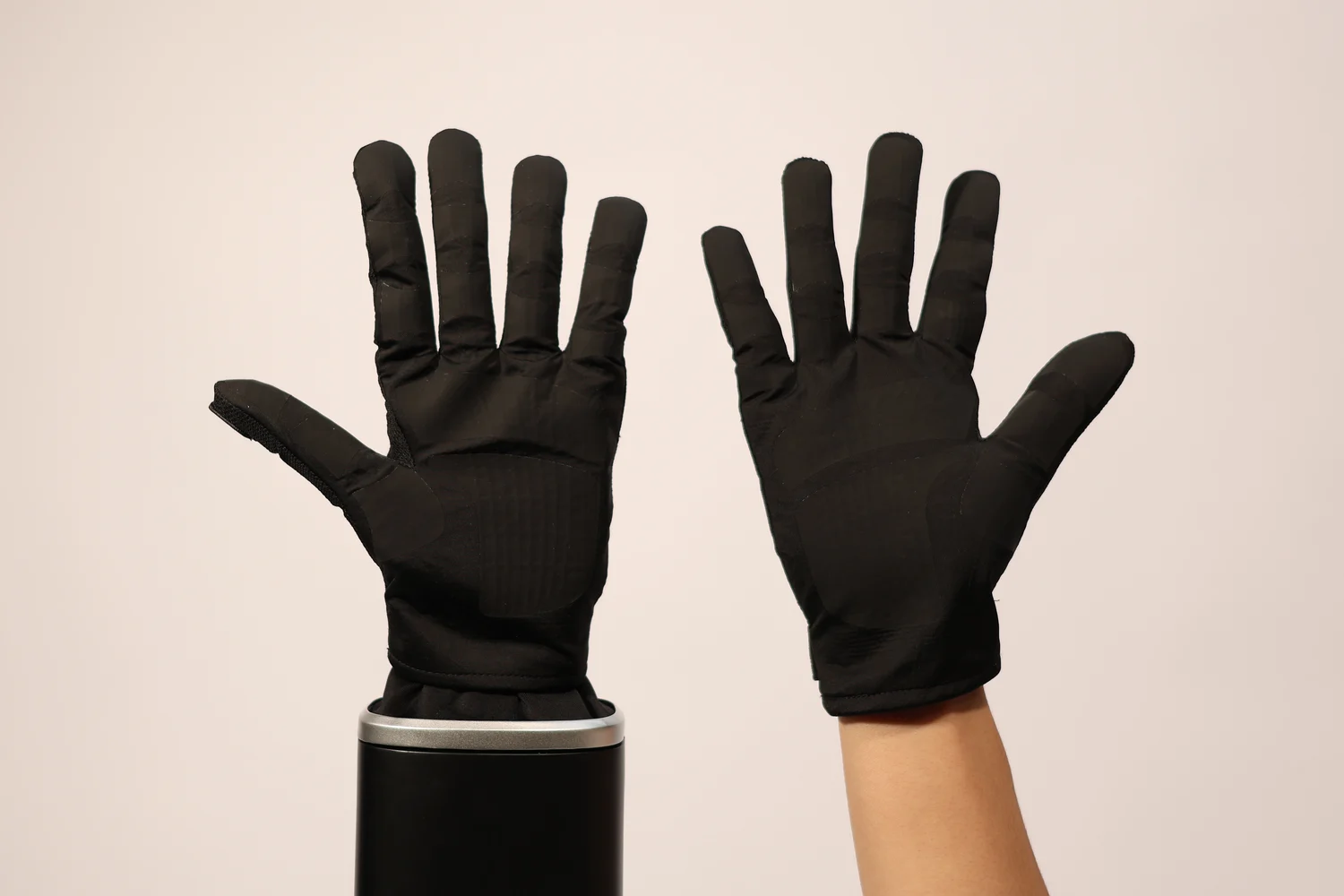
The core of the company’s operation involves recruiting individuals to record their daily tasks using an array of sophisticated hardware. Depending on the specific requirements of a customer, these workers may be outfitted with specialized headsets, wrist-mounted cameras, tactile sensing gloves, and motion-capture suits. This multi-modal approach allows for the capture of data that exceeds the capabilities of standard stationary video, providing the nuanced information on force, spatial orientation, and object manipulation that is critical for training robots to handle delicate or multifaceted physical objectives.
At the time of the funding announcement, Human Archive reported that more than 1,000 headsets were currently in use across its network. The company’s geographical footprint is focused on diversity in labor and environmental contexts, currently operating in partnership with service-oriented businesses in India. Furthermore, the firm has initiated pilot programs in Southeast Asia and the United States. This international reach is essential for creating robust datasets that reflect a variety of architectural layouts, tools, and social norms, ensuring that the resulting AI models are not limited by a narrow Western-centric training set.
Industry analysts have noted that the emergence of companies like Human Archive highlights a pivotal moment in the evolution of robotic learning. For decades, roboticists relied on synthetic data or manual programming to dictate machine movements. However, as large language models have demonstrated the power of massive data ingestion, the robotics field is now attempting to replicate that success through 'imitation learning.' By watching thousands of hours of humans performing tasks, AI systems can learn to navigate environments and manipulate objects with a level of fluidity that was previously impossible to achieve through simulation alone.
The resulting streams of video and sensor data act as a digital blueprint for physical intelligence. These datasets help models understand the subtle physics of the world, such as how much pressure to apply when picking up an egg versus a power tool, or how to maintain balance while traversing an uneven surface. As the demand for general-purpose robots in logistics, manufacturing, and domestic service grows, the value of this human-recorded archive is expected to appreciate, positioning the company as a foundational supplier in the emerging AI supply chain.
However, the rapid scaling of human-centric data collection brings difficult ethical and economic questions to the forefront. According to reports from TechCrunch, some workers utilized by the company were paid a base rate of approximately $1 per hour. This figure has drawn scrutiny as it sits below the compensation rates cited for several competing data providers in the burgeoning AI labeling and collection industry. The disparity highlights a tension between the high valuations of AI companies and the labor conditions of the global workforce that powers their underlying technologies.
Beyond compensation, the privacy implications of widespread human recording are substantial. Recording within private homes and active workplaces necessitates a rigorous framework for meaningful consent, not only from the primary workers but also from bystanders who may inadvertently be captured by the sensors. Industry observers emphasize that the expansion of such networks requires strict limits on data reuse, highly secure storage protocols, and transparent procedures for the deletion of sensitive or personally identifiable material that is not relevant to the training of the AI model.
The fresh capital is earmarked for the expansion of Human Archive's collection network and the integration of even more diverse sensor types. The company’s growth trajectory suggests a move toward becoming an end-to-end data refinery, where raw human experience is converted into structured intelligence. Yet, as the company scales, experts suggest that its long-term viability will depend on its ability to maintain high ethical standards. Growth that outpaces the development of safeguards could lead to regulatory risks or reputational damage that might alienate the very enterprise customers the startup seeks to serve.
The broader market for physical AI is entering a phase where the quality of data is becoming as important as the quantity. Leading developers of humanoid robots, such as those at Tesla or Boston Dynamics, are increasingly looking for 'corner cases'—rare or complex physical interactions that are difficult to simulate. Human Archive’s model of deploying sensors into the field allows for the capture of these rare events, providing a competitive edge over companies that rely solely on laboratory-based data collection or computer-generated imagery.
Ultimately, the success of Human Archive will serve as a test case for how the technology industry values human labor in the age of automation. Physical AI requires diverse, authentic examples of real human activity, and those examples are derived from individuals whose movements and privacy have intrinsic value. As the sector matures, buyers of training data will likely move beyond simple volume metrics, increasingly examining the provenance of the data and the conditions under which it was obtained to ensure compliance with emerging global AI governance standards.
For now, the startup remains in a high-growth phase, fueled by the urgent needs of an industry racing toward a 'ChatGPT moment' for robotics. With backing from some of the most influential figures in Silicon Valley and a growing fleet of sensor-equipped workers, Human Archive is positioned at the intersection of human effort and machine intelligence. The coming months will determine if the company can balance its ambitious technical goals with the complex social and ethical responsibilities inherent in archiving the physical nuances of the human experience.
Sources
Written by
The Company Wire
Inside the companies building what’s next. Reporting on startups, technology, funding and the people shaping them.