HPE Posts $14.5B Fourth Quarter as AI Backlog Climbs to $10.5B
Revenue rose 50% on surging infrastructure demand, but extended networking lead times and moderating server margins checked market enthusiasm.
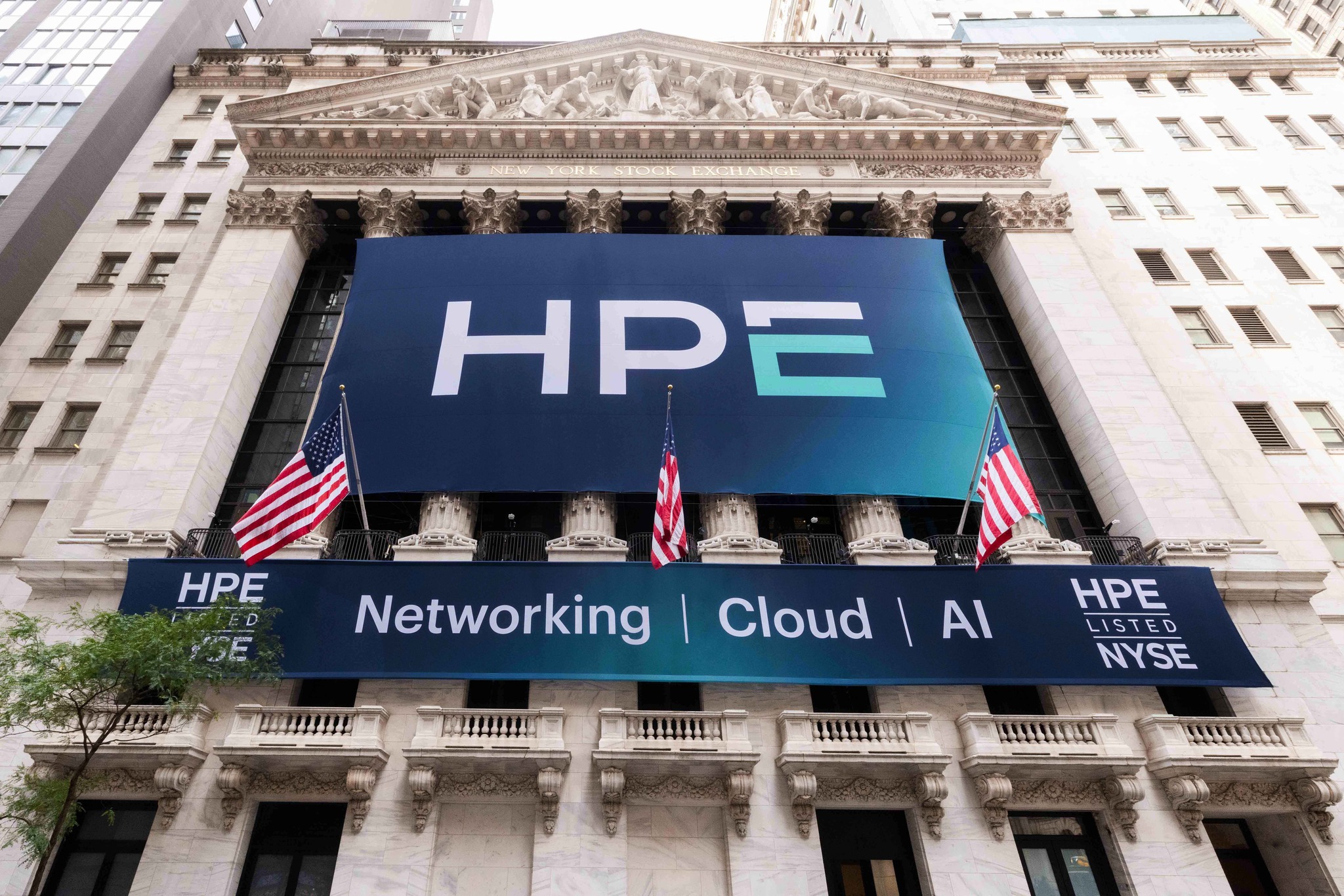
Hewlett Packard Enterprise Co. reported record fiscal fourth-quarter results, driven by surging enterprise demand for artificial intelligence clusters and networking equipment that continues to outpace shipping capacity.
Revenue rose 50% year-over-year to $14.5 billion, while overall orders expanded 88%, lifting the company's total AI backlog to $10.5 billion at the close of the fiscal year. Adjusted earnings reached $1.43 per share, exceeding the upper bound of company guidance. For fiscal 2027, HPE guided revenue growth to between 27% and 35%, forecast adjusted earnings per share of $5.05 to $5.35, and projected free cash flow of at least $5.5 billion.
The performance illustrates how data-center buildouts are lifting traditional enterprise hardware vendors, yet market reaction remained measured. After climbing 17% ahead of the release during a broader infrastructure rally, HPE shares fell approximately 13% the following morning as investors weighed delivery bottlenecks and margin normalization.
Details of the company's executive briefing and financial breakdown were reported by SiliconANGLE.
In an analyst briefing reported by the outlet, Chief Executive Antonio Neri said networking orders expanded more than 4.5 times faster than networking revenue in the quarter, accelerating from 3.5 times in the third quarter. Severe component shortages continue to dictate shipment timing, with lead times for certain networking parts extending between 28 and 40-plus weeks. HPE doubled purchase commitments during the summer and increased them again in the fourth quarter, though management expects conversion rates to improve only starting in the second quarter of fiscal 2027. Critical supplies, including server memory, are projected to stay constrained through the second half of 2028.
Networking has emerged as the central pillar of HPE's margin strategy following the completed integration of Juniper Networks. HPE raised its projected annual run-rate cost synergies from the transaction to $800 million. Chief Financial Officer Marie Myers told analysts that networking is slated to account for more than 40% of total operating profit by the fourth quarter of fiscal 2027, despite generating less than a quarter of aggregate revenue, supported by triple-digit growth in routing orders between AI facilities.
Amid industry debate over vendor-backed debt across specialized cloud operators, Neri said HPE has avoided financial exposure to neocloud balance sheets through Hewlett Packard Financial Services. Although HPE fulfilled major customer purchases, including a $1.2 billion hardware agreement with Vultr, Neri noted the company holds no debt exposure to neoclouds, with sovereign entities and conventional enterprises comprising the bulk of cumulative AI orders.
Margin mix remains the primary point of investor evaluation. Operating margins in HPE's Cloud and AI segment reached 18.4% during the quarter—up from 9.3% in the prior-year period—boosted by elevated server pricing. Management projected segment operating margins to settle near 14% across fiscal 2027 as component costs rise alongside higher-volume shipments. HPE also anticipates roughly 54% of fiscal 2027 revenue to land in the second half of the year, driven by the rollout of its Helios rack systems, which incorporate Advanced Micro Devices Inc. silicon paired with HPE Ethernet switching rather than Nvidia Corp.'s proprietary fabric.
Looking beyond model training, Neri projected that inference workloads will account for 80% of enterprise AI processing by 2030, anticipating that data privacy requirements and recurring token costs will increasingly shift operational AI deployments onto local corporate networks.
Sources
Written by
The Company Wire
Inside the companies building what’s next. Reporting on startups, technology, funding and the people shaping them.

