Skydio Raises $110 Million to Expand U.S. Drone Manufacturing
The autonomous drone maker reached a $4.4 billion valuation as it increases production for defense, public safety and infrastructure customers.
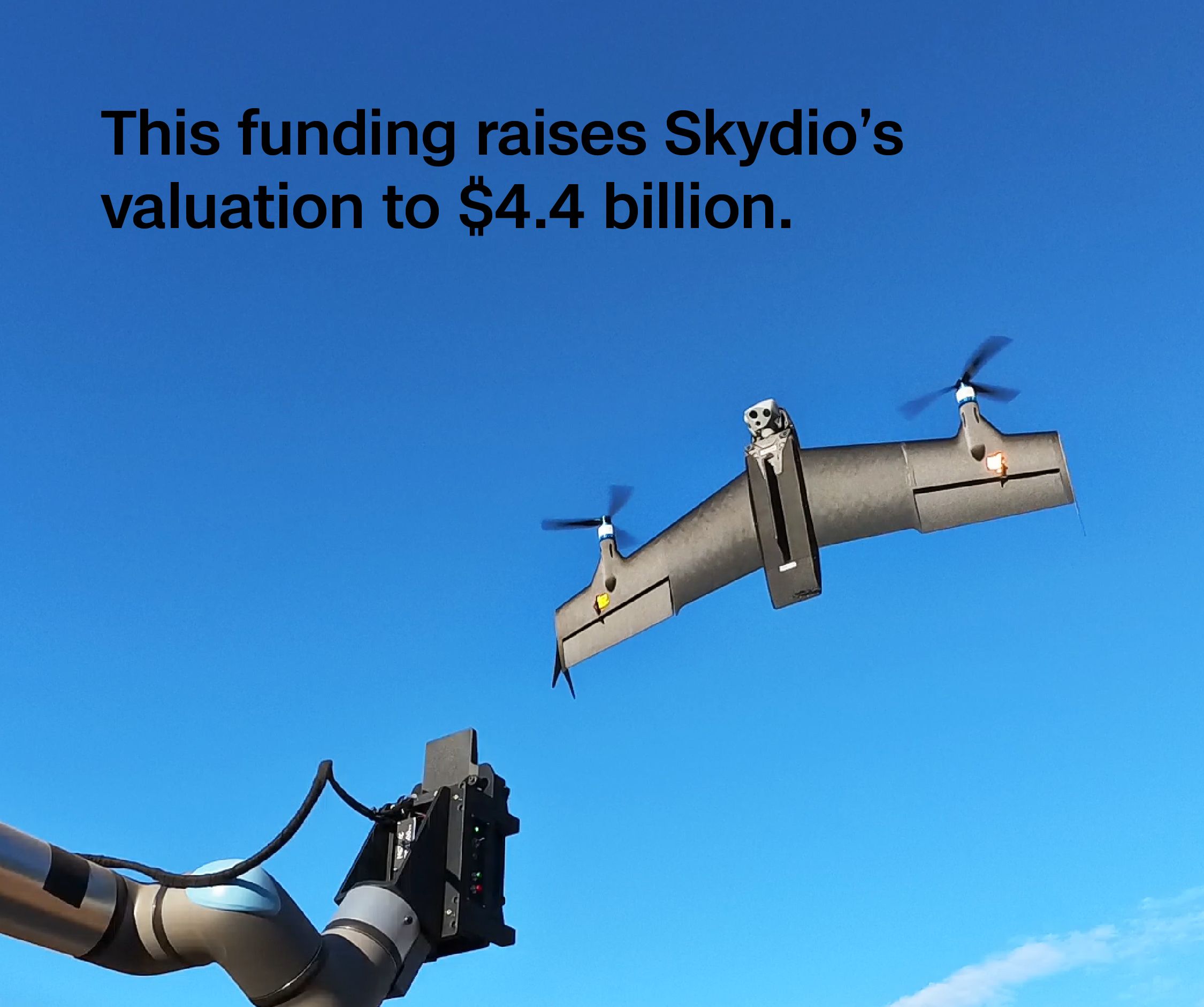
SAN MATEO, Calif. - Skydio has raised $110 million in Series F financing at a $4.4 billion valuation, highlighting the continued investor appetite for domestic autonomous systems. Existing investors led the round, providing the San Mateo-based company with additional capital to expand its domestic manufacturing footprint and accelerate the development of autonomous drones for a wide range of government and commercial customers. This latest injection of capital positions Skydio as one of the most well-funded robotics enterprises in the United States, as the company seeks to scale its operations to meet a critical shift in how drones are utilized across public and private sectors.
The core of Skydio's value proposition lies in its sophisticated integration of aircraft design, proprietary software, and advanced computer-vision systems. Unlike traditional unmanned aerial vehicles that rely heavily on manual pilot control, Skydio's technology allows drones to navigate complex environments and maneuver around obstacles with limited input from a human operator. This autonomy is achieved through onboard sensors and artificial intelligence that process environment data in real time, making the aircraft less prone to crashes and significantly more efficient for high-stakes operational environments.
Skydio has strategically focused its sales efforts on defense organizations, emergency responders, and infrastructure operators. These sectors represent large-scale markets where the ability to inspect utilities, bridges, and power lines without constant manual oversight provides a clear return on investment. In the defense realm, the autonomy features allow personnel to deploy drones for reconnaissance and tactical awareness without the distraction of complex flight controls. For public safety agencies, such as fire and police departments, autonomous flight capability means faster deployment and safer navigation through dense urban or wooded areas.
The demand for U.S.-made drones has surged in recent years as government agencies and commercial enterprises seek reliable alternatives to foreign suppliers. There has been a growing emphasis on secure supply chains and data integrity, particularly within the federal government and critical infrastructure sectors. This shift in the regulatory and geopolitical landscape has created a significant opening for domestic manufacturers like Skydio to capture market share from international competitors who have historically dominated the low-altitude drone market but now face increasing scrutiny over security vulnerabilities.
By integrating hardware and autonomy software, Skydio enables its customers to deploy entire fleets for repeated missions rather than treating each drone as a manually flown device. This architectural choice is central to the company's long-term strategy, as it transforms drones from isolated tools into scalable enterprise assets. When drones can fly themselves through pre-programmed inspection routines, a single operator can manage multiple units or focus on analyzing the data captured, rather than the mechanics of flight. This transition is essential for industries looking to automate labor-intensive inspection processes at a global scale.
Despite the successful funding round, expanding manufacturing capabilities brings significant execution challenges. Scaling production for high-precision hardware is notoriously difficult, particularly as the company must control component costs and maintain high quality across an increasingly large volume of orders. Developing a reliable domestic supply chain requires deep coordination with vendors and a high degree of vertical integration, which can be capital-intensive. The company's ability to maintain its margin while increasing output will be a key metric for its future sustainability in the hardware space.
Furthermore, the company must keep pace with rapidly changing defense requirements. Modern conflict zones and security operations have become testing grounds for drone technology, leading to quick iterations in software needs, hardened communications, and electronic warfare resistance. As defense departments update their standards for small unmanned aircraft systems, Skydio will need to ensure its R&D cycle can respond to these shifting demands without compromising the stability of its commercial product lines or its production timelines.
The competitive landscape for Skydio is becoming increasingly crowded and diverse. On one end, the company faces manufacturers offering less expensive aircraft that may lack full autonomy but provide a lower barrier to entry for budget-conscious agencies. On the other, specialized military systems are designed specifically for combat environments with features that go beyond standard commercial needs. There is also the rise of software-first companies that provide autonomy and fleet management tools capable of running on hardware from multiple different manufacturers, potentially commoditizing the aircraft themselves.
The Series F round is specifically earmarked to support domestic production capacity, product development, and large-scale customer deployments. By keeping manufacturing within the United States, Skydio aims to mitigate the risks associated with international logistics and trade tensions, though this strategy often requires higher labor and operational costs than outsourcing. The funding provides a runway to optimize these factory processes and integrate more advanced AI features into the next generation of their flight controllers and sensor arrays.
At a $4.4 billion valuation, Skydio's success assumes that autonomous drones will eventually become standard tools across nearly all public and private operations. This valuation reflects a belief that we are moving away from an era of RC-style flight toward an era of robotic utility. For this valuation to remain justified in the eyes of future investors or potential public markets, the company will need to move beyond early adoption phases and into the mass-market implementation of its technology across the global industrial landscape.
The next major proof point for Skydio will be securing large, multi-year repeat orders from its core customer base. While several agencies have conducted pilot programs or initial purchases, the long-term viability of the business depends on these organizations integrating Skydio's drones as a permanent part of their operational workflow. Demonstrating that its drones can provide consistent value over thousands of flight hours in varied climates and conditions will be essential to establishing the brand as the gold standard for reliable autonomous flight.
Finally, the company must prove that it can manufacture at scale while sustaining the high level of reliability and support that professional customers require. Maintaining a zero-defect culture while ramping up assembly lines is a hurdle that has stalled many hardware-focused technology firms in the past. If Skydio can successfully bridge the gap between a high-growth startup and a stable industrial manufacturer, it will solidify its position at the forefront of the American robotics industry. The industry will be watching closely as the company deploys this $110 million to solve the complex puzzle of high-tech domestic manufacturing.
Sources
Written by
The Company Wire
Inside the companies building what’s next. Reporting on startups, technology, funding and the people shaping them.