Cisco’s Quarter-Century Stock Recovery Offers Valuation Lessons for AI Hardware Leaders
A 25-year wait to eclipse a dot-com peak closing price demonstrates how extreme valuation multiples can decouple investor returns from fundamental growth.
More than twenty-five years after Cisco Systems briefly reigned as the world's most valuable public company, its protracted stock rehabilitation is offering a cautionary case study for investors assessing artificial intelligence infrastructure providers, according to an analysis published by Yahoo Finance (https://247wallst.com/investing/2026/11/08/in-march-2000-cisco-briefly-became-the-worlds-most-valuable-company-as-its-stock-closed-at-80-06-buyers-that-day-waited-more-than-25-years-for-it-to-close-higher-heres-what-ai-investors-need-t/?.tsrc=rss).
At the height of the dot-com buildout on March 27, 2000, Cisco shares closed at $80.06, lifting its market capitalization on basic shares to $555.5 billion. The milestone inched past Microsoft's $541.6 billion valuation, according to contemporaneous reporting from the Associated Press. Driven by demand for the core routers and switches directing early internet traffic, Cisco's equity had surged roughly 4,000% between late 1994 and March 2000, leaving the company trading at a price-to-earnings ratio above 200 and an enterprise value-to-sales multiple of 31.
When the telecom and dot-com boom collapsed, Cisco stock tumbled 87.11% over the following two and a half years, bottoming at $10.32 on October 11, 2002. Total market value fell to roughly $60 billion, requiring an eventual 676.3% rally from that trough simply to regain parity with the March 2000 close.
Investors who bought at the peak waited 25 years, eight months, and 13 days for a higher close. Cisco finally broke that ceiling on December 10, 2025, closing at $80.25, and later touched an intraday high of $119.36 on May 14, 2026. The prolonged recovery highlights how extreme initial pricing can suppress shareholder returns even when underlying operations succeed: since 1999, Cisco has nearly quintupled annual revenue, quadrupled net income, and grown earnings per share eightfold while preserving healthy margins. Because corporate share buybacks retired substantial share volume over the intervening decades, Cisco's market capitalization—roughly $373.4 billion at a recent price of $94.89—remains well below its nominal 2000 high.
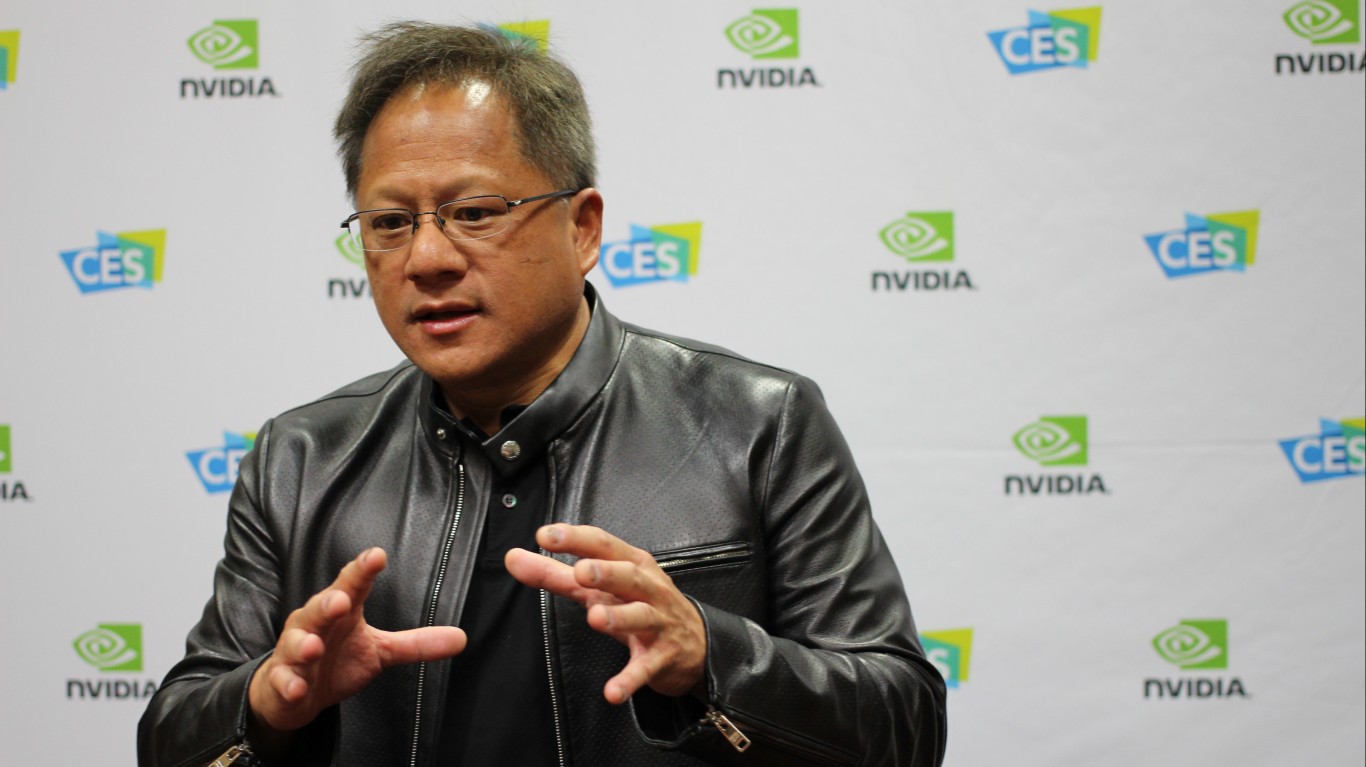
The historical comparison is resonating across Wall Street as analysts draw parallels between dot-com networking hardware and modern AI accelerators. Nvidia currently holds the computing infrastructure mantle with a market capitalization near $4.556 trillion, supported by fiscal second-quarter revenue that surged 105.85% year over year to $96.22 billion. Although Nvidia trades at roughly 37 times earnings—substantially below Cisco’s peak multiple of 200—the chipmaker has absorbed a 21.14% stock decline over the past month while managing $279.0 billion in advance supply commitments, largely dedicated to memory procurement for its Vera Rubin architecture ramp.
Cisco is also participating directly in the generative computing cycle, booking $9.3 billion in AI infrastructure orders from hyperscale cloud operators during fiscal 2026, when total revenue reached $63.3 billion. Cisco expects to generate $7.5 billion in AI infrastructure revenue in fiscal 2027, with both Cisco and Nvidia scheduled to report quarterly financial updates in mid-November.
Sources
Written by
The Company Wire
Inside the companies building what’s next. Reporting on startups, technology, funding and the people shaping them.