Jensen Huang's Reinstatement Sparks $500 Billion Rebound Across Nvidia's AI Ecosystem
Shares of key suppliers, server makers, and equity holdings surged on Monday, while chip rivals Broadcom and AMD trailed the broader recovery.
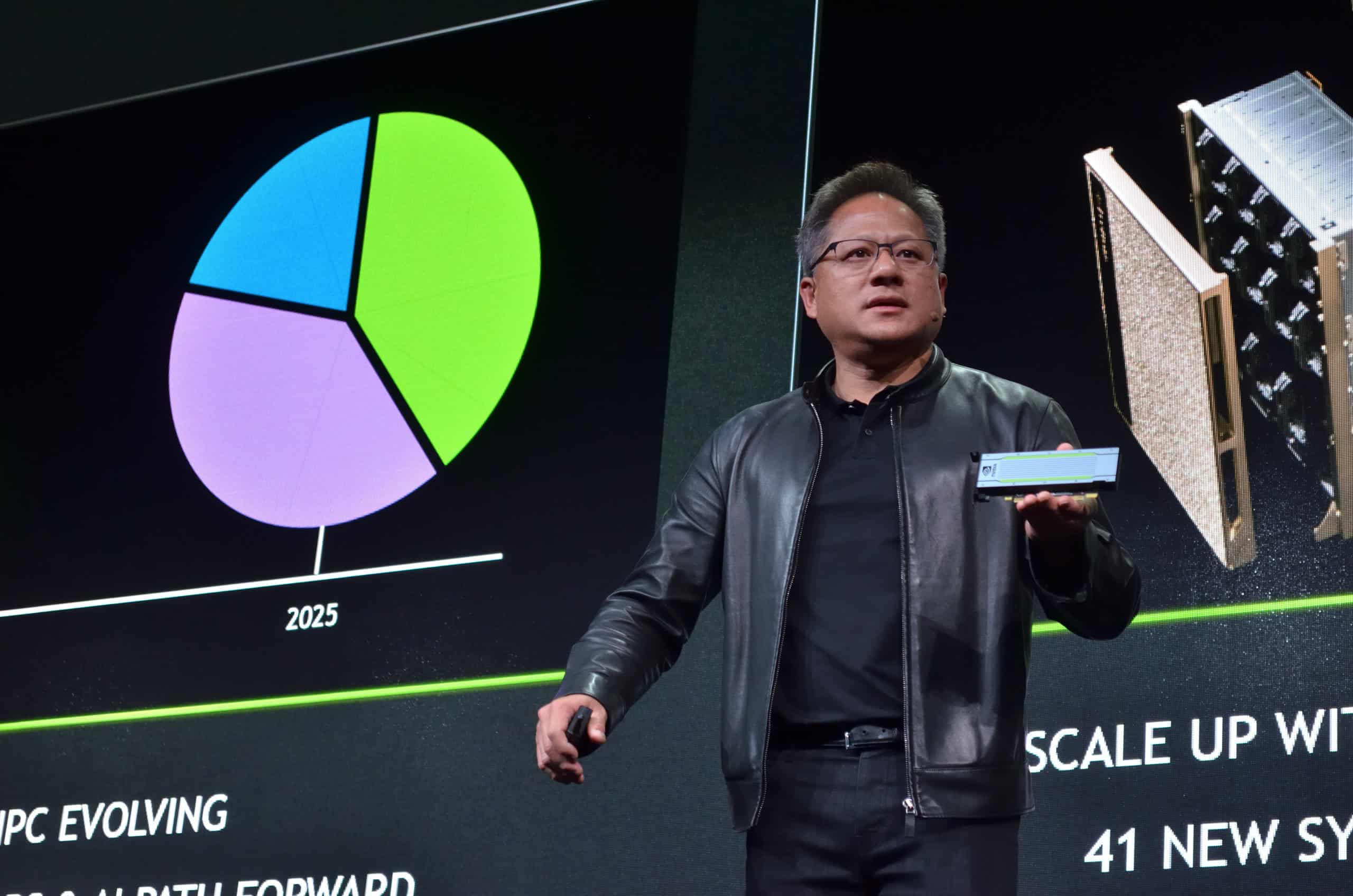
Nvidia's board of directors reinstated Jensen Huang as chief executive on Monday morning, ending a 12-day period that followed his sudden resignation and triggering a sharp rally across the artificial intelligence semiconductor supply chain.
The board approved Huang’s reappointment at 8:55 a.m. Eastern, 12 days after accepting his departure on Nov. 12. In a corporate release, Nvidia board chair Harvey C. Jones stated that the reinstatement was "in the best interests of our stockholders, employees, partners and customers."
Public markets reacted swiftly to the leadership restoration. By 1:39 p.m. Eastern, Nvidia shares surged 31%, adding approximately $940 billion to its valuation, according to market data reported by Yahoo Finance (https://247wallst.com/investing/2026/11/23/jensen-huangs-return-just-added-about-500-billion-to-micron-dell-tsmc-and-the-ai-stocks-that-depend-on-nvidia/?.tsrc=rss). The relief quickly cascaded across the hardware ecosystem: a group of 10 primary partners, suppliers, and minority equity investments gained an aggregate 16%, adding roughly $500 billion in market value after entering the day worth a combined $3 trillion.
The bulk of that gain was concentrated in foundry and memory infrastructure. Contract chipmaker Taiwan Semiconductor Manufacturing Co., which fabricates Nvidia’s graphics and AI processors, jumped 15% in U.S. trading to add approximately $248 billion. Micron Technology, which supplies high-bandwidth memory for AI accelerators, gained 18%, or $123 billion. Together, TSMC and Micron accounted for roughly 76% of the $500 billion partner increase.
Server manufacturers and component partners experienced similar surges. Dell Technologies gained 21%, adding roughly $36 billion, while Super Micro Computer rose 14%, adding $2 billion. Optical and networking suppliers Marvell Technology and Lumentum advanced 17% each, adding $19 billion and $7 billion, respectively. Equity stakes also tracked the move: Intel climbed 13% to add $36 billion, optical supplier Coherent rose 15% ($5 billion), and AI cloud operators CoreWeave and Nebius each gained 21%, adding roughly $5 billion apiece.
By comparison, direct architectural competitors received a muted lift. Broadcom shares rose 2%, adding $28 billion, while Advanced Micro Devices climbed 7%, adding $47 billion—a combined 3% gain that trailed the 16% advance posted by Nvidia's partner basket. The divergence reversed trading on Nov. 12, when Huang’s resignation sent Nvidia down 4% and depressed its suppliers while Broadcom and AMD each gained roughly 6% on expectations of picking up data center market share.
Broader market tailwinds and separate business catalysts also supported Monday's tech rally. The SPDR S&P 500 ETF gained 5% and the Invesco QQQ Trust rose 7%. Company-specific developments provided additional momentum: Citi released an upbeat memory demand forecast aiding Micron, while the Financial Times reported that server builders including Dell and Super Micro are seeking price increases of 25% to 45% on previously ordered AI hardware. Broadcom faced headwind from an analyst report Friday indicating Google had lowered 2027 design projections for custom chips.
Despite the single-day resurgence, none of the 13 equities have fully recouped losses since Huang's Nov. 12 exit announcement. Compared with closing levels on Nov. 11, Nvidia remains down 5%, TSMC is down 11%, Micron is down 13%, Broadcom is down 10%, and AMD is down 18%. The durability of the rebound faces immediate operational scrutiny, with Dell scheduled to report quarterly earnings on Tuesday and Broadcom reporting results on Dec. 9.
Sources
Written by
The Company Wire
Inside the companies building what’s next. Reporting on startups, technology, funding and the people shaping them.