Nasdaq 100 Touches Bear Market Territory as AI Spending Doubts Drive Tech Selloff
The tech-heavy benchmark fell 20.2% below its October peak intraday before closing just above the formal bear threshold.
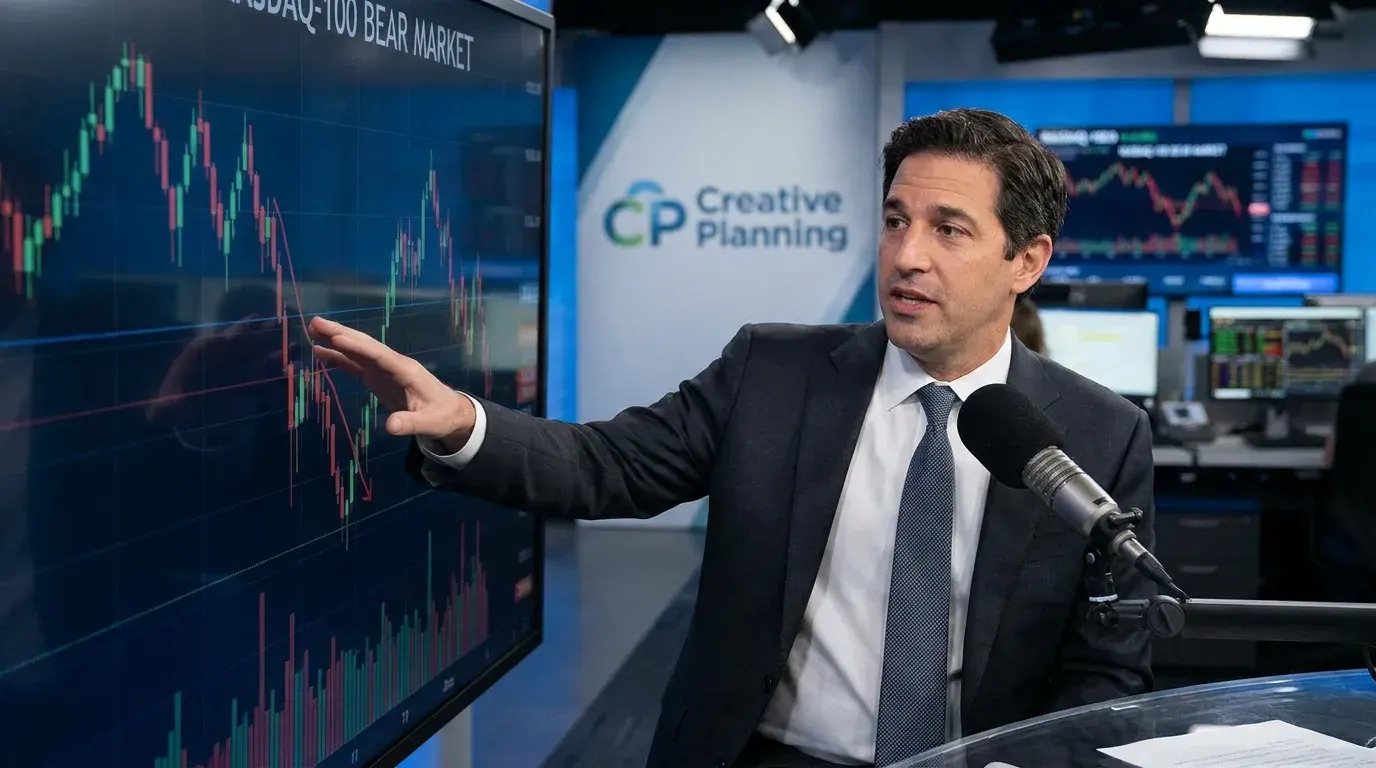
The Nasdaq 100 briefly crossed into bear market territory during trading on Friday, November 20, 2026, marking the index's first 20% drawdown from a recent record close since April 2025, according to market analysis by Creative Planning Chief Market Strategist Charlie Bilello and reporting by Yahoo Finance (https://247wallst.com/investing/2026/11/22/charlie-bilello-flags-the-nasdaq-100s-first-bear-market-since-april-2025/?.tsrc=rss).
The sharp slide followed an intense wave of selling across technology equities, driven by mounting investor concern over the scale of corporate capital expenditure on artificial intelligence infrastructure relative to near-term returns.
The Invesco QQQ Trust, the primary exchange-traded fund tracking the Nasdaq 100, set a record closing high of $759.66 on October 6, 2026. On November 20, the ETF fell as low as $606.23—down 20.2% from that peak—before rebounding slightly to finish the session at $608.45. That left the fund down 5.67% on the day and 19.9% below its record. The underlying Nasdaq 100 index mirrored the trajectory, touching a 20.2% intraday deficit before finishing the session 19.84% below its all-time high, narrowly avoiding a bear market on a closing basis.
The contraction capped a bruising month for tech-focused equities. The QQQ ETF dropped 10.51% over one week and 16.1% over one month. The broader market also retreated, though less acutely: the SPDR S&P 500 ETF Trust dropped 3.64% on November 20 and logged a 10.77% decline over the trailing month.
The selloff underscores the concentration risks embedded in major capitalization-weighted indexes. The Nasdaq 100 tracks exclusively non-financial companies and caps any single holding at 24%. As of June 30, 2026, its three largest positions were Nvidia at 7.6%, Apple at 6.67%, and Micron Technology at 5.64%. Because semiconductor manufacturers and mega-cap hardware suppliers fell in tandem, the benchmark had few uncorrelated components to absorb the drawdown.
The pullback has rapidly deflated equity valuation multiples across Wall Street. Bilello noted that the S&P 500 forward price-to-earnings ratio fell to 17, its lowest level in more than three years. He characterized severe pullbacks as the historical volatility premium equity investors must absorb to achieve higher long-term compounding than cash or fixed income. Over longer horizons, the QQQ ETF remains up 3.89% over one year, 50.61% over five years, and 411.73% over ten years, cycles that include the 2022 bear market and the brief tariff-driven downturn of April 8, 2025.
Market volatility indicators surged alongside the selloff. The CBOE Volatility Index reached 28.44 on November 19, up 9.74 points from the prior week. Market participants now face thinner holiday liquidity ahead of the Thanksgiving market closure on November 26, followed by the Federal Reserve's final monetary policy meeting of the year on December 8–9.
Sources
Written by
The Company Wire
Inside the companies building what’s next. Reporting on startups, technology, funding and the people shaping them.

