Nvidia Outlines Supply Constraints and $40 Billion Gigawatt Platform as Demand Surges
The chipmaker posted $96 billion in quarterly revenue while projecting multiyear component shortages, expanding enterprise sales, and pursuing a $12.9 billion deal for Hugging Face.
Nvidia Corp. reported total quarterly revenue of $96 billion, representing a year-over-year increase of more than 100 percent, supported by $89 billion in data center revenue and third-quarter revenue guidance of $108 billion. As detailed in analysis first reported by SiliconANGLE, Chief Financial Officer Colette Kress issued long-range guidance projecting fiscal 2028 revenue growth of approximately 70 percent, noting that customer demand forecasts point to total orders doubling next year despite persistent supply bottlenecks.
Chief Executive Jensen Huang stated that component and capacity constraints across Nvidia’s entire supply chain will limit inventory through at least the end of fiscal year 2028. To secure raw materials and operational infrastructure, Nvidia has moved further upstream into direct partnerships with memory chip manufacturers, land developers, and power utility providers. The company secured 4.25 gigawatts of power capacity at SoftBank Energy’s Portsmouth campus specifically for OpenAI, a facility Kress noted could support hardware upgrades across a 20-year span.
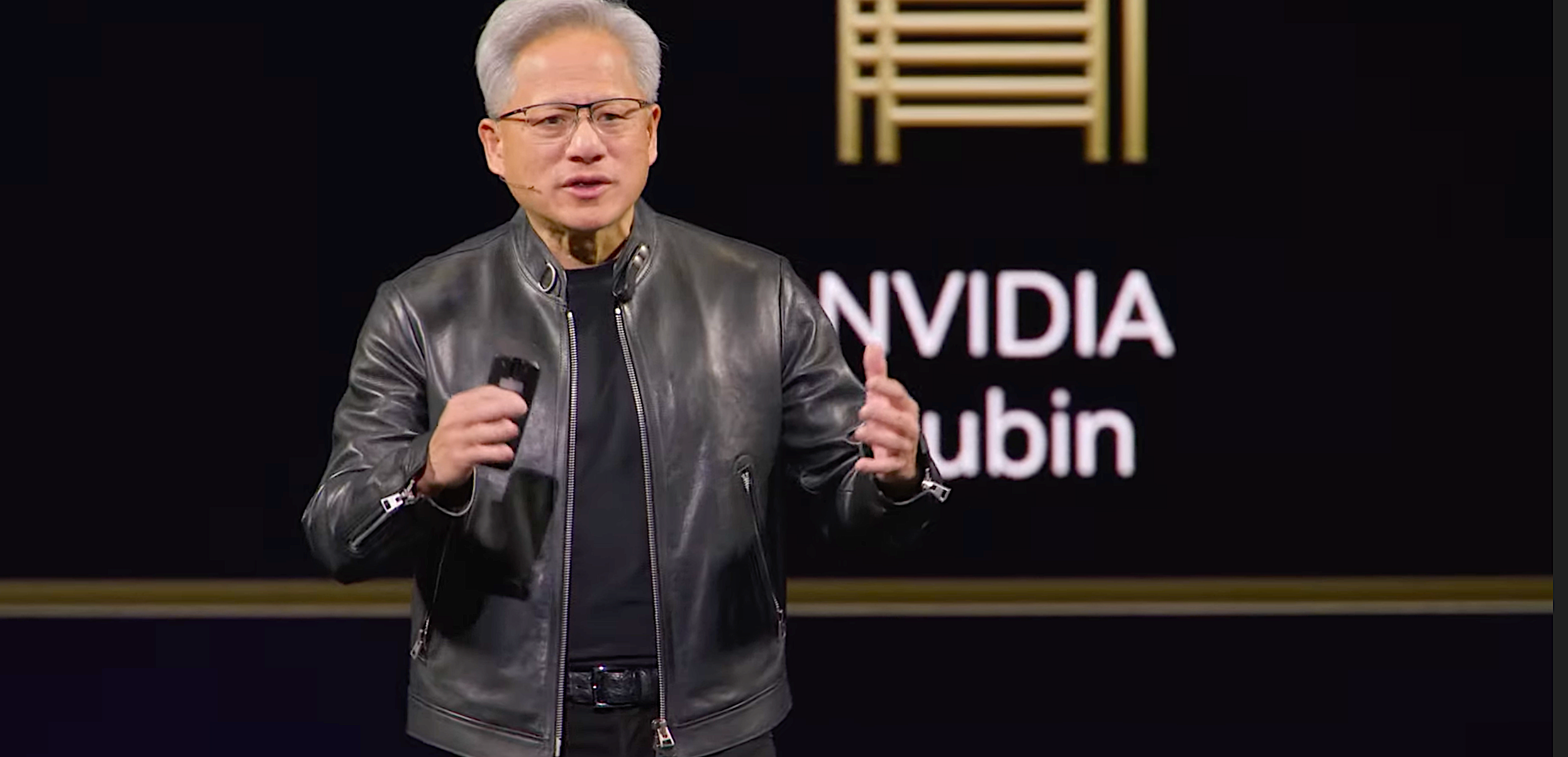
The chipmaker highlighted growing revenue generation per gigawatt of data center footprint, scaling from roughly $18 billion using Hopper architecture and $25 billion with Grace Blackwell up to $40 billion with its new Vera Rubin platform. Nvidia's expanded hardware catalog now encompasses Vera central processing units, Rubin graphics processing units, NVLink interconnects, InfiniBand, Spectrum-X Ethernet, and Groq language processing units. Kress reported that sequential networking sales rose 18 percent, while Spectrum-X Ethernet revenue expanded 2.6-fold year-over-year.
Nvidia's Grace CPU product line crossed $5 billion in trailing 12-month revenue, with total CPU revenue projected to more than double in fiscal 2028. Vera CPUs have entered mass production, with initial shipments delivering to cloud partners including Oracle Cloud Infrastructure and Amazon Web Services. The company claims the Vera Rubin architecture provides 30 times higher compute throughput per megawatt and reduces per-token processing costs by 35 times compared to Grace Blackwell Ultra systems, drawing purchase commitments across major cloud providers and system vendors.
Revenue from non-hyperscaler buyers—a category Nvidia terms ACIE that includes enterprises, sovereign entities, edge facilities, and regional cloud providers—reached $40 billion for the quarter, rising 25 percent sequentially and 138 percent year-over-year. Nvidia projects this segment will represent roughly half of its total data center business. On-premises automotive deployment revenue reached $8 billion over the trailing 12 months, with financial services, healthcare, and manufacturing contributing another $7 billion. Enterprise clients deploying Vera Rubin platforms include quantitative trading outfits Hudson River Trading and Jane Street, Samsung Electronics, and pharmaceutical giant Bristol Myers Squibb.
Gross margin projections were revised down to 74 percent for the third quarter, with an anticipated bottom of 71 to 72 percent in the fourth quarter before stabilizing between 72 and 73 percent in fiscal 2028. Kress attributed the margin compression to steep price increases for dynamic random-access memory (DRAM), which are expected to persist into next year. Because DRAM price inflation stems directly from industry-wide artificial intelligence buildouts, Nvidia confirmed it is passing higher memory costs along to enterprise systems integrators and buyers.
Huang pointed to a rapid transition toward autonomous agentic workloads, which use between 15 and 100 times more compute capacity than traditional human-prompted queries. He indicated that continuous background agent execution crossed over human prompt traffic within the past month. In addition to earnings metrics, reporting from The Information revealed that Nvidia has agreed to acquire open-source artificial intelligence hub Hugging Face for $12.9 billion, marking the chipmaker's largest corporate transaction to date.
Sources
Written by
The Company Wire
Inside the companies building what’s next. Reporting on startups, technology, funding and the people shaping them.


