Adobe Firefly AI Assistant Coordinates Work Across Creative Apps
The conversational agent can plan and complete tasks using Photoshop, Premiere, Illustrator and other Adobe tools.
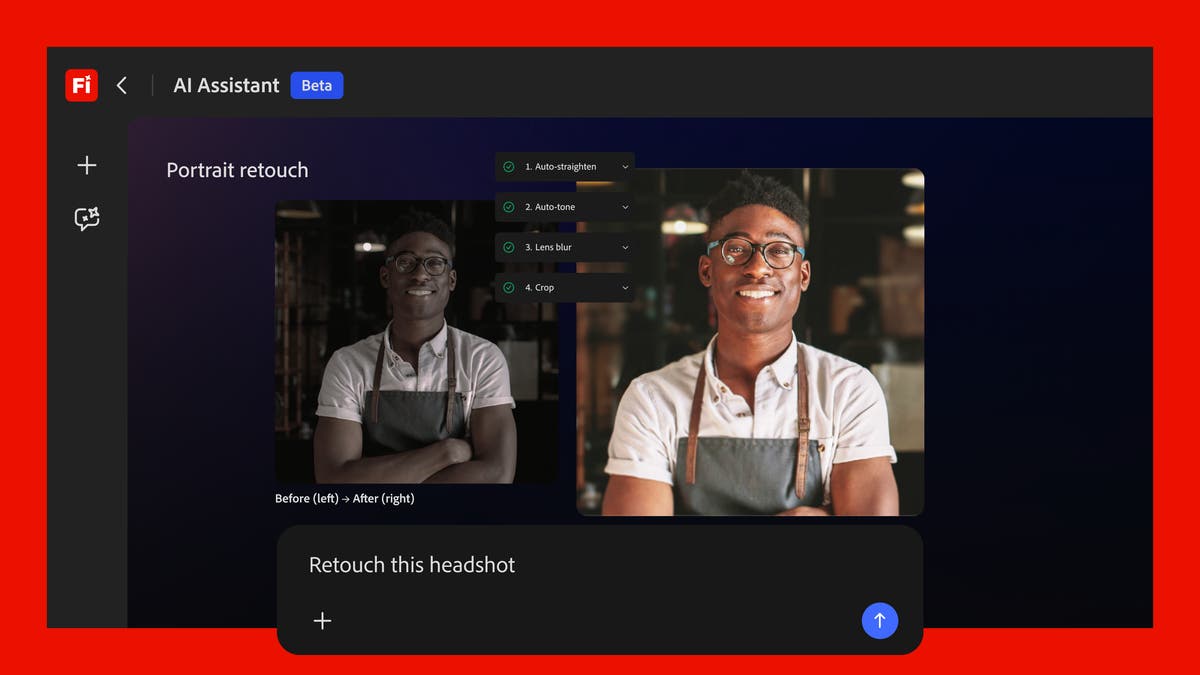
SAN JOSE, Calif. - Adobe has introduced Firefly AI Assistant, a conversational agent designed to coordinate complex creative work across the company's extensive suite of flagship applications. By allowing users to describe a desired outcome in ordinary language, the assistant can independently choose and deploy tools within products such as Photoshop, Premiere Pro, Lightroom, Illustrator, and Adobe Express. This launch represents a significant evolution for the San Jose-based software giant, moving beyond isolated generative features toward a unified agentic system capable of cross-application project management. The move follows a period of intense competition in the creative software sector, where traditional tools are increasingly being challenged by specialized artificial intelligence startups.
The new assistant is specifically engineered to perform tasks that go beyond generating a single static image or video clip. According to Adobe, the agent can plan a sophisticated sequence of steps, apply a variety of prebuilt creative skills, and preserve necessary context regarding a specific project and a user's individual aesthetic preferences. This multi-step capability is intended to reduce the manual labor associated with repetitive design tasks, allowing the software to act as a digital collaborator that understands the technical overhead of the Creative Cloud ecosystem. For professional users, the ability to maintain project continuity as a task moves from a raster-based environment like Photoshop to a vector-based one like Illustrator is a critical technical requirement.
Central to the utility of the assistant is the transparency of the workflow it produces. Unlike black-box generative systems that output a finalized file, Adobe’s assistant allows creators to review the work at each stage and continue editing inside the familiar application interface. This approach acknowledges the reality of professional creative work, where stakeholders often require granular adjustments that are impossible to execute within a non-layered output. By keeping the assistant's actions visible and editable, the company is attempting to bridge the gap between automated efficiency and the high-fidelity control required for commercial-grade production.
The Firefly AI Assistant draws on Adobe's own proprietary generative models as well as a broader, curated catalog of partner models. The company stated that customers will eventually have access to more than 30 different models, providing creators with a diverse range of choices based on visual style, processing speed, and the specific type of media they are producing. This multi-model strategy marks a departure from more closed ecosystems, suggesting that Adobe recognizes that no single model can satisfy the varied requirements of global agencies, independent filmmakers, and social media marketers simultaneously.
Adobe plans to release the assistant in a public beta in the weeks following the announcement. While the technical capabilities served as the centerpiece of the reveal, the company did not provide final pricing details for the service. Historically, Adobe has integrated new AI features into its existing subscription models or utilized a generative credit system, but the computational intensity of an agent that manages multiple applications may necessitate a different commercial approach. Industry analysts have noted that the success of such tools often hinges as much on their cost-efficiency as it does on their raw creative performance.
The launch extends Adobe’s overarching strategy of embedding generative features directly inside professional workflows, where the value of a tool depends on the production of editable output and strict compatibility with existing file formats. This strategy has been a cornerstone of the Firefly brand since its inception, as the company seeks to protect its market share against emerging AI-native platforms like Midjourney and Canva. By focusing on integration, Adobe is betting that professional creators will prefer tools that live inside their current pipeline rather than external platforms that require constant importing and exporting of assets.
One of the most difficult technical challenges Adobe faces will be maintaining creative control as an agent crosses between applications and makes several autonomous decisions per request. The risk of the 'hallucinations' common in large language models becomes more acute when an assistant is tasked with altering a professional's creative vision. Customers will likely demand clear provenance for all generated elements, predictable credit usage, and a reliable, intuitive way to undo changes made by the agent across multiple files simultaneously. Without these safeguards, the agent could potentially introduce more complexity than it resolves.
Adobe must also demonstrate that the assistant can save significant time without flattening the creative judgment that distinguishes professional work from generic output. There is a persistent concern in the design community that over-automation leads to a homogenization of visual styles. To combat this, Adobe’s emphasis on preserving user preferences suggests a desire to train the assistant to follow a brand's specific manual rather than a generic set of data points. The goal is to automate the mundane technical hurdles of the software while leaving the conceptual and strategic decisions to the human operator.
The timing of the announcement is particularly relevant as the broader technology industry shifts its focus from simple chat-based AI to 'agents' that can execute actions. In the enterprise software market, the ability for an AI to interact with software APIs and file systems is seen as the next major frontier for productivity gains. Adobe’s reach across video, photography, and illustration gives it a unique vantage point to deploy these agents, provided the underlying infrastructure can handle the massive data throughput required for high-resolution creative assets.
For the creative industry, the introduction of an agentic assistant also raises questions about the future of entry-level roles that traditionally involve the 'grunt work' of resizing, color correction, and asset formatting. If the Firefly AI Assistant can effectively manage these tasks, the workflow for small agencies and solo freelancers could be radically streamlined. However, the company has consistently framed these tools as 'co-pilots' intended to expand the creative potential of its users rather than replace them, a narrative that is crucial for maintaining the trust of its core user base.
Looking forward, the success of the Firefly AI Assistant will be measured by its adoption rate during the upcoming beta phase. The creative community is known for its rigorous testing of new features, and the assistant will be subjected to diverse real-world stresses. Observers will be watching to see if the agent can truly understand the nuances of a creative brief or if it will require constant correction from the user, which would negate the promised efficiency gains. Furthermore, the integration of partner models will be a test of Adobe’s ability to manage a platform-style ecosystem within its traditionally proprietary software suite.
As the beta period approaches, the focus remains on how seamlessly these thirty-plus models will interact with one another. If Adobe can successfully deliver a tool that synchronizes the power of Photoshop with the motion capabilities of Premiere through a single conversational interface, it will have set a new bar for the creative software industry. The launch underscores the company's commitment to remaining the central hub for professional creativity in an era defined by rapid technological disruption and the democratization of digital art tools.
Sources
Written by
The Company Wire
Inside the companies building what’s next. Reporting on startups, technology, funding and the people shaping them.