Apple Introduces Siri AI Across Its Device Ecosystem
The rebuilt assistant adds conversational interaction, visual understanding and deeper control across apps and personal context.
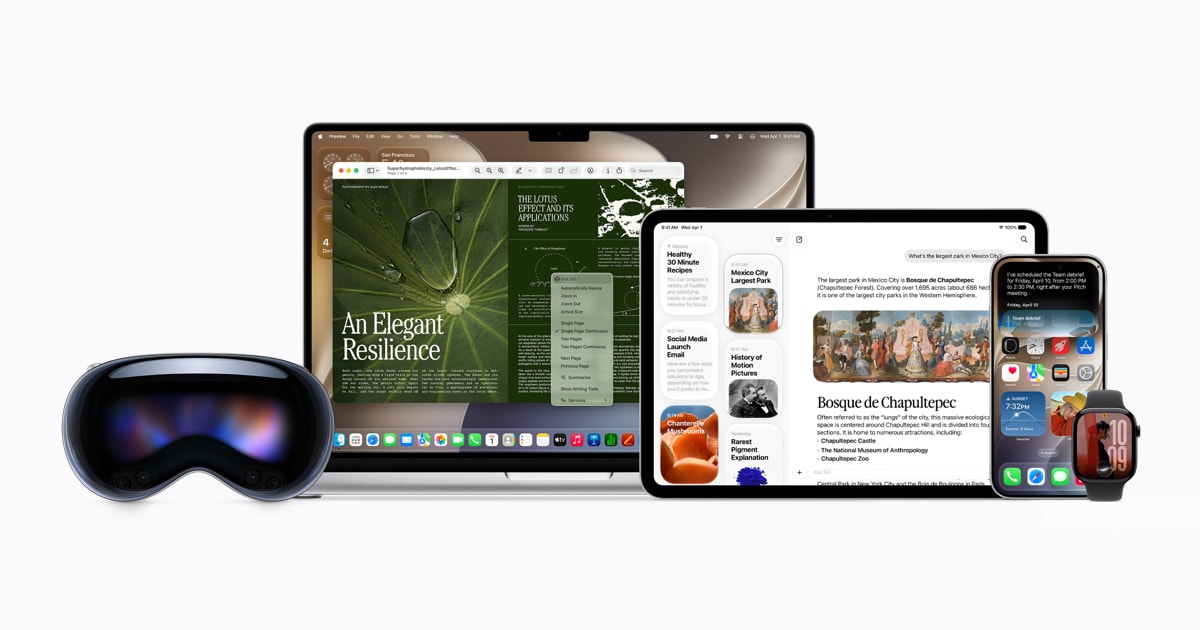
CUPERTINO, Calif. - Apple has introduced Siri AI, a rebuilt version of its assistant designed to be more conversational, knowledgeable and capable of acting across the company's devices. The system is powered by Apple Intelligence and is planned for iPhone, iPad, Mac, Apple Watch, Apple TV and Vision Pro through the 2027 software releases. This development represents a pivotal shift for the consumer electronics giant as it seeks to reclaim its position in the rapidly accelerating artificial intelligence landscape, where competitors have spent years refining generative models while Apple's original assistant often remained static.
The new Siri can use information visible on a screen, understand content across supported apps and respond to more natural follow-up questions. For years, the interface between users and digital assistants was limited by structured, rigid commands that often failed if a user did not phrase a request perfectly. By enabling Siri to grasp personal context and on-screen visuals, Apple is attempting to bridge the gap between simple voice commands and true digital agency, where the assistant understands what a user is looking at in the moment they ask a question.
Apple also showed a standalone conversation interface for longer exchanges, moving away from the traditional bubble-based UI that has defined the Siri experience since its debut. Visual Intelligence can help identify objects and interpret images, while cross-app actions are intended to complete tasks without requiring users to move through several menus. This integration is designed to reduce the friction of mobile and desktop computing, allowing the assistant to carry out complex workflows that previously required manual multi-tasking and repetitive tapping.
The strategic importance of this rollout cannot be overstated, particularly as the broader technology sector undergoes a paradigm shift toward generative AI. Apple is integrating outside model support, including Google's Gemini technology, while retaining its on-device processing and Private Cloud Compute approach for requests requiring more capacity. This hybrid architecture seeks to offer the power of massive cloud-based large language models without sacrificing the localized speed and privacy that Apple has marketed as a core differentiator for its hardware ecosystem.
The company says permissions and privacy boundaries remain central, but users will need clear indicators showing when data leaves a device and which service is answering. This transparency is a response to growing consumer and regulatory scrutiny regarding how personal data is handled by AI providers. By utilizing Private Cloud Compute, Apple is betting that its custom silicon can provide a secure environment for processing complex queries that exceed the capabilities of local hardware while maintaining a level of encryption that prevents even Apple from accessing the data.
The release is strategically important because Apple previously delayed several promised Siri capabilities, leading to skepticism among analysts regarding the company's ability to execute on high-level machine learning features. Historically, the company has focused on refining existing technologies rather than being the first to market, but the breakneck speed of the current AI cycle has forced a more aggressive roadmap. The company now has to prove that the rebuilt system works consistently across a large hardware base that spans billions of active devices.
The technical challenge is significant, particularly given the hardware variety across Apple's lineup. Ensuring that Siri AI functions with the same fluidity on a several-year-old iPhone as it does on a top-spec Mac Pro or a Vision Pro headset requires significant optimization. Conversational fluency alone will not be enough if app actions fail, personal context is incomplete or regional availability remains limited. If the assistant cannot reliably interact with third-party software, it risks becoming another feature that users toggle off due to inconsistency.
Siri AI could become one of the largest distribution channels for advanced assistants because it is built into devices people already own. Unlike third-party applications or web-based portals that require a separate subscription or a change in behavior, Apple’s assistant is woven into the operating system at a fundamental level. This ubiquity provides Apple with a massive built-in user base, giving it the potential to normalize AI-driven interactions for the general public in a way that specialized startups cannot easily replicate.
The opportunity is practical, low-friction help across daily tasks, such as managing schedules, parsing emails for relevant dates, and summarizing long-form content. By focusing on utility over novelty, Apple aims to make AI an invisible layer of the user interface. Analysts have noted that the success of this initiative will be measured not by how many people use the chat interface, but by how many tasks are successfully automated in the background, making the device feel more intuitive to the end user.
However, the move into deeper app control introduces a new set of liabilities. The risk is that a highly integrated assistant can also make consequential mistakes quickly, such as deleting an important email or misinterpreting a calendar invite for a high-stakes meeting. Because the assistant now has the authority to act on behalf of the user within applications, the margin for error has narrowed. A single misunderstood command could lead to data loss or logistical errors that damage user trust in the system's reliability.
Apple should prioritize visible confirmations, reversible actions and honest limits as the software moves from preview to public use. Creating a safety net where users can audit or undo actions taken by the AI will be essential for long-term adoption. Without these guardrails, the assistant's newfound power could become a source of anxiety rather than a productivity tool. Clear communication about the system's current limitations will be just as important as highlighting its capabilities, preventing users from over-relying on a feature that may still be in a developmental stage.
Beyond the consumer experience, this launch impacts the competitive landscape for developers. Those who build for the Apple ecosystem must now consider how their apps will provide or consume data to and from Siri AI. The company is essentially building a new layer of the platform, one where the app developer’s traditional interface is bypassed in favor of a voice or text query. This shift could redefine how software is marketed and used, focusing more on the data and actions an app provides than its visual aesthetic.
As the rollout proceeds through 2027, the industry will be watching for regional updates and language support. Apple's global footprint means it must localize complex linguistic nuances to ensure Siri AI remains competitive in international markets. This is a massive engineering undertaking that involves not just translation, but the cultural and contextual understanding required for a truly conversational assistant. Any delay in these updates could see the company losing ground in key international territories to domestic AI players.
The partnership with external providers like Google also signals a new era of pragmatism for Apple. Traditionally known for its walled-garden approach, the company's willingness to integrate outside models suggests that the compute requirements for all-encompassing AI are too vast for any single company to tackle alone. This multi-model approach allows Apple to provide a premium experience today while it continues to develop its own proprietary models to eventually handle a greater share of the workload.
In the final analysis, Siri AI represents Apple's attempt to turn its most criticized product into its most advanced asset. The success of this transition will define the company’s trajectory for the next decade. If Apple can deliver on the promise of a truly personal and capable assistant while maintaining its strict privacy standards, it will secure its place at the center of the AI era. Failure to do so would leave the company vulnerable in a world where the operating system is increasingly defined by intelligence rather than just apps and hardware.
Sources
Written by
The Company Wire
Inside the companies building what’s next. Reporting on startups, technology, funding and the people shaping them.


