Apple Previews AI-Powered Accessibility Upgrades
The updates extend VoiceOver, Magnifier, Voice Control and captioning while adding eye-based wheelchair controls for Vision Pro.
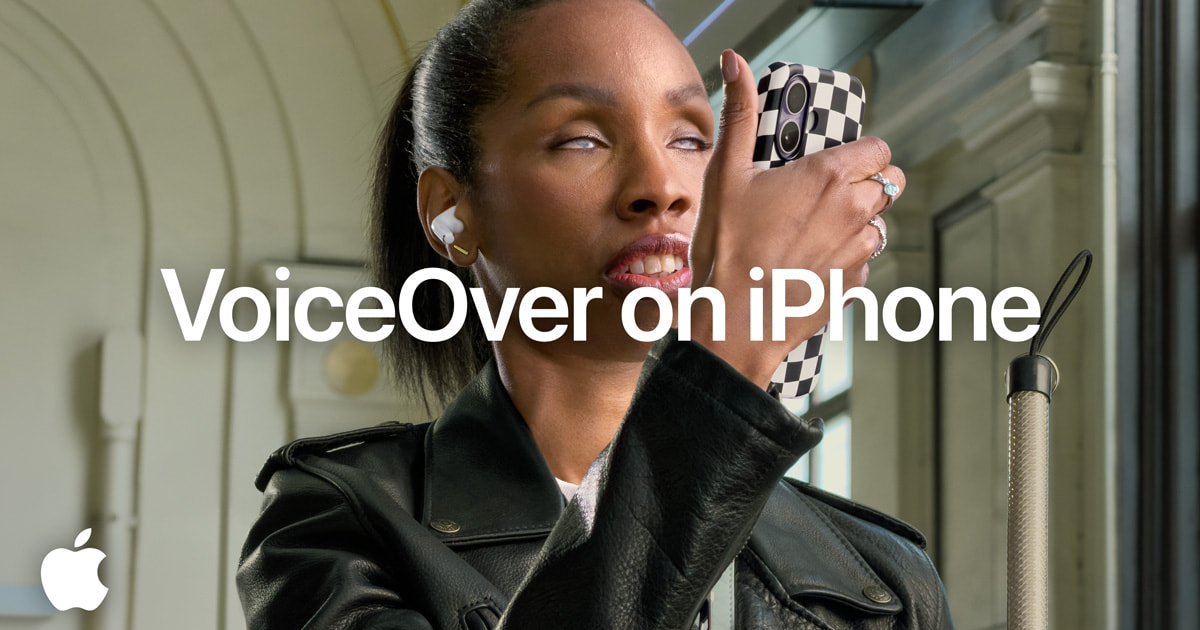
CUPERTINO, Calif. - Apple has previewed a suite of accessibility updates that use Apple Intelligence across its entire hardware ecosystem, including iPhone, iPad, Mac, Apple Watch, Apple TV, and Vision Pro. The announcement signals a significant shift in how the consumer technology giant intends to deploy its generative modeling capabilities, moving beyond general-purpose assistants toward specialized tools integrated into the core functionality of its operating systems. The company is introducing more detailed image descriptions, natural-language navigation, and generated subtitles while extending assistive controls to new hardware categories and edge-use cases.
The centerpiece of the update involves significant enhancements to VoiceOver, Apple’s screen-reading technology for users who are blind or have low vision. A new feature called Image Explorer is designed to describe photographs, scanned bills, documents, and other onscreen material in greater detail than previously possible. By leveraging the multimodal capabilities of Apple Intelligence, the system can provide context and spatial relationships within an image, allowing users to understand the layout of a physical document or the specific elements of a digital interface without manual exploration.
Apple is also refining its Magnifier application, allowing it to act as an interactive visual assistant. Users will be able to ask natural-language questions about their physical surroundings through the camera interface, such as identifying objects or reading text that is further away. This evolution reflects a broader industry trend where computer vision is transitioning from simple object identification to conversational scene analysis, a field where real-time processing and low latency are critical for user safety and utility.
Voice Control, which allows users to navigate their devices using strictly verbal commands, is being updated to support more natural instructions. Historically, voice-based accessibility tools required specific, rigid syntax to trigger actions. The integration of large language models allows the system to interpret intent more fluidly, reducing the cognitive load on users who may not be able to memorize complex command lists. Alongside these changes, the Accessibility Reader is being expanded to help individuals navigate and synthesize complex digital content, providing summaries and structural breakdowns of long-form text.
For the Deaf and hard-of-hearing communities, Apple is introducing on-device subtitles for video content that does not already include captions. This feature utilizes local machine learning to transcribe audio in real-time, ensuring privacy by keeping the data on the device rather than processing it in the cloud. This aligns with Apple’s long-standing institutional focus on on-device processing, a strategy that the company maintains is essential for securing sensitive user data while providing high-speed transcription services across various media formats.
The Apple Vision Pro, the company’s spatial computing headset, is set to receive a unique integration for mobility. Users will be able to connect compatible power wheelchairs and use eye tracking to control their movement. This represents one of the most sophisticated applications of the headset’s sensor array to date, demonstrating how eye-tracking technology can be repurposed from a navigation tool for digital interfaces into a physical control mechanism for mobility hardware.
In addition to software improvements, the company announced broader support for motion cues and sign-language interpretation across its platforms. Apple also refreshed its physical accessibility lineup, introducing new colors for the adaptive Hikawa Grip and Stand. These hardware accessories are designed to make it easier for individuals with limited dexterity to interact with touchscreens and other input devices, reinforcing the company's approach of combining software innovation with physical ergonomic support.
The release shows how generative models can improve access when they are integrated into operating-system features instead of being offered as isolated, separate chatbots. For the accessibility community, the value of artificial intelligence lies in its ability to bridge the gap between human intent and machine execution. Image understanding and natural-language control can drastically reduce the number of steps required to complete everyday tasks, such as paying a bill online or navigating a public space, which are often friction points for users with disabilities.
However, the stakes for accuracy are significantly higher in the context of accessibility. Industry analysts have noted that while hallucination is a minor nuisance in creative writing, inaccurate descriptions or misinterpreted commands can have greater consequences for people who rely on the system as an assistive tool. If an AI-powered visual assistant misidentifies a medication label or an environmental hazard, the legal and safety ramifications for the manufacturer are substantial, necessitating a high degree of precision before a public rollout.
Apple says the software features are coming later in 2026, with availability varying by language, device, and region. This extended timeline suggests a cautious approach to deployment, as the company will need to publish clear compatibility requirements and give users reliable ways to confirm AI-generated information. Ensuring that a user can verify the accuracy of a generated image description is a fundamental design challenge that Apple will need to solve to maintain the trust of the accessibility community.
The broader technology sector is currently in a race to prove the utility of generative AI beyond search and coding. By embedding these capabilities into accessibility layers, Apple is positioning its 'Apple Intelligence' as a utilitarian tool rather than a novelty. The success of these features will depend heavily on their performance in diverse, unstructured environments, moving from the controlled conditions of a lab to the unpredictable nature of daily life for millions of global users.
Ultimately, the evolution of these tools will be shaped by those who use them most. Accessibility technology fundamentally succeeds through consistency, and real-world testing by disabled users will matter more than demonstrations at launch. As Apple moves toward its 2026 release window, the industry will be watching to see if the company can deliver on the promise of a more inclusive digital world through the application of its proprietary AI models.
Sources
Written by
The Company Wire
Inside the companies building what’s next. Reporting on startups, technology, funding and the people shaping them.