Cisco Unveils Silicon One G300 for Large AI Networks
The 102.4-terabit chip is designed to move data across increasingly dense computing clusters.
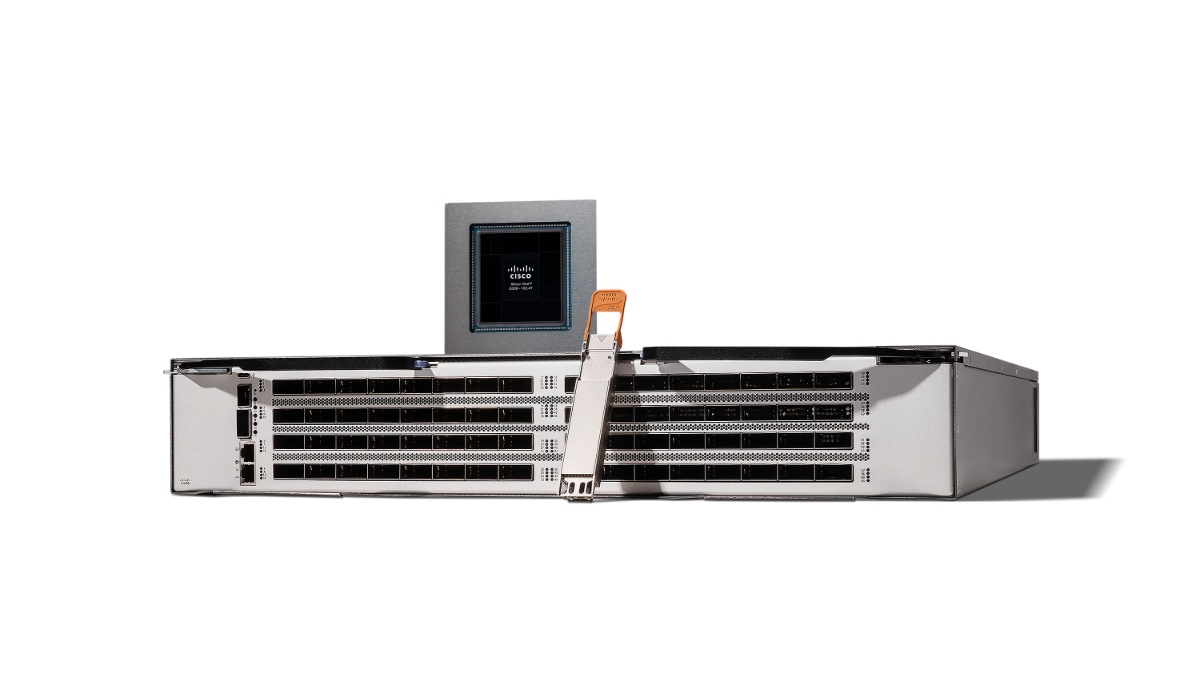
SAN JOSE, Calif. - Cisco has introduced the Silicon One G300, a networking chip built for the large clusters used to train and run artificial intelligence models. The company revealed that the new processor is capable of moving 102.4 terabits of data per second, a performance benchmark that doubles the raw capacity of its previous generation. This development arrives as the networking giant seeks to solidify its position in the rapidly expanding market for high-performance AI infrastructure, where data transfer speeds often dictate the overall efficiency of multi-billion-dollar computing hardware investments.
The G300 is slated to power upcoming versions of the Cisco 8000 and Nexus 9000 systems, representing a major refresh of the company’s core enterprise and service provider portfolios. According to technical specifications shared by the company, the chip is intended for both scale-up and scale-out network designs. This dual-purpose architecture is critical for modern data centers that must manage both the tightly coupled traffic within a single rack of servers and the expansive traffic flows that pass between different clusters throughout a facility.
Cisco confirmed that the G300 is manufactured using a 3-nanometer process, a cutting-edge node that reflects the industry's drive toward greater transistor density and power efficiency. The hardware is further optimized for the specific physical demands of high-heat AI environments, offering support for liquid-cooled systems and high-speed optics. Furthermore, it incorporates advanced telemetry features needed to manage and monitor the health of densely connected accelerators, providing operators with visibility into the complex physical layers of their network.
The launch addresses a primary pain point for AI infrastructure operators, who are increasingly focused on preventing the network from becoming a performance bottleneck between costly graphics processors. As AI models grow in size, the time spent waiting for data to travel between GPUs can significantly degrade return on investment. Cisco stated that its design can improve job completion time by 28 percent in certain configurations, a metric that highlights the tangible productivity gains the company is targeting for its customers.
Beyond raw throughput, the Silicon One G300 emphasizes operational sustainability. Cisco cited substantial energy savings for systems that combine the new chip with liquid cooling and advanced optics. In a market where power availability has become a limiting factor for data center expansion, the ability to deliver higher bandwidth while moderating the increase in electricity consumption is a key competitive differentiator for infrastructure providers serving the hyperscale market.
This product introduction puts Cisco into more direct competition with Broadcom and Nvidia for spending inside AI data centers. While Cisco has traditionally been known as a systems vendor, its Silicon One initiative allows it to compete at the component level. Cisco’s specific advantage in this landscape is its flexibility; it maintains the ability to sell individual chips, complete switches, and integrated management software, catering to a wide variety of purchasing models across the industry.
The dual-pronged approach is particularly relevant as many large-scale customers transition toward disaggregated infrastructure. These customers, who prefer to build their own custom hardware, can integrate Silicon One components directly into their unique designs. By offering the G300 as a standalone silicon option alongside finished systems, Cisco is attempting to capture market share regardless of whether a customer prefers a turnkey solution or a more modular, DIY approach to network architecture.
Cisco expects systems based on the G300 to become available in the second half of 2026. This timeline suggests a long-term roadmap intended to align with the next cycle of data center upgrades. The lead time allows for the extensive testing and validation required by large-scale enterprise customers and cloud service providers who must ensure that new hardware can successfully integrate with existing legacy systems and software defined networking protocols.
A key question facing the company is whether cloud providers and model developers will adopt the platform at scale. While Cisco holds a dominant position in the traditional enterprise networking sector, it faces an uphill battle against established incumbents in the specialized AI fabric market. Success will likely depend on the company's ability to prove that its holistic software and hardware stack provides a lower total cost of ownership than more specialized competitors.
Industry analysts have noted that performance claims for high-end networking silicon will need to hold across a wide variety of real-world workloads to gain widespread trust. While early benchmarks are promising, the G300 must demonstrate consistent reliability across varied optics and within heterogeneous networks that include equipment from multiple different vendors. The interoperability of the Silicon One architecture with the broader ecosystem will be a critical factor in its eventual market penetration.
The release also signals Cisco's broader strategic pivot toward becoming a fundamental player in the AI era. By investing heavily in the physical layer of the AI stack, the company is positioning itself to benefit from the massive capital expenditure cycles currently being led by the world’s largest technology firms. The shift from 51.2-terabit to 102.4-terabit throughput marks a technical milestone that aligns with the industry-wide transition toward faster interconnect standards.
As the sector continues to evolve, the integration of advanced optics and liquid cooling support indicates that hardware vendors are no longer just thinking about bitrates, but also the physical realities of thermal management. The G300's design philosophy reflects a comprehensive view of the data center, acknowledging that the next generation of AI performance will require as much innovation in cooling and power delivery as it does in logic and signal processing.
Looking forward, the market will be watching for initial customer trials and the announcement of early adopters within the hyperscale community. The ability of the G300 to reduce tail latency and improve the stability of large-scale training runs will be the ultimate test of its utility. For now, Cisco has laid out a clear path to challenge for leadership in the AI networking space, leveraging its manufacturing partnerships and established brand to vie for a central role in the future of the cloud.
The journey toward 2026 will be characterized by intense competition and rapid technological iteration. With the G300, Cisco has placed a significant bet on the continued demand for ever-increasing bandwidth. Whether this 102.4-terabit solution becomes the standard for the next wave of AI clusters will depend on its real-world execution and the company's ability to navigate the complex supply chains associated with 3-nanometer semiconductor production.
Sources
Written by
The Company Wire
Inside the companies building what’s next. Reporting on startups, technology, funding and the people shaping them.