Nvidia Launches Toolkit for Long-Running Enterprise AI Agents
OpenShell, AI-Q and new Nemotron models aim to give companies more control over autonomous software.
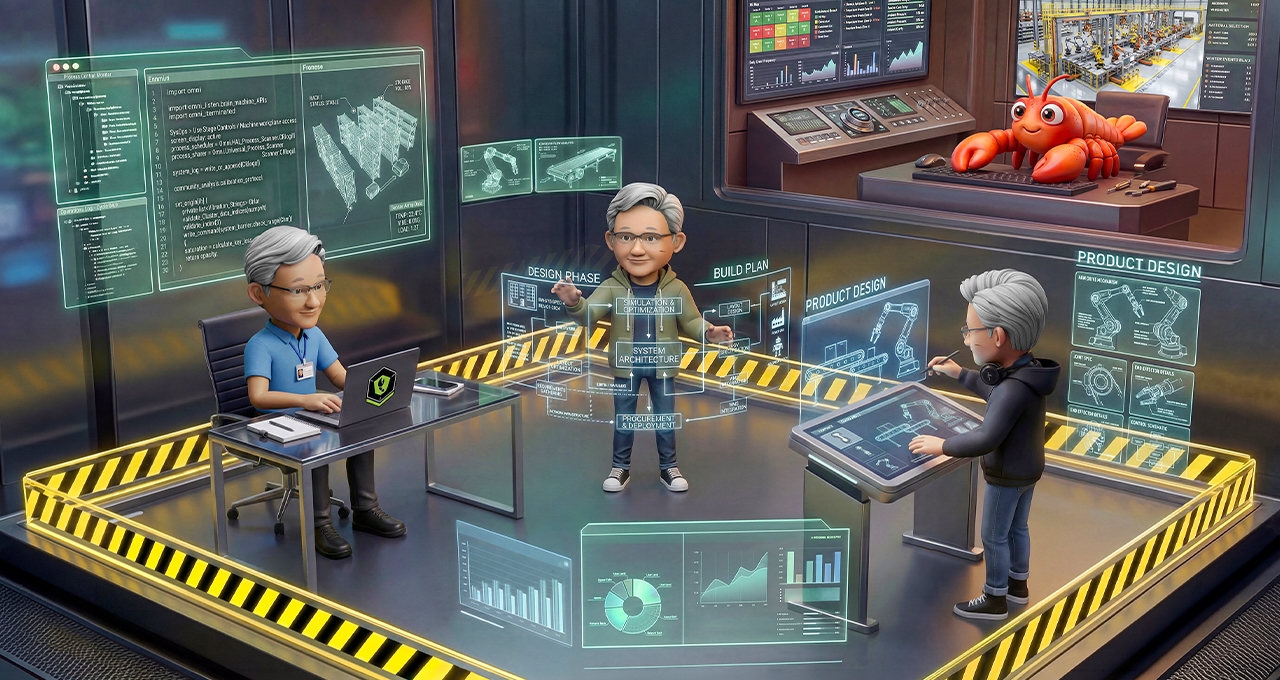
SANTA CLARA, Calif. - Nvidia has launched a collection of software and models for building enterprise AI agents that can operate for longer periods while remaining subject to company policies. The package, which includes the OpenShell runtime, an AI-Q blueprint, and additions to the Nemotron model family, marks a significant expansion of the company's platform from hardware acceleration into the functional orchestration of autonomous software. By providing these tools, the Santa Clara-based chipmaker is attempting to move beyond the supply of processing power to become the foundational layer for how businesses deploy sophisticated, long-running digital workflows.
The centerpiece of the announcement is OpenShell, an open-source runtime designed to isolate an agent's work and enforce strict controls around tool usage, data access, and network connectivity. This focuses on a critical pain point in the enterprise sector: the need for guardrails when AI systems move beyond simple text generation to executing actions within corporate systems. Nvidia said the runtime can help companies run agents across different infrastructure environments while maintaining auditable policies, a feature intended to satisfy the compliance and security requirements that have historically slowed the adoption of autonomous agents in regulated industries.
Alongside the runtime, the company introduced the AI-Q blueprint, which provides a standardized reference architecture for agents that retrieve and utilize corporate knowledge. This blueprint is part of a broader industry trend where organizations seek to bridge the gap between static foundational models and their own proprietary data. By codifying how an agent should interface with internal databases and document repositories, Nvidia aims to reduce the engineering friction associated with deploying agents that must navigate complex internal information silos without human intervention for every step.
The hardware giant is also expanding its portfolio of large language models with new entries in the Nemotron family, specifically tuned for reasoning and agentic tasks. At launch, the company confirmed that Nemotron 3 Super was available, with other specialized components slated to follow on separate release schedules. These models are intended to serve as the 'brains' of the agents, capable of decomposing high-level human instructions into a sequence of actionable steps, a process known in the industry as planning, which is essential for the transition from passive chatbots to active autonomous participants.
Nvidia's latest move reflects a fundamental shift in the artificial intelligence landscape from simple chatbots toward systems that plan, call software tools, and complete multistep work autonomously. While first-generation AI assistants were largely confined to creative writing or basic customer support, the emerging class of 'agentic' AI is expected to manage more complex business processes. This transition requires a higher degree of reliability and a robust technical stack that can maintain state over hours or days of operation, rather than just seconds of interaction.
The importance of this launch is punctuated by the involvement of major software providers, including Adobe, Atlassian, Box, and Cisco, who were listed among the initial ecosystem participants. Their involvement matters because enterprise agents require deep access to documents, communication systems, and various operational applications to be effective. By partnering with these legacy software leaders, Nvidia is positioning its technology as connective infrastructure rather than a single end-user assistant, attempting to create a universal layer that bridges the gap between raw compute and diverse software environments.
In the broader competitive landscape, Nvidia's foray into agentic infrastructure puts it in direct dialogue with cloud service providers and independent AI platforms also racing to define the standards for autonomous software. While Nvidia has long dominated the market for the GPUs that train these models, the success of OpenShell and AI-Q would lock the company more firmly into the software development lifecycle. For enterprise customers, the appeal lies in having a unified framework that can ostensibly run across different clouds and local data centers without requiring a complete rebuild of the agent's logic.
However, the path to widespread adoption remains fraught with technical and organizational challenges. Industry analysts have frequently noted that the true test for such frameworks will depend on whether the controls and boundaries established by OpenShell work reliably when agents encounter ambiguous requests or sensitive data. Because agents are designed to make decisions autonomously, the risk of 'hallucination' or logical errors can lead to unintended consequences in a live production environment, ranging from incorrect data entry to unauthorized system modifications.
Enterprises will also have to carefully measure the cost and accuracy of these systems over long workflows. Running sophisticated models like Nemotron 3 Super for extended periods involves significant compute costs, and the business value must justify the overhead. Furthermore, as agents take on more multi-step tasks, the cumulative probability of error increases. Companies using the Nvidia toolkit will need to develop rigorous benchmarks to ensure that the autonomous outputs remain consistent with human-level quality across thousands of operations.
Nvidia's toolkit supplies more of the technical foundation for this future, but the company has been clear that customers still carry the ultimate responsibility for permissions, evaluation, and human oversight. This 'shared responsibility' model is common in cloud computing but takes on a new dimension with autonomous agents. Developers must decide exactly how much autonomy to grant a system, determining when a human-in-the-loop is required to approve a decision and when the agent can proceed independently to the next phase of a project.
Looking forward, the industry will be watching for the release of the additional Nemotron components mentioned in the announcement, as well as the first wave of case studies from the participating ecosystem partners. The success of these pilot programs will likely dictate how quickly other software vendors and internal IT departments adopt the OpenShell and AI-Q standards. If these tools can prove that autonomous agents are safe and manageable at scale, it could trigger a wave of automation across departments such as legal, human resources, and supply chain management.
Ultimately, Nvidia is betting that the future of enterprise software is not a collection of static tools, but a network of interconnected agents that act as a digital workforce. By providing the plumbing for this network, Nvidia seeks to ensure its relevance even as the focus of the AI market shifts from the intensive training of models to the efficient, governed execution of those models in the real world. The launch of this toolkit is a clear signal that the company intends to lead the next phase of the AI revolution by defining the infrastructure of autonomy.
Sources
Written by
The Company Wire
Inside the companies building what’s next. Reporting on startups, technology, funding and the people shaping them.