Databricks Genie One Turns Company Data Into an AI Coworker
The agentic system is designed to help business teams analyze information and automate recurring work.
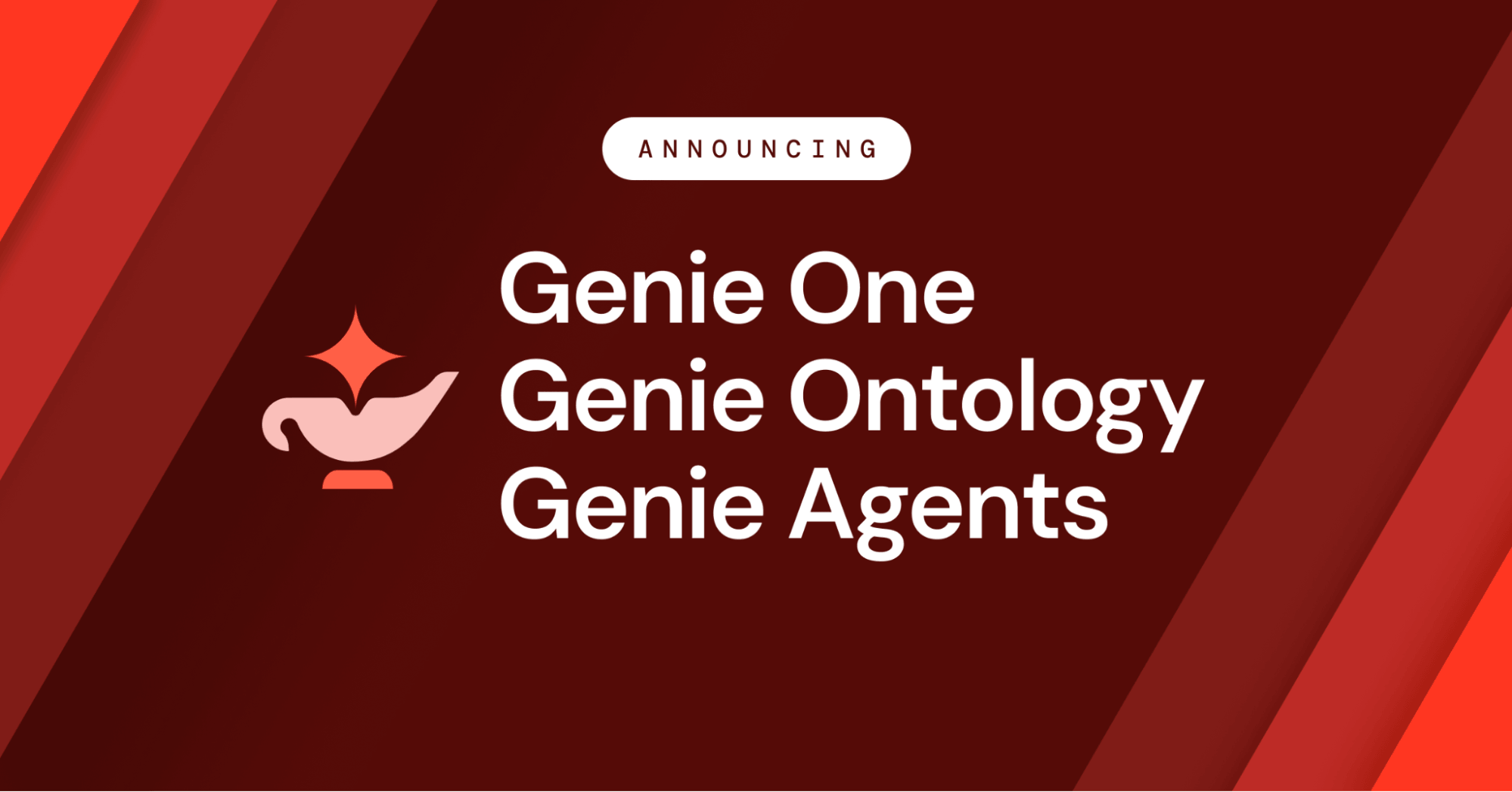
SAN FRANCISCO, Calif. - Databricks has launched Genie One, an AI coworker designed to let business teams analyze company information, build applications, and automate workflows from a single unified interface. The product release represents a strategic attempt by the San Francisco-based data giant to extend its core platform beyond its traditional base of data scientists and engineers. By translating ordinary-language requests into specific actions grounded in a company’s enterprise data, the platform aims to decentralize data access while maintaining a consolidated technological backbone.
The launch arrives as the enterprise software sector pivots from simple generative chat interfaces toward agentic systems capable of executing complex tasks. These agents are designed not just to summarize information, but to interact with databases and external tools to complete multi-step operations. For Databricks, which has built a valuation around its Lakehouse architecture and massive data storage capabilities, Genie One serves as a translation layer that attempts to turn raw technical assets into actionable intelligence for non-technical leadership and operations staff.
A central component of the new architecture is the Genie Ontology, which supplies a critical context layer for the system. This ontology functions by connecting disparate data points, documents, applications, and people into high-level business concepts that AI agents can comprehend. Rather than operating in a vacuum of raw rows and columns, the agents utilize this mapping to understand the semantic relationship between different datasets, ensuring that requests regarding revenue, customer churn, or regional performance are interpreted with the correct corporate logic.
Databricks specified that customers can deploy specialized Genie Agents for targeted tasks, allowing for a more granular approach to automation. Complementing these agents is an integrated App Builder, which allows teams to construct lightweight internal tools and dashboards. This feature is intended to facilitate the creation of custom workflows without the traditional friction of moving sensitive company information into a separate AI service or third-party application, which often introduces security vulnerabilities and latency issues.
The governance of the system is managed through Unity Catalog, the established Databricks framework for permissions, lineage, and policy enforcement. This integration is central to the company’s pitch to security-conscious enterprises: employees are granted the ability to ask broad, natural-language questions while the platform automatically respects the same robust access rules that apply to the underlying raw data. This structure ensures that a marketing manager using the tool cannot inadvertently access sensitive payroll data or restricted financial forecasts unless they already possess the requisite permissions.
Genie One enters an increasingly crowded field of enterprise coworkers populated by major cloud providers, productivity suite vendors, and legacy application developers. Companies like Microsoft, Salesforce, and Google have all introduced versions of AI agents integrated into their respective ecosystems. However, Databricks is betting that its position as the foundational layer for analytics and machine-learning workloads gives it a more resilient grounding. Because the data often already resides within the Databricks Lakehouse, the company argues that its agents have a more direct and accurate connection to the 'source of truth' than tools that must bridge external data silos.
Industry analysts have noted that the move could significantly reduce the historical gap between a business executive’s question and the technical labor required by a data team to answer it. In many organizations, a simple query regarding quarterly performance trends can take days to fulfill as data engineers write SQL queries and format results. By automating these rote technical processes, Databricks seeks to turn its platform into a real-time conversational partner, potentially accelerating the pace of decision-making across the corporate hierarchy.
The primary risk facing such a high degree of automation is the speed at which errors can propagate throughout a business. While a human analyst serves as a natural filter for data anomalies, an automated agent might execute a series of actions based on a misunderstanding of a prompt. Consequently, organizations adopting Genie One will likely need to implement rigorous evaluation protocols for recurring workflows. This includes establishing human-in-the-loop review points for consequential actions and defining clear ownership for when an agent produces a faulty or misleading result.
The broader market context for this product launch is defined by the shift toward 'Agentic AI'—the next evolution of large language models. While the first wave of enterprise AI focused on content generation, the current wave focuses on utility and integration. Databricks' history in handling massive scale data for some of the world's largest companies provides a competitive moat, yet the success of Genie One will depend on whether its ontology can accurately reflect the messy, often contradictory logic of real-world business operations.
For Databricks, the rollout of Genie One is also an expansion of its total addressable market. By providing a tool that appeals to business analysts, product managers, and operations leads, the company is moving up the stack toward the application layer. This puts them in more direct competition with business intelligence software providers, though Databricks maintains that its strength lies in the deep integration with its underlying data processing engine, which allows for more complex reasoning than basic visualization tools.
To ensure reliability, the platform emphasizes the importance of data lineage. Because Genie One is built on the Unity Catalog, users can theoretically trace an agent’s conclusion back to the specific source tables and documents used to generate it. This transparency is vital for auditing financial reports or compliance-sensitive tasks, where 'black box' AI models are often rejected by risk departments. The ability to audit the reasoning path of an AI coworker is likely to be a deciding factor for adoption in regulated industries such as banking or healthcare.
What remains to be seen is how effectively these agents can handle the idiosyncrasies of decentralized data environments. While the Genie Ontology provides a framework for organization, the quality of the output remains inherently tied to the quality of the input. Companies with legacy data debt or poorly defined business metrics may find that an AI coworker simply surfaces existing inaccuracies with greater speed. Therefore, the implementation of Genie One is as much a data hygiene challenge as it is a technological upgrade.
Looking forward, the value of Genie One will be measured objectively by the volume of reliable, completed work it handles rather than the fluency or conversational polish of its interface. As businesses move from the experimental pilot phase of AI adoption into full-scale production, the focus is shifting toward return on investment and operational stability. Databricks has positioned Genie One as the pragmatic choice for firms that want to weaponize their existing data without the overhead of building bespoke LLM infrastructures from scratch.
In the coming months, the industry will watch for integration updates and case studies from early adopters to see how the App Builder is utilized for specialized departmental tasks. If Databricks can prove that Genie One reduces the burden on data engineering teams while increasing the throughput of business intelligence, it may set a new standard for how enterprise data is consumed. The launch signals a significant milestone in the company’s evolution from a niche technical utility into a comprehensive, AI-driven operating system for the enterprise.
Sources
Written by
The Company Wire
Inside the companies building what’s next. Reporting on startups, technology, funding and the people shaping them.