Figma Motion Adds Native Animation Tools to Product Design Files
Teams can build, review and hand off interface motion without leaving the shared canvas.
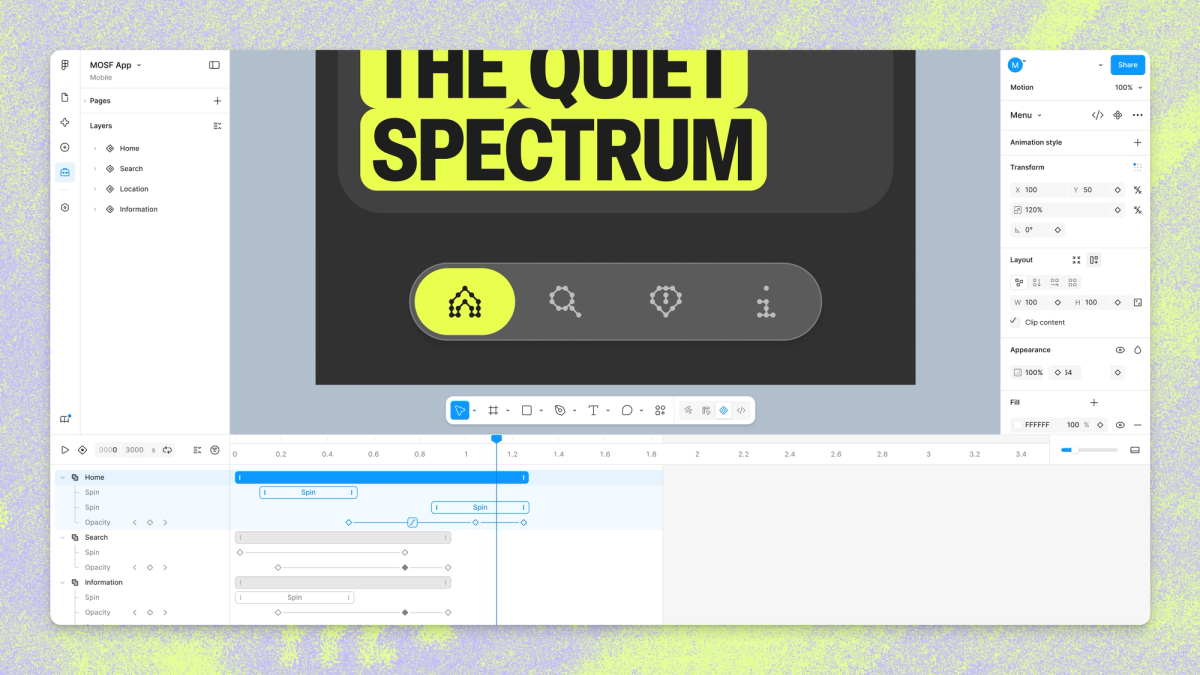
SAN FRANCISCO, Calif. - Figma has officially launched Motion, a native set of animation tools designed to integrate interactive movement directly into product-design files. The introduction of these features marks a significant shift for the design platform, allowing professionals to utilize a timeline, keyframes, and preset styles without ever leaving the collaborative environment of their shared canvas. By housing these tools alongside existing interface layouts, comments, and components, Figma aims to unify the visual language of digital products, ensuring that motion is treated as a core element of the user experience rather than a secondary consideration added late in the development cycle.
For years, the design industry has grappled with a fragmented process when it came to adding movement to digital interfaces. Designers were often forced to export static assets from their primary design tools into specialist animation software, a workflow that frequently resulted in a loss of fidelity and context. Once the animation was complete, the burden fell back on the designer to translate those visual timings and easing curves to developers, often through manual documentation or approximate video recordings. Figma Motion is specifically intended to replace this disjointed system by keeping animation specifications within the same shared file used by the broader product team.
The integration extends beyond the design phase and into the handoff process through Figma’s Dev Mode. By exposing animation data and specifications directly to engineers, the software seeks to minimize the guesswork traditionally associated with implementing complex motion. This move aligns with a broader industry trend toward 'design-to-code' efficiency, where the goal is to reduce the friction between creative intent and technical execution. As software companies face increasing pressure to ship high-quality products faster, the ability to maintain a single source of truth for both static and moving parts of an interface has become a competitive necessity.
In addition to manual controls, Figma is leaning into modern automation by supporting prompting for certain animation tasks. This feature provides teams with a faster starting point by generating initial motion concepts that designers can subsequently refine using granular, editable controls. This hybrid approach—combining generative assistance with professional-grade manual tools—reflects an awareness that while speed is essential, creative control remains paramount for enterprise-scale design systems where brand consistency and precise timing are non-negotiable.
The wider release of Figma's expanded toolkit includes sophisticated features such as three-dimensional transforms, shaders, and code layers. These additions significantly broaden the types of visual effects that can be prototyped within the platform, moving Figma closer to the high-fidelity capabilities once reserved for specialized video production or gaming software. By incorporating these advanced graphical elements, Figma is positioning itself as a comprehensive engine for modern digital expression, capable of handling everything from simple button transitions to complex, layered visual storytelling within a web or mobile application.
Strategically, the launch of Motion strengthens Figma’s overarching goal of covering a larger portion of the product-development workflow. Since its inception, the company has successfully expanded from a vector editing tool to a collaborative infrastructure layer for technology companies. By adding native animation, Figma is moving vertically into the specialized domains of interaction design and technical art. This strategy not only increases the platform’s stickiness within large organizations but also positions it as the central hub for the entire lifecycle of a digital feature, from the first brainstorm to the final line of production code.
One of the most practical benefits of this native integration is the democratization of design review. Previously, motion was often viewed as a late-stage enhancement that was only critiqued after the primary layout was approved. By making animation a routine part of the shared canvas, teams can now identify critical issues regarding timing, accessibility, and performance much earlier in the process. This proactive approach helps prevent situations where a complex animation might look impressive during a presentation but proves to be distracting or technically unfeasible during actual implementation.
Industry analysts have noted that the move into motion design is a natural evolution for a platform that already dominates the collaborative design space. As user expectations for interactive experiences continue to rise, motion is no longer a luxury; it is a functional requirement for guiding users through complex workflows and providing feedback. However, the success of Figma Motion will depend on its ability to bridge the gap between creative ambition and the technical constraints of various operating systems and devices, each of which handles motion differently.
Despite the clear advantages of the new toolset, the primary risk for Figma and its users is the inherent complexity that rich motion introduces. While fluid transitions can improve usability, excessive or poorly executed animation can make interfaces harder to navigate and can lead to user fatigue. There is also the technical challenge of translation: effects generated within a design tool may not always translate efficiently to every target platform, whether it be a low-powered mobile device or a browser with limited hardware acceleration. Teams will need to exercise discipline to ensure that the ease of creating motion does not lead to over-designed, heavy applications.
To mitigate these risks, Figma will need to provide dependable handoff details and robust accessibility guidance. For animations to be successful in a production environment, they must be implemented with 'reduced motion' preferences in mind for users with vestibular disorders or other sensitivities. Figma’s role will be to ensure that designers can preserve their creative intent without creating excessive implementation work for engineering teams or accidentally introducing barriers for certain user groups. The inclusion of precise timing data and easing values within the design file is a step toward this necessary rigor.
The sector for developer tools and enterprise software has seen a wave of consolidation and feature expansion as platforms vie to become the 'operating system' for digital creation. In this landscape, Figma’s move into motion design places it in more direct competition with established players in the motion graphics space, while simultaneously reinforcing its value proposition to current enterprise customers. By consolidating these disparate workflows into a single subscription and interface, the company is betting that convenience and collaboration will outweigh the benefits of using a suite of fragmented, specialist tools.
Looking forward, the tech industry will be watching to see how quickly major design systems adopt Figma Motion as part of their standard libraries. The success of the feature will likely be measured by the quality of the interactions seen in the next generation of mainstream apps and services. If the tool can effectively reduce the 'translation tax' between designers and developers, it could set a new standard for how digital products are built and refined. For now, the launch represents a significant milestone in the evolution of Figma from a design tool into a comprehensive product-development platform.
As teams begin to experiment with three-dimensional transforms and code layers, the boundaries between design and development will likely continue to blur. Figma's expansion into these more technical visual domains suggests a future where the distinction between a designer and a technical artist is increasingly fluid. By providing the tools for these varied roles to work within the same environment, Figma is not just changing how animations are built, but also how multi-disciplinary teams communicate during the high-stakes process of launching new software.
Ultimately, Figma Motion represents a calculated bet on the future of interactive design. By integrating professional-grade animation tools into a platform known for its accessibility and collaboration, Figma is attempting to make high-fidelity movement a standard part of the design conversation. Success will depend on whether this integration simplifies the path to production or merely adds a new layer of complexity to an already demanding workflow. As the product reaches wider adoption, the feedback from the developer community regarding the ease of implementation via Dev Mode will be the ultimate test of Figma’s vision.
Sources
Written by
The Company Wire
Inside the companies building what’s next. Reporting on startups, technology, funding and the people shaping them.


